As populations shift to cities, the concept of urbanism begins to take on more relevance across the planet. In a recent book, author Jeb Brugmann explores what urbanism means as a trend and a process.


Policy Innovations corresponded with Brugmann over email to discuss some of the issues related to an urbanizing world.
"Policy Innovations: Corporations and wealthy countries are experimenting with building cities from scratch, many designed along sustainable principles. What must they do to make these places interesting and not just empty green office parks?
Jeb Brugmann: The industrial production of urban space and facilities, with no matter how many bells and whistles, is not the same as the more self-built production of an urbanism by a city-building community. An urbanism, as I define it, is the ways that specific city-building communities design, build, govern, and co-locate activities in customized places to support their specialized forms of production and living. In other words, robust urbanism is user designed and often user built."
Read the full story: Welcome to the Urban Revolution
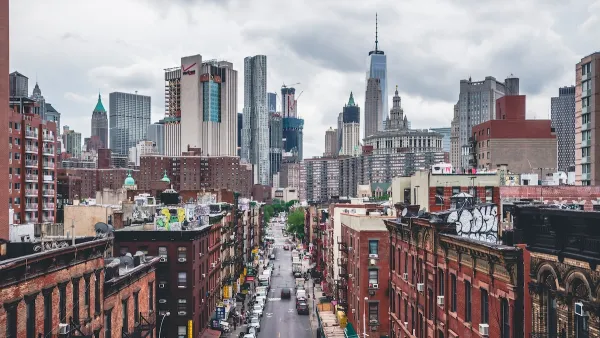
Is the Urban Form Sustainable?
One author offers a framework for resilience that rethinks common assumptions about the inevitability of cities as we know them.
The Superstar Metro Argument... And Why It Fails
One argument against solving the housing shortage in large, expensive cities is that growth in those cities will drain people and wealth from declining areas. Data does not agree.
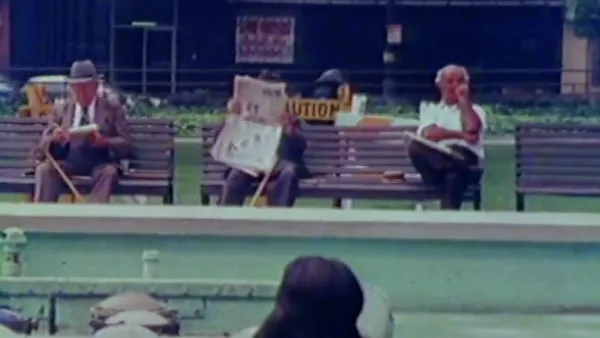
William Whyte’s Seminal Urban Film Restored
‘The Social Life of Small Urban Spaces’ changed the way planners view public space and ushered in a new way of understanding urban patterns.

Planetizen Federal Action Tracker
A weekly monitor of how Trump’s orders and actions are impacting planners and planning in America.

California plans to bury El Niño’s downpour
If the state plays its cards right, it may be able to store a billion acre-feet of El Niño’s water in aquifers.

Desperate measures: Advocates weigh draining Lake Powell to fill Colorado River
Draining the reservoir could reduce evaporation losses by a couple hundred thousand acre-feet.

US buildings threatened, destroyed by fires set to triple by 2060
Researchers found a high fire risk for socioeconomically vulnerable neighborhoods in the American West.

LA residents may be allowed to paint their own crosswalks
Councilwoman Katy Yaroslavsky put out a motion instructing the Los Angeles Department of Public Transportation to study the feasibility of allowing volunteers to paint crosswalks.

Dallas moves to overhaul its zoning code
The city's zoning reform will allow more multi-family and mixed-use developments.

FREE Course: Walkable City 1: Why Walkability?
After describing his path towards focusing on walkability as the essence of good planning, Jeff Speck marches through his five principal reasons for making more walkable places.
Reinventing Malls: Planning Alchemy—Turning Gray Fields Into Gold
The course focuses on the opportunities and imperatives that shape reinvention of mall sites.

City of Rosemead
Rutgers University, Edward J. Bloustein School of Planning and Public Policy
One Hundred Miles
Hunter College, City University of New York (CUNY)
The Architects Foundation
University of Cincinnati Online
City of Cambridge
Montrose County
The Pocatello Development Authority