AASHTO is pitching a replacement of the current fed excise fuel taxes with sales taxes - initially revenue neutral, but would increase with inflation, unlike stagnant excise taxes last increased in 1993. In 6 years, might raise an extra $43 billion.


In a refreshing change from advocating for the popular "vehicle-miles-fee" replacement of the current federal gas tax funding mechanism for transportation, the American Association of State Highway and Transportation would simple adjust the current method to index it for inflation by converting it to a sales tax.
Initially, drivers would "pay an 8.4% tax on a gallon of gas instead of the current 18.4-cent tax. The tax on a gallon of diesel would be 10.6% instead of the current 24.4 cents."
"We think this has bipartisan potential," said John Horsley, AASHTO's executive director, who called the policy "revenue-neutral."
"Florida Rep. John Mica, the ranking Republican on the House Transportation and Infrastructure Committee, said that any proposal that would have Americans paying more at the pump would be a "non-starter." Mica would chair this committee if the Republicans take control of Congress after mid-term elections, as many polls suggest.
Read the full story: Gas-Tax Revamp Pushed to Fund Transportation Projects
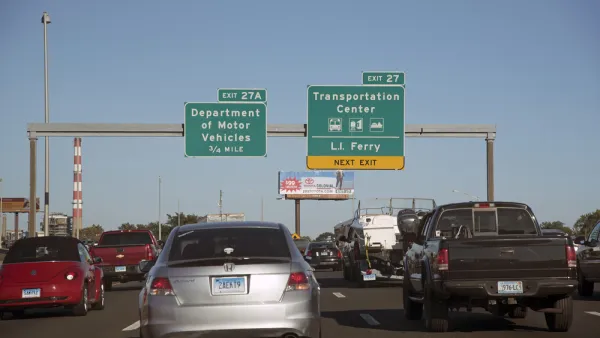
Connecticut Governor's Transportation Plan Raises New Revenue to Fund Road Projects
Tolls and gas taxes—that's how Connecticut Governor Daniel P. Malloy plans on raising revenue for the state's troubled Special Transportation Fund.
Analysis: What does America want from surface transportation reauthorization?
Over 13,000 comments were submitted in the federal Request for Information on surface transportation reauthorization. We analyzed all of them.
Follow Planetizen’s analysis of surface transportation reauthorization
Follow along as we explore the upcoming surface transportation reauthorization bill and its potential impacts on US transportation infrastructure in the coming years.

Planetizen Federal Action Tracker
A weekly monitor of how Trump’s orders and actions are impacting planners and planning in America.

California plans to bury El Niño’s downpour
If the state plays its cards right, it may be able to store a billion acre-feet of El Niño’s water in aquifers.

Desperate measures: Advocates weigh draining Lake Powell to fill Colorado River
Draining the reservoir could reduce evaporation losses by a couple hundred thousand acre-feet.

Chicago voters approve permanent festival grounds, penalty for vacant property owners
Currently, major summer and fall festivals take over public parks for weeks at a time, drawing criticism from nearby residents

NYC votes to cut outdoor dining red tape, speed up permitting
New York City also voted to allow the Department of Transportation to begin work on urgent projects before notifying elected officials.

California appears to reject Prop. 45
The proposition would have expanded the projects that qualify for a streamlined environmental review, effectively paring down the California Environmental Quality Act.

FREE Course: Walkable City 1: Why Walkability?
After describing his path towards focusing on walkability as the essence of good planning, Jeff Speck marches through his five principal reasons for making more walkable places.
Reinventing Malls: Planning Alchemy—Turning Gray Fields Into Gold
The course focuses on the opportunities and imperatives that shape reinvention of mall sites.

City of Rosemead
Rutgers University, Edward J. Bloustein School of Planning and Public Policy
One Hundred Miles
Hunter College, City University of New York (CUNY)
The Architects Foundation
University of Cincinnati Online
City of Cambridge
Montrose County
The Pocatello Development Authority