A new video game has been released that has players trying to solve urban issues and make cities work better. Next American City columnist Christian Madera reviews.


The new game is CityOne, and it has been released by IBM as part of a broad program aimed at making improvements to the urban realm.
"While comparisons have been made to SimCity, unlike the popular Maxis title, the object isn't to build a city. Rather, players are faced with a series of problem scenarios related to four sectors – energy, water, banking and retail – and ask to choose a solution that can help make things work better (or should I say, smarter). Once players complete 10 rounds, the game provides an assessment of your performance, and classifies you as one of five types of leaders – pragmatic, conservative, short-term oriented, futurist or evasive (if you happen to "ignore the problem" too many times). There's also high score board and map showing players from all over the world."
Read the full story: The Real SimCity?


10 urbanist video games that aren’t Sim City
Sim City may have inspired an entire generation of urban planners — but these games have perfected the art of city-building simulation.
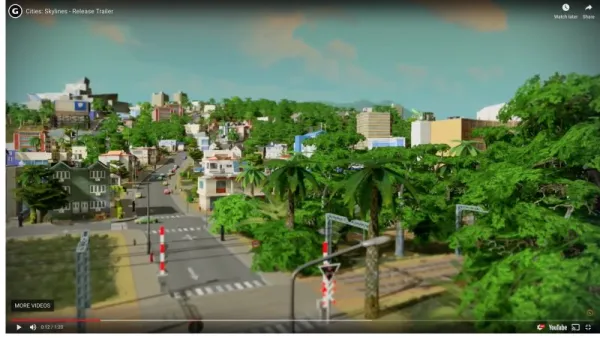
Cities: Skylines as an Urban Planning Tool
Computer simulations continue to play a novel and important role in urban planning, especially in finding new ways to engage the public and add some fun to the process of planning for the future of cities.

SimCity’s Impact and Evolution
The video game has inspired many people to pursue careers in planning. But, the newest version is also trying to better align the simulations with what planners face in the real world.

Planetizen Federal Action Tracker
A weekly monitor of how Trump’s orders and actions are impacting planners and planning in America.

‘Going backwards:’ Baltimore mayor, students rally against state's transit funding plan
Maryland's proposed six-year plan provides no funding for Baltimore’s BMORE bus program and reduces its road maintenance funding.

Detroit to transform waterfront with $2.2 billion investment
Developers will convert about 18 acres of unused parking lot space into civic spaces.

Less housing, wasted money: study reveals impact of city parking mandates
The study found that 71% of carless households in the United States pay for a parking space they don’t use.

Minnesota seeks to replace fraud-ridden Housing Stabilization Services with new program
Federal prosecutors have charged over a dozen people in fraud cases involving at least $26 million.

A multi-billion dollar problem is brewing under Oakland’s streets
Oakland’s stormwater drainage systems are in desperate need of upgrades and repairs. The El Niño will only further strain the city’s infrastructure.

FREE Course: Walkable City 1: Why Walkability?
After describing his path towards focusing on walkability as the essence of good planning, Jeff Speck marches through his five principal reasons for making more walkable places.
Reinventing Malls: Planning Alchemy—Turning Gray Fields Into Gold
The course focuses on the opportunities and imperatives that shape reinvention of mall sites.

One Hundred Miles
County of Mendocino
planning NEXT
The Architects Foundation
University of Cincinnati Online
Montrose County
Northern Illinois Transit Authority (NITA)
The Pocatello Development Authority