As San Francisco update its strategic plan, the rhetoric in the boardroom is increasingly about reducing car traffic and use in the city.


Officials want to turn the city into a place where driving around is the last choice people would want to make.
"Private automobiles, especially those containing only a driver, should remain part of the city's transportation future, directors said. But they should not dominate use of the city's scarce transportation resources nor the bulk of its roads and rights of way.
'Private autos do deserve a place,' said Cheryl Brinkman, a newcomer to the board, 'but the goal is not to make them the most convenient choice. We want to have the same dignity.'
The board is updating its strategic plan, adopted in 2007 as its vision through 2012, because of the unforeseen financial challenges delivered by the recession. The revised plan, which sets the agency's priorities, is expected to be completed by spring 2011."
Read the full story: S.F. transit agency's plan put cars in backseat

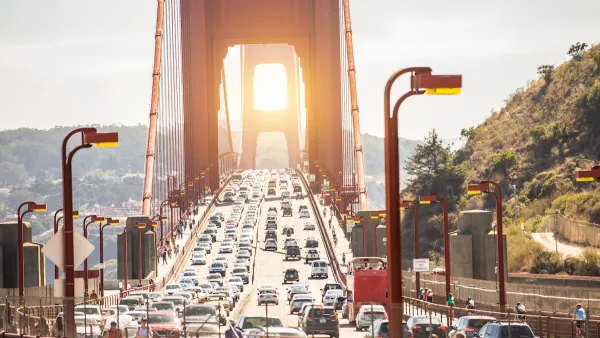
San Francisco ‘Best-Performing Metro’ for VMT, Traffic Reduction
The city saw a 13 percent drop in miles driven per capita in the last five years.
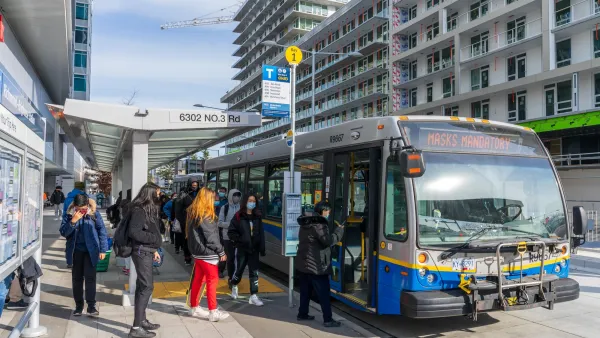
Why “Full Buses are a Car Commuter’s Dream”
Even a 5-10% drop in cars on the road can dramatically ease congestion, making healthy transit systems a win-win for transit users and drivers alike.
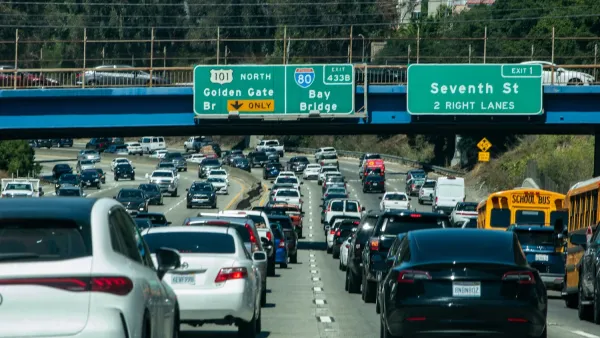
US Commuters Lost 8 Workdays to Traffic in 2024
As more employers call workers back to the office, commute times are growing — and costing drivers in time and money.

Planetizen Federal Action Tracker
A weekly monitor of how Trump’s orders and actions are impacting planners and planning in America.

Northwest rail fans eager for Sept. 30 debut of Amtrak’s Airo fleet
Get ready for that new train smell and more seats. But they won’t go faster or run more frequently on the Cascades route in Washington and Oregon.

Trump is considering data centers on 6 states' public land — some state officials say they had no idea
If the administration approves the proposed projects, data center and data center-related developments will cover 17,600 acres of public land.

After decades of planning, Sacramento gains new light rail station
Trains will arrive every 15 minutes during peak hours and every 30 minutes during non-peak hours.

Massive tunnel-boring machine breaks ground on Gateway Project
The Trump administration revoked funding for the project in October 2025, and then restored it earlier this year.

Airo trainsets begin service on Amtrak Cascades route
The trains feature panoramic windows, complementary wifi and over 300 seats per train set.

FREE Course: Walkable City 1: Why Walkability?
After describing his path towards focusing on walkability as the essence of good planning, Jeff Speck marches through his five principal reasons for making more walkable places.
Reinventing Malls: Planning Alchemy—Turning Gray Fields Into Gold
The course focuses on the opportunities and imperatives that shape reinvention of mall sites.

City of Thousand Oaks
City of Wisconsin Rapids
Harvard University Graduate School of Design
The Architects Foundation
University of Cincinnati Online
The Pocatello Development Authority
The Urban Renewal Agency of the City of Pocatello