Unclean and unsafe water is an increasingly vexing problem for the world's cities, which are struggling to meet the needs of rapidly growing populations. But there has been some positive work in developing countries.


"Already at 6-billion-plus souls, the world is adding close to 1 million new inhabitants a week - and will to 2050. The lion's share of growth is coming in Southeast Asia, Sub-Saharan Africa and parts of Latin America where safe drinking water is a luxury of the few and basic sanitation to treat human wastes is often simply lacking.
One wonders: when, if ever, will the entire world be able to access the safe drinking water supplies and sewage systems that developed societies began to adopt, raising average lifespans by decades, in the late 1800s?"
Columnist Neal Peirce writes of efforts in Phnom Penh to bring new water pipes to disadvantaged areas, which is helping to improve the health of residents. But many other cities in the developing world are still plagued by unsafe water and aging or nonexistent infrastructure.
Read the full story: World Water Crises Cry Out For Ingenious Solutions

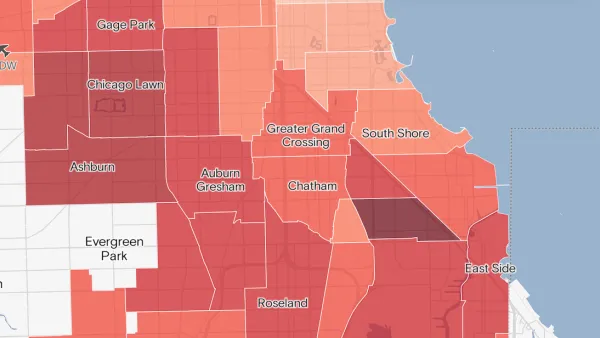
84% of Chicago's Pipes Contain Lead — and They're Not Equally Distributed
The city’s Black and Latino communities are most impacted, but the issue is widespread across the city’s water distribution network.
A Place to Recover from Illness: How Medical Respite Programs Help Unhoused People Heal
For people experiencing homelessness, recuperating after a hospitalization is difficult. Medical respite programs can help. Why aren't they more common?
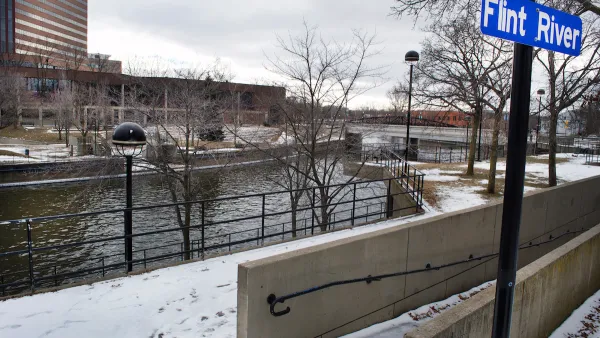
Lead Pipes Make Up Nearly One Tenth of US Water Service Lines
A decade after the Flint crisis captured national attention, tens of thousands of US water transmission lines can still leach dangerous chemicals.

Planetizen Federal Action Tracker
A weekly monitor of how Trump’s orders and actions are impacting planners and planning in America.

Amtrak, CN end decades-long dispute with eight-year agreement
The new operating agreement establishes an updated framework for the companies to work together, including processes to resolve disputes.

Judges permit Denver to divert 77,000 acre feet from the Colorado River for reservoir expansion
Overuse and climate change have caused the Colorado River’s water levels to plummet.

NYC DOT wants faster, more permanent street upgrades
The city is examining ways to build more concrete infrastructure without getting entangled in 'decades-long' projects.

'Something we’ve never seen before:' rising utility rates could strain city finances nationwide
Data centers, climate change and other factors have caused utility rates in the United States to increase by 38% since 2020.

Trump to overrule local leaders, lease millions of acres of America’s Pacific Island territories’ seafloors to mining companies
International law says that the Indigenous people of America’s territories have a right to prior and informed consent regarding projects that impact their countries.

FREE Course: Walkable City 1: Why Walkability?
After describing his path towards focusing on walkability as the essence of good planning, Jeff Speck marches through his five principal reasons for making more walkable places.
Reinventing Malls: Planning Alchemy—Turning Gray Fields Into Gold
The course focuses on the opportunities and imperatives that shape reinvention of mall sites.

Harvard University Graduate School of Design
KFH Group Inc.
Greater Baltimore Committee
The Architects Foundation
University of Cincinnati Online
The Pocatello Development Authority
The Urban Renewal Agency of the City of Pocatello