Developing Countries

COP28: Will Developed Nations Reduce Emissions?
Tensions between developed and developing nations surfaced over emissions and energy, with the former focused on reducing fossil fuels and the latter pointing to unrealized emissions reductions from the nations most responsible for global warming.

Land Use the Subject of Latest IPCC Report
Not urban land use, but in the literal sense: land used to produce food, graze livestock, supply drinking water, grow trees, and sequester carbon. As the climate warms and the population grows, crop yields will decrease and land will be degraded.
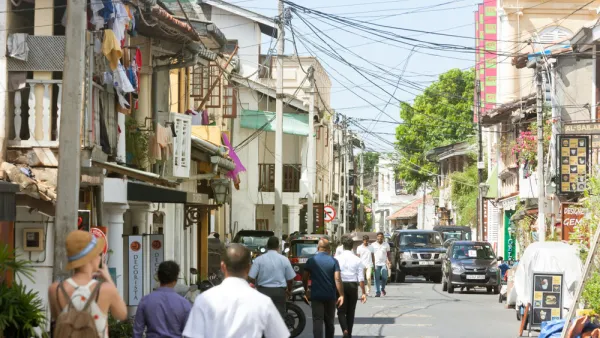
Urban Extremes In Sri Lanka
The Sri Lankan tourist destinations of Ella and Galle are microcosms of urban trends worldwide: one is a boomtown and the other is a boutique city.
Developing Countries Require More Urban Planning Capacity to Meet Growing Needs
How can the Global South implement the New Urban Agenda with colonial-era curricula and little investment in training? Zambia offers a new model.
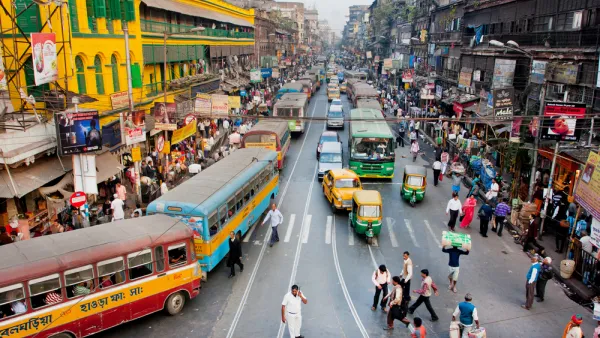
Complete Streets Concepts Are Now Being Applied Worldwide
Dehli announced a major new Complete Streets program that will redesign urban roads to favor walking, cycling and public transport over car traffic. This is very good news. It shows that the Complete Streets concept is now being applied worldwide.,
When is Density Beneficial in Disasters?
Comparing cities versus suburbs in disaster resiliency and recovery.
Giving the Informal Economy a Voice in Planning Processes
In the first of a new series of articles tackling urban livelihoods, Caroline Skinner explains why the informal workforce matters, and offers six strategies for developing more inclusive urban planning processes.
How Chinese Megacities Avoid Problems
Megacities are quickly on the rise in China. But as this post from New Geography argues, they've managed to avoid problems currently faced by other megacities in developing nations.
Climate Change and the Urban Water Crisis
As population growth and climate change set in, cities in developing countries will face major shortages of freshwater. A new report looks at how those cities could be affected and what preventive steps they should start taking.
How Would MLK, Jesus or Che Plan?
I spent last week at the Asian Development Bank (ADB) headquarters in Manila, in the Philippines, where we are starting on an exciting but humbling project: developing a more comprehensive framework for transport project evaluation. Among other factors, this project will develop better methods for incorporating social equity impacts into transport planning. This is important in any community, and particularly in developing countries where many people are extremely poor. What transport policies and planning practices respond to their needs?
The Global Challenge of Unsafe Water
Unclean and unsafe water is an increasingly vexing problem for the world's cities, which are struggling to meet the needs of rapidly growing populations. But there has been some positive work in developing countries.
As Developing Countries Urbanize, Food Booms
A new study shows that agricultural output in the emerging economies of Brazil, Russia, India and China will be three times as great as those in the developed world. Increasing urbanization is seen as one of the drivers of this growth
Finding A Sustainabe Path for Jakarta
Jakarta, Indonesia is the world's sixth most populated metropolitan area, and it's on track to move up in ranks within the next decade. Some planners are trying to figure out how to guide this developing megacity onto a sustainable path.
New Eco-City Planned in China
A new 350,000-person eco-city is being planned in China, this time with cooperation from Singapore. Planners are hopeful that it can serve as a sustainable model for development in countries with high population growth.
Disaster Risk Tied to Urban Growth
Two reports have linked patterns of urban development to disaster risk. As urban populations grow, these studies suggest developing countries will become even more vulnerable.

FREE Course: Walkable City 1: Why Walkability?
After describing his path towards focusing on walkability as the essence of good planning, Jeff Speck marches through his five principal reasons for making more walkable places.
Reinventing Malls: Planning Alchemy—Turning Gray Fields Into Gold
The course focuses on the opportunities and imperatives that shape reinvention of mall sites.

Harvard University Graduate School of Design
KFH Group Inc.
Greater Baltimore Committee
The Architects Foundation
University of Cincinnati Online
The Pocatello Development Authority
The Urban Renewal Agency of the City of Pocatello