Jakarta, Indonesia is the world's sixth most populated metropolitan area, and it's on track to move up in ranks within the next decade. Some planners are trying to figure out how to guide this developing megacity onto a sustainable path.


"Like so many other cities in the developing world, it's a place struggling to adjust to the forces of modernity and rural migration. The city is increasingly known for its explosive population growth, seemingly endless traffic jams, polluted air and water, disappearing open spaces, urban poverty, and its vulnerability to frequent floods. Traffic jams in the city are expected to reach total gridlock by 2014. Air pollution reached unhealthy levels nearly 365 days a year causing widespread respiratory problems. One quarter of the capital city's population lives in kampungs, or slum neighborhoods spread around the city. In many cases these neighborhoods were rural villages simply engulfed by the march of urbanization. Another 5% of the population live in illegal settlements tucked under and next to public infrastructure as well as along river banks. Experts sum up Jakarta's unsustainable trajectory as 'catastrophic' and call it an 'urban planner's nightmare.'"
Read the full story: Towards a More Sustainable Jakarta

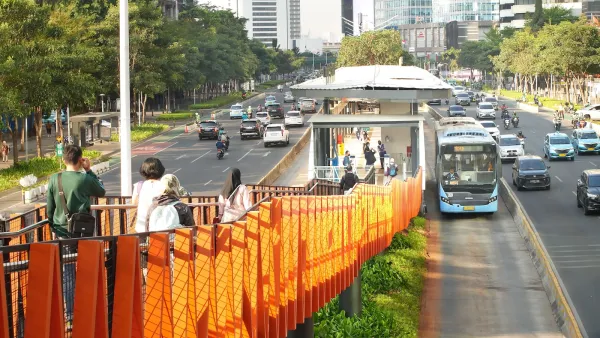
How Jakarta built the world's largest BRT system
Once known for total gridlock, the Indonesian capital has transformed itself into a public transit leader.
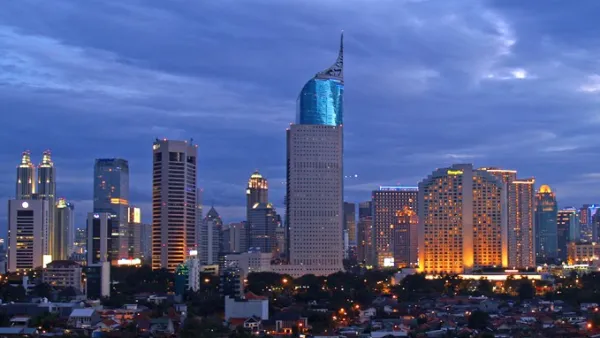
Jakarta's Suburb in the Sky
A rooftop housing development in the Indonesian capital takes the suburb to new heights.
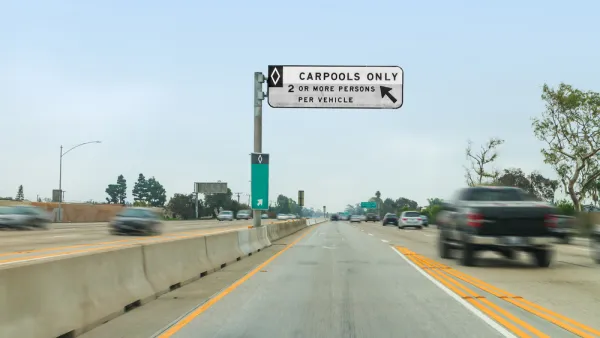
Before and After Carpool Lanes
The Guardian shares news of a new study of a Jakarta lane that could prove that carpool requirements work to reduce driving and congestion.

Planetizen Federal Action Tracker
A weekly monitor of how Trump’s orders and actions are impacting planners and planning in America.

Amtrak, CN end decades-long dispute with eight-year agreement
The new operating agreement establishes an updated framework for the companies to work together, including processes to resolve disputes.

Judges permit Denver to divert 77,000 acre feet from the Colorado River for reservoir expansion
Overuse and climate change have caused the Colorado River’s water levels to plummet.

NYC DOT wants faster, more permanent street upgrades
The city is examining ways to build more concrete infrastructure without getting entangled in 'decades-long' projects.

'Something we’ve never seen before:' rising utility rates could strain city finances nationwide
Data centers, climate change and other factors have caused utility rates in the United States to increase by 38% since 2020.

Trump to overrule local leaders, lease millions of acres of America’s Pacific Island territories’ seafloors to mining companies
International law says that the Indigenous people of America’s territories have a right to prior and informed consent regarding projects that impact their countries.

FREE Course: Walkable City 1: Why Walkability?
After describing his path towards focusing on walkability as the essence of good planning, Jeff Speck marches through his five principal reasons for making more walkable places.
Reinventing Malls: Planning Alchemy—Turning Gray Fields Into Gold
The course focuses on the opportunities and imperatives that shape reinvention of mall sites.

Harvard University Graduate School of Design
KFH Group Inc.
Greater Baltimore Committee
The Architects Foundation
University of Cincinnati Online
The Pocatello Development Authority
The Urban Renewal Agency of the City of Pocatello