Pedestrianism is on the rise in Cape Town, South Africa, where the recent World Cup has inspired more citizens to get out of their cars and put their feet on the street.


A "Fan Walk" of pedestrianized street during World Cup events in Cape Town brought tens of thousands of people into the street. Officials there are hoping the positive experience will translate into a stronger pedestrian tradition.
"They called it the Fan Walk, 1.6 miles of asphalt connecting a public soccer viewing area downtown with the newly constructed Green Point Stadium. The path was mobbed with people during the city's eight World Cup matches; a sea of fans, performers, and kids running wild. The street party was a big change for a city and country that has shied away from venturing beyond the comfort and security of the private automobile.
'The motorcar is central to everything we do,' says Dave Dewar, chair of City and Regional Planning at the University of Cape Town's School of Architecture and Planning."
Read the full story: World Cup legacy: more bids to get South Africans out of their cars
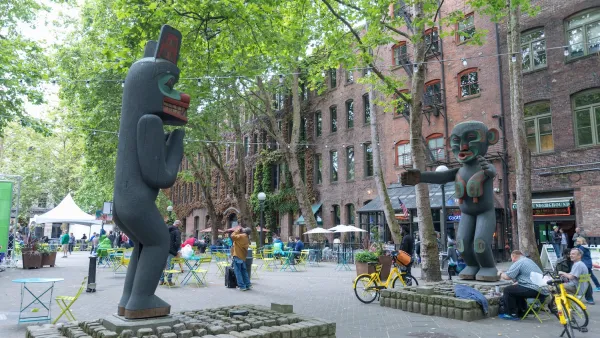
Seattle's Pioneer Square to become pedestrian zone during World Cup
The city will restrict car traffic and street parking in areas around Lumen Field on match days.
Four Cool World Cup Stadia and Their Uncertain Futures
The 2010 World Cup in South Africa has caused the creation or redesign of ten stadia. The Architect's Newspaper offers this list of four of the most interesting stadia and what future these expensive buildings may have.
Johannesburg's Auto-Orientation and the Persecution of the Pedestrian Majority
You really need to almost get hit by a car to feel like a true Johannesburg pedestrian. That's the way it goes here. A huge, sprawling greater metropolitan area of about 10 million people covering more than 600 square miles, the city is built for the car. And if you're not in one, good luck.

Planetizen Federal Action Tracker
A weekly monitor of how Trump’s orders and actions are impacting planners and planning in America.

Eastern Nebraska is running out of electricity
Data centers and electrification are straining eastern Nebraska’s grid, throttling economic development.
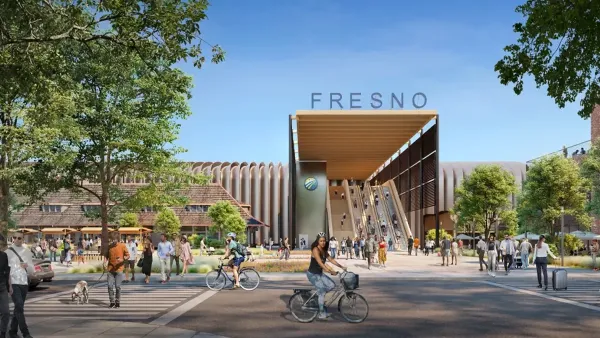
California High-Speed Rail Authority picks trainset manufacturer
The California High-Speed Rail Authority aims to start servicing passengers by 2033.

Massachusetts bogs generate both power, and cranberries
Putting solar panels above farmland is one way Massachusetts is advancing toward its goal of net-zero carbon emissions by 2050.

What could the future of LA transit look like under Raman?
The mayor-elect views broken sidewalks and potholes as crises that can be fixed with better governance.

States are counting on battery farms. Some towns don’t want them.
While fire safety has improved, some communities are still wary.

FREE Course: Walkable City 1: Why Walkability?
After describing his path towards focusing on walkability as the essence of good planning, Jeff Speck marches through his five principal reasons for making more walkable places.
Reinventing Malls: Planning Alchemy—Turning Gray Fields Into Gold
The course focuses on the opportunities and imperatives that shape reinvention of mall sites.

City of Rosemead
Rutgers University, Edward J. Bloustein School of Planning and Public Policy
One Hundred Miles
University of Michigan School for Environment and Sustainability (SEAS)
Hunter College, City University of New York (CUNY)
The Architects Foundation
City of Cambridge
The Pocatello Development Authority
The Urban Renewal Agency of the City of Pocatello