Facebook, Twitter, and YouTube are becoming standard components of transit agencies' strategies for outreach and keeping riders informed.


For many transit agencies that may not have conceived of themselves as the hippest kids on the block, social media are opening up legitimate avenues for public participation, outreach and dissemination of information. The migration to social media has been so rapid of late that for agencies that have not yet joined Facebook or Twitter-no matter how unfamiliar these media may be-the question is not 'if," but "when."
"At the [Transportation Research Board Annual] Meeting in January we had a Sunday morning workshop at 9 . . . and we had a full room," said Jennifer Weeks, senior transportation planner at Parsons-Brinkerhoff and chair of the TRB's Committee on Public Involvement. "I think everybody is like, 'Wow, holy cow-we've got tO get on the bandwagon.' If there are any contrarians, they're shouted down."
Thanks to Josh Stephens
Read the full story: Transit Agencies Find New On-Ramps to the Information Superhighway
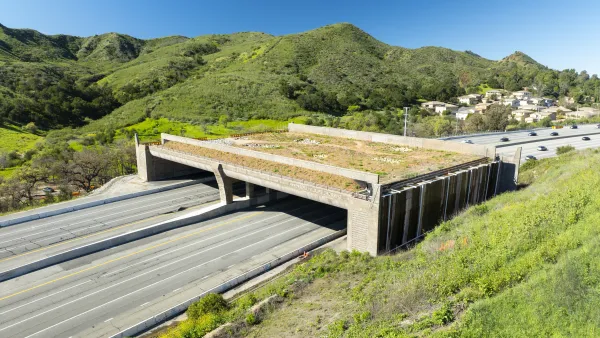
California invests $2.7 billion in over 150 transportation projects
The fund allocates money to transit upgrades and safety improvements to streets surrounding schools, among other ventures.
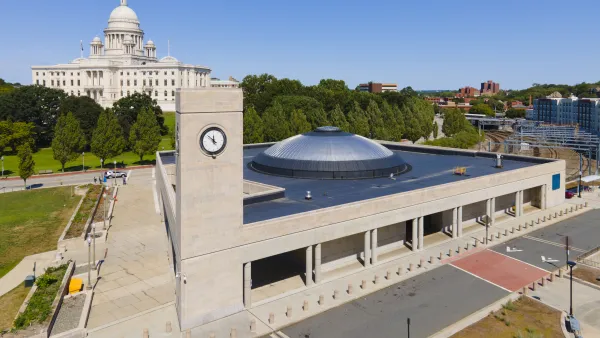
Providence train station to gain new bus hub
The new hub will replace the one currently located at Kennedy Plaza.
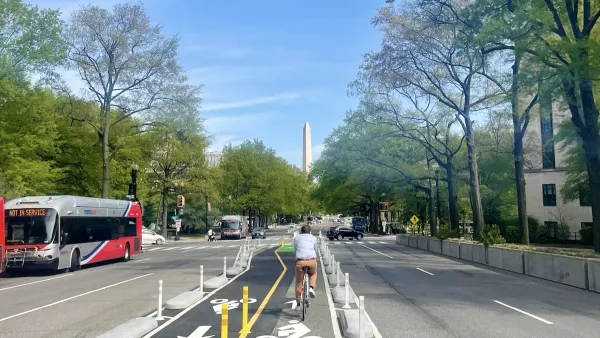
Trump Prompts Restructuring of Transportation Research Board in “Unprecedented Overreach”
The TRB has eliminated more than half of its committees including those focused on climate, equity, and cities.

Planetizen Federal Action Tracker
A weekly monitor of how Trump’s orders and actions are impacting planners and planning in America.

California plans to bury El Niño’s downpour
If the state plays its cards right, it may be able to store a billion acre-feet of El Niño’s water in aquifers.

Desperate measures: Advocates weigh draining Lake Powell to fill Colorado River
Draining the reservoir could reduce evaporation losses by a couple hundred thousand acre-feet.

Mamdani’s pied-à-terre tax survives legal challenge
A panel of judges found that the plaintiffs failed to demonstrate injury as a result of New York City's implementation of the tax.

Eastern Nebraska is running out of electricity
Data centers and electrification are straining eastern Nebraska’s grid, throttling economic development.

Seattle passes record-breaking transit services expansion
Proposition 1 will double the city’s transit tax to add 95,000 more bus trips and preserve 180,000 bus trips annually.

FREE Course: Walkable City 1: Why Walkability?
After describing his path towards focusing on walkability as the essence of good planning, Jeff Speck marches through his five principal reasons for making more walkable places.
Reinventing Malls: Planning Alchemy—Turning Gray Fields Into Gold
The course focuses on the opportunities and imperatives that shape reinvention of mall sites.

City of Rosemead
Rutgers University, Edward J. Bloustein School of Planning and Public Policy
One Hundred Miles
University of Michigan School for Environment and Sustainability (SEAS)
Hunter College, City University of New York (CUNY)
The Architects Foundation
City of Cambridge
Montrose County
The Pocatello Development Authority