William Rivers Pitt says it's all too easy to blame BP or the politicians who deregulated the oil industry. Ultimately, he says, all of us are to blame for the Gulf oil disaster and the damage wrought by fossil fuels.


Pitt points out that everything we do, from driving to flying to eating is completely dependent on the oil industry. Because of this, we cannot absolve ourselves of responsibility for what is now happening in the Gulf of Mexico:
"We are learning a savage lesson in the Gulf. We are witnessing the end of a way of life we have become all too deeply accustomed to. We drive, we eat, we fly, we vote, and in doing so, we share the blame for what is happening, and what is to come. We have gone to sleep each night deliberately oblivious to the deadly nature of the fossil fuels that power the way we live, because it is too hard to even think about living a different way.
The Deepwater Horizon is the period at the end of a very long, bleak sentence that has been rolling along for a hundred years. We are killing ourselves with the way we live, with our complacency, and we can no longer ignore this wretched truth. The oil that is killing beaches and fisheries and animals of every kind is our lifeblood, the spigot on the sea floor is our femoral artery, and we are bleeding to death right there on television."
Read the full story: It's Our Fault Too


Creating Ocean-Safe Plastic from Seashells
USC researchers have created a biodegradable, marine-safe plastic alternative using calcium carbonate from seashells, offering a promising solution to ocean pollution.
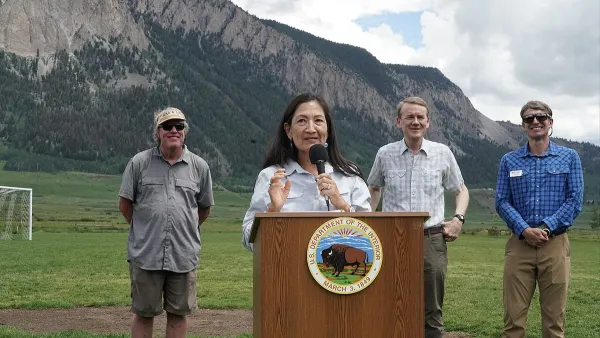
Commentary: Colorado Will Forge Ahead With Conservation Work
While federal policy may become less friendly to environmental efforts, support from state legislators and agencies can prevent the state from backsliding.
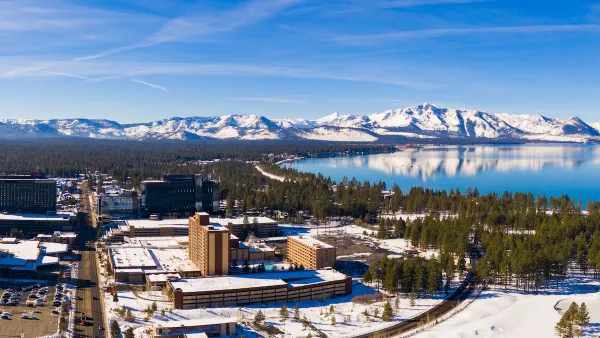
Nevada to Host National Outdoor Recreation Conference
In May 2024, the Society of Outdoor Recreation Professionals will hold its national conference in Stateline, Nevada, offering opportunities to learn and network in the beautiful setting of Lake Tahoe.

Planetizen Federal Action Tracker
A weekly monitor of how Trump’s orders and actions are impacting planners and planning in America.

‘Going backwards:’ Baltimore mayor, students rally against state's transit funding plan
Maryland's proposed six-year plan provides no funding for Baltimore’s BMORE bus program and reduces its road maintenance funding.

Detroit to transform waterfront with $2.2 billion investment
Developers will convert about 18 acres of unused parking lot space into civic spaces.

Battered from federal attacks, Louisiana's offshore wind industry refuses to give up
State Representative Joe Orgeron expressed hope that the state could revitalize its wind industry once President Trump leaves office.

Data center developers are using lawsuits, cash offers to ‘overwhelm’ rural America
Newsrooms in five states worked together to uncover the tactics big tech developers use to buy land from reluctant communities.

U.S.-Iran war may have ‘devastating’ impact on cost to warm homes
Vermont and Maine residents may see a 76% increase in the cost of warming their homes this winter.

FREE Course: Walkable City 1: Why Walkability?
After describing his path towards focusing on walkability as the essence of good planning, Jeff Speck marches through his five principal reasons for making more walkable places.
Reinventing Malls: Planning Alchemy—Turning Gray Fields Into Gold
The course focuses on the opportunities and imperatives that shape reinvention of mall sites.

One Hundred Miles
County of Mendocino
planning NEXT
The Architects Foundation
University of Cincinnati Online
Montrose County
Northern Illinois Transit Authority (NITA)
The Pocatello Development Authority