A new report about how New York City should react and adapt to climate change raises ideas and questions about what other large cities should do to prepare themselves for a changing climate.


"The report describes intense heat waves, increased blackouts, flooding in low-lying neighborhoods, severe droughts, reduced water quality, all wrapped up a climate that resembles that of Raleigh, North Carolina, or Norfolk, Virginia, today. But how can such a densely-packed city possibly prepare for this?
The report is fairly optimistic about New York City's climate change-combating resources, but it explains that adaptation will require cooperation between a number of different factions, including designers, the insurance industry, local government, and more."
The Climate Change Adaptation in New York City report suggests the creation of a variety of expert panels to continually monitor climate issues and to develop new city standards that respond to those recorded shifts in climate.
Read the full story: How Can Big Cities Adapt to Climate Change?
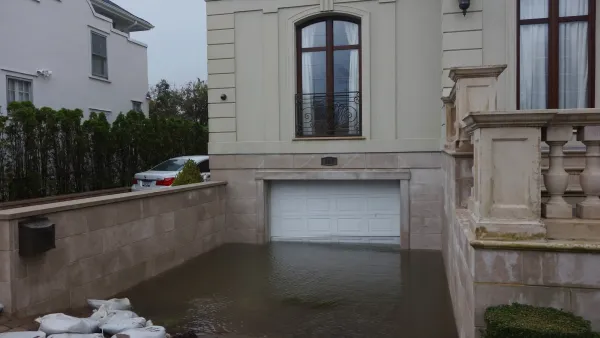
Over 500 NYC ‘Blue Zones’ at Risk of More Destructive Floods
High-risk flood zones cover roughly 20% of the city’s land.
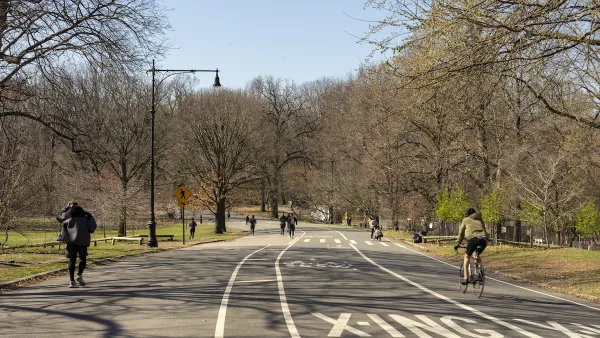
New Yorkers Face New Climate Risks
A two-acre fire in a city park prompted city officials to ban grilling while urging residents to conserve water to limit the impact of a historic drought.
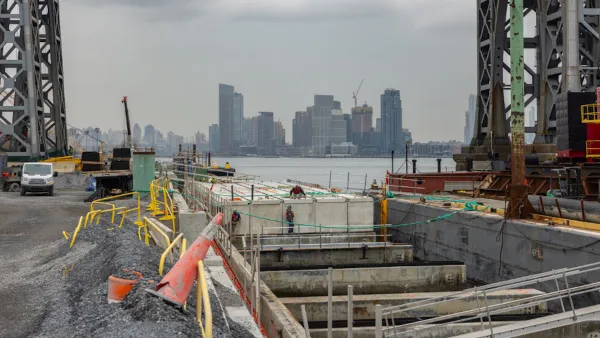
New York Flood Control Plan Takes Lessons From the Dutch
The Netherlands has a long history of flood mitigation. U.S. cities, threatened by coastal flooding and erosion, are taking note.

Planetizen Federal Action Tracker
A weekly monitor of how Trump’s orders and actions are impacting planners and planning in America.

Washington state to charge fee to drivers with fuel-efficient cars
Revenue from the fee will go towards supporting the state’s highways.

Trump to blast ‘hydrocarbon highway’ through ‘world’s longest art gallery’
Environmental and historic preservation groups are suing to stop the project.

A data center developer is going back on its promises to nearby residents
Data center developer HostDime originally promised free at-home Wi-Fi to residents of Eatonville, Florida.

Trump administration takes another swing at Solar for All
Since the Environmental Protection Agency announced its intent to end Solar for All in August 2025, two federal judges have ruled in favor of protecting it.

The MTA wants to entice international bus manufacturers to set up shop in America
The MTA hopes to create more competition for better bus options while still "buying American."

FREE Course: Walkable City 1: Why Walkability?
After describing his path towards focusing on walkability as the essence of good planning, Jeff Speck marches through his five principal reasons for making more walkable places.
Reinventing Malls: Planning Alchemy—Turning Gray Fields Into Gold
The course focuses on the opportunities and imperatives that shape reinvention of mall sites.

City of Charlotte
City of Rosemead
Rutgers University, Edward J. Bloustein School of Planning and Public Policy
University of Michigan School for Environment and Sustainability (SEAS)
Hunter College, City University of New York (CUNY)
The Architects Foundation
University District Partnership