The New York Times takes a look at plans to redesign Governors Island, control of which was recently take over by the City of New York.


Critic Nicolai Ouroussoff reviews the plans and argues that the redesign will bring the island exactly what it needs -- an identity.
The City of New York "will push ahead with a plan that includes a 2.2-mile-long waterfront promenade and a 40-acre park, offers reassuring evidence that even in difficult times it is possible to get the tricky balance between public good and private interests right - or at least right enough.
The plan, by Adriaan Geuze of the Dutch landscape architecture firm West 8, calls for a park that, if realized, will eventually include a cluster of steep, artificially created hills that form a focal point at the park's center, visually tying it back to the city. Its wildly original array of parkscapes - including a 'hammock grove,' a grottolike shelter, playing fields and marshlands - will give the island the kind of strong identity it currently lacks."
Read the full story: Governors Island Vision Adds Hills and Hammocks

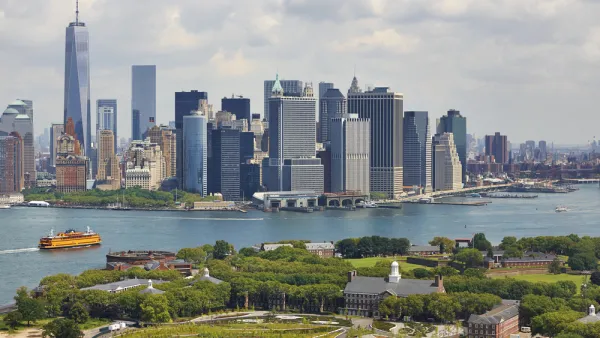
Proposal for the Future of New York's Governors Island
The island's 40-acre park is a recreational destination, but waterfront advocates would like to see more use of Governor Island's shoreline and maritime infrastructure.
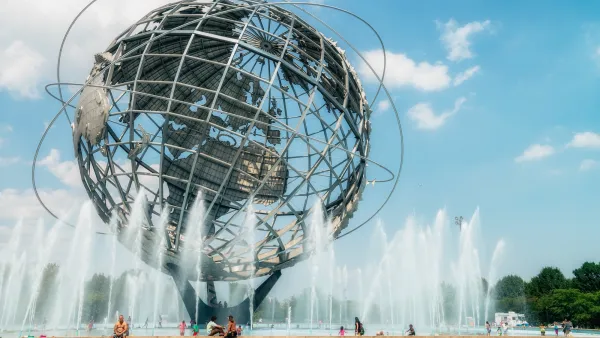
Historic Queens park is getting a $120M upgrade
The borough's largest park will undergo significant upgrades for accessibility, flood mitigation and historic preservation.

Manhattan Waterfront Parking Lot to Become Public Park
A lot that has served as parking for decades will add a much-needed public amenity to the East River waterfront.

Planetizen Federal Action Tracker
A weekly monitor of how Trump’s orders and actions are impacting planners and planning in America.

California plans to bury El Niño’s downpour
If the state plays its cards right, it may be able to store a billion acre-feet of El Niño’s water in aquifers.

Desperate measures: Advocates weigh draining Lake Powell to fill Colorado River
Draining the reservoir could reduce evaporation losses by a couple hundred thousand acre-feet.

After public outcry, Massachusetts city releases housing development tracker
Cambridge’s tracker currently shows 250 housing projects in various stages of development.

40 years after approval, Chicago breaks ground on new park
The park honors Jean Baptiste Point du Sable, the city’s first permanent non-native settler.

‘Hoodwinked:’ New Mexico bill aimed at microgrids paves way for data center development
In an interview with High Country News, Padilla said the legislation “ignited” New Mexico's economy.

FREE Course: Walkable City 1: Why Walkability?
After describing his path towards focusing on walkability as the essence of good planning, Jeff Speck marches through his five principal reasons for making more walkable places.
Reinventing Malls: Planning Alchemy—Turning Gray Fields Into Gold
The course focuses on the opportunities and imperatives that shape reinvention of mall sites.

City of Rosemead
Rutgers University, Edward J. Bloustein School of Planning and Public Policy
One Hundred Miles
Hunter College, City University of New York (CUNY)
The Architects Foundation
University of Cincinnati Online
City of Cambridge
Montrose County
The Pocatello Development Authority