The environmental and infrastructural conditions that brought about the flooding of New Orleans during Hurricane Katrina in 2005 remain today, and have the potential to cause similar devastation, according to this piece.


"[A]s geographer Richard Campanella makes plain in his new book, Delta Urbanism: New Orleans, the immediate catastrophe - the one that could not be ignored, that attracted international attention and inspired relief efforts and planning proposals and federal promises - has given way to the slow-building potential for future catastrophe - one that seems all too easy to ignore. For the underlying conditions that caused the devastation remain much the same. Not only are the flood-protection systems that have been constructed to protect the low-lying city pathetically inadequate - "under-engineered, cavalierly inspected and poorly maintained," in Campanella's words; still more, a century of intensive environmental manipulation has neutralized or destroyed the natural systems - the coastal wetlands, barrier islands, etc. - that would buffer the effects of seasonal storms and cyclical flooding."
Campanella documents the days leading up to the flooding and how human interference with the area's delta environment enabled the destruction.
Read the full story: Delta Urbanism and New Orleans: Before

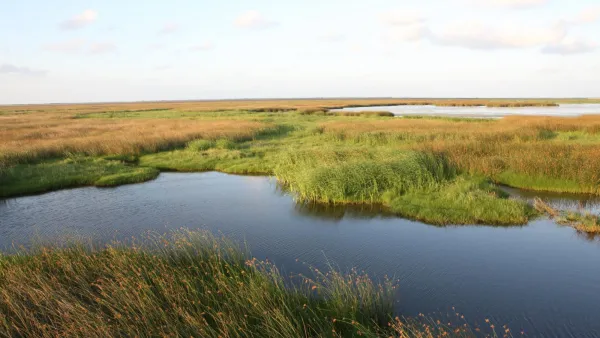
New Orleans Convent to Become Large Urban Wetland
Hurricane Katrina damaged a Catholic convent in New Orleans. Then the nuns spearheaded a project to transform the land into a wetland area that will protect the city from flooding in the future.
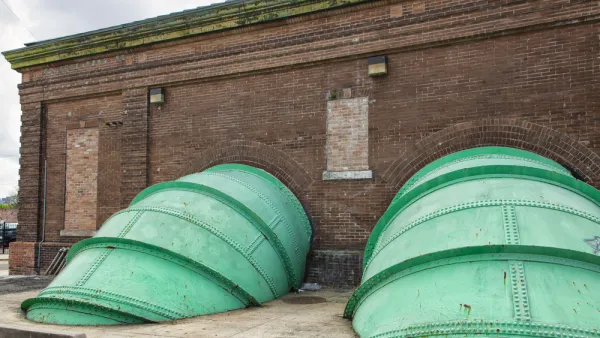
Hurricane Nate to Test New Orlean's Drainage System
Nate will make landfall southeast of New Orleans on Saturday night as possibly a category 2 hurricane after leaving at least 22 dead in Central America. It's not so much the levees but the pumps and generators that have city officials worried.
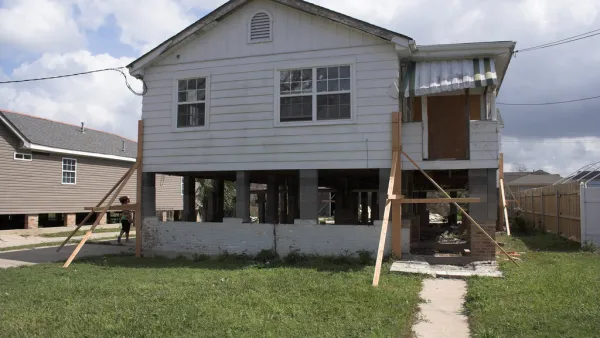
Louisiana Dials Back Requirements for Elevating Homes in Flood Areas
Housing market pressures, flood insurance costs, changing FEMA maps, and improved methods of flood control are giving victims of flood damage in Louisiana mixed signals on how high they should rebuild their homes.

Planetizen Federal Action Tracker
A weekly monitor of how Trump’s orders and actions are impacting planners and planning in America.

Chicago breaks ground on $3 billion megadevelopment
The new neighborhood, titled Foundry Park, will one day host 3,700 residences.

This MA town is drowning in its own sewage — and residents like it that way
Susan Murcott, a waste water expert, said if Carlisle didn't address their leaking sewage, the problem could turn “deadly.”

Iowa taxpayers are paying thousands to clean manure out of their water
While the Clean Water Act makes states responsible for regulating factory farms that discharge pollutants, Iowa has turned a blind eye to the polluting farms.

Amtrak cuts ribbon on Seattle Airo maintenance facility
The $250 million, nearly 100,000-square-foot building can house an entire Cascades Airo trainset.

To power data centers, Google seeks autonomous control of thousands of homes’ electricity
The tech company has signed a deal to indirectly pay Mid-Atlantic residents to reduce their power demand when the grid is strained.

FREE Course: Walkable City 1: Why Walkability?
After describing his path towards focusing on walkability as the essence of good planning, Jeff Speck marches through his five principal reasons for making more walkable places.
Reinventing Malls: Planning Alchemy—Turning Gray Fields Into Gold
The course focuses on the opportunities and imperatives that shape reinvention of mall sites.

City of Rosemead
Rutgers University, Edward J. Bloustein School of Planning and Public Policy
One Hundred Miles
The Architects Foundation
University of Cincinnati Online
Montrose County
The Pocatello Development Authority
The Urban Renewal Agency of the City of Pocatello