Philip Langdon compares the New Urban response to New Orleans and Haiti.


For the second time in five years, new urbanist methods and new urbanist imagination are being used to rebuild places crushed by natural disasters. In late January, Andres Duany went to Haiti to help generate housing after the staggering Jan. 12 earthquake.
Duany was primed for the Haiti mission by the experiences of 2005, when a large contingent of new urbanists began helping Mississippi and Louisiana to plan the rebuilding after Hurricane Katrina. The winds and flooding associated with Katrina inflicted $100 billion in property damage and caused 1,836 deaths. In Haiti, vast numbers of buildings and public works were destroyed by the earthquake, and 217,000 to 230,000 lives are said to have been lost.
There are certainly important differences between Haiti's circumstances and those of the Gulf Coast, yet the two post-disaster efforts have a good deal in common. Taken together, they reveal some of New Urbanism's strengths.
Thanks to Renee Brutvan
FULL STORY: After the disaster

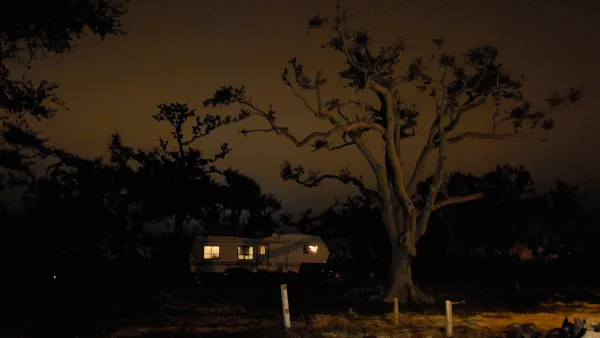
The Katrina Cottage Legacy
The New Urbanist Katrina Cottages initiative for the Gulf Coast appeared to be a failure but their legacy lives on in the SmartDwellings and in the Tiny House movement.
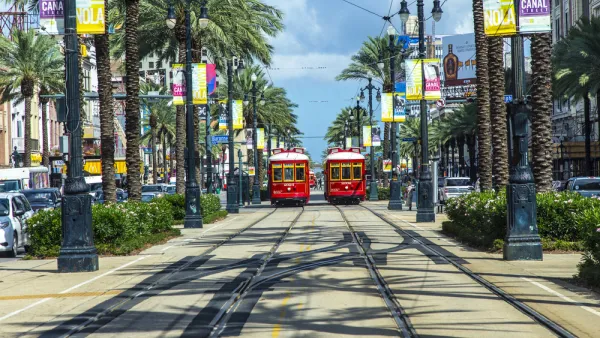
Two Narratives Collide in Post-Katrina New Orleans
“A narrative of rebirth, reform and success that coexists with a narrative of stasis, failure and unrealized dreams.”
Haitians Lay Foundation for Hope 5 Years After Earthquake
Despite what some see as slow progress five years after an earthquake rocked Haiti, architect and sustainability consultant Dave Hampton writes about how he and others see hope for the future.

Planetizen Federal Action Tracker
A weekly monitor of how Trump’s orders and actions are impacting planners and planning in America.

The state-sanctioned urbicide of Austin
People don’t kill cities. Freeways do.

US to reduce Colorado River water deliveries to Mexico
A new Colorado Treaty amendment reduces Mexico’s Colorado River water allocation by 250,000 acre feet.

5 New England states march closer to 800 megawatt wind energy project
Securing federal approval for the project may be complicated under the Trump administration, which has historically been hostile towards domestic wind power.

Baltimore to break ground on $50 million Transit Priority Project
The project will bring faster bus trips, safer streets and better bike connections to Baltimore.

Airbnb launches $250 million 'last-dollar financing' housing accelerator, makes first investment in Austin
The company will put $6.4 million towards affordable housing development in Texas’ capital.

FREE Course: Walkable City 1: Why Walkability?
After describing his path towards focusing on walkability as the essence of good planning, Jeff Speck marches through his five principal reasons for making more walkable places.
Reinventing Malls: Planning Alchemy—Turning Gray Fields Into Gold
The course focuses on the opportunities and imperatives that shape reinvention of mall sites.

Eagle County Government
Harvard University Graduate School of Design
Nashville Planning Department
The Architects Foundation
University of Cincinnati Online
The Pocatello Development Authority
The Urban Renewal Agency of the City of Pocatello
Journal of the American Planning Association