Grist writer Lisa Selin Davis argues that now is the time to make public transit a priority in serving outer suburbs, because the rebounding economy will inevitably lead to increased demand.


Grist's land use writer Lisa Selin Davis laments that while exurbs have seen their attractiveness wane due to the recession, mortgage crisis and higher gas prices, their popularity will inevitably return as the economy rebounds, just as vehicle-miles-traveled increased last September compared to a year earlier.
"Sadly, the best thing for reducing traffic congestion, in the absence of a comprehensive public transit system, is a sour economy.
Increased driving is partly the result of an as-yet unfulfilled promise to put public transit back on the front burner; many of those outer suburbs would be more feasible digs if trains or buses or rapid transit reached them. But it's also a sign that the economy is slowly on the mend.
Here's the question: if the existing, largely empty suburban greenfield developments (products of wayward policies though they may be) will inevitably fill back up as the economy eases, wouldn't it be better for mass transit to trundle their denizens back and forth to work?"
Read the full story: Car Culture: Nothing will drive the suburbs away

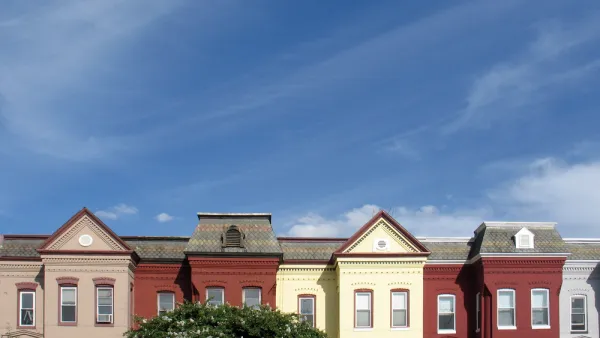
Report: D.C. Housing Too Decentralized
Over the last three decades, the D.C. region has seen the most development in far-flung exurbs disconnected from area jobs and transit networks.
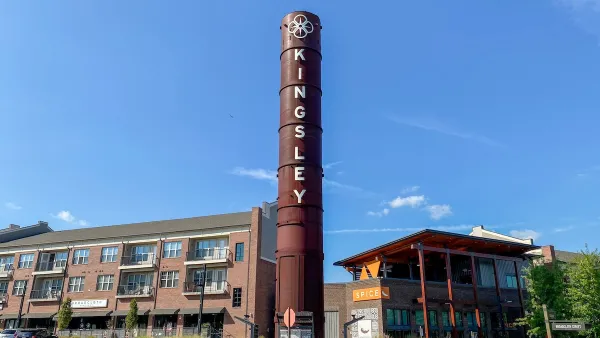
Rethinking Suburban Development: New Trends in Creating Livable Communities
Discover new trends in suburban development focused on creating more livable, sustainable communities for future growth.

Midburbs: A New Definition of Suburbs
When the name “suburb” just doesn't quite fit.

Amtrak, CN end decades-long dispute with eight-year agreement
The new operating agreement establishes an updated framework for the companies to work together, including processes to resolve disputes.

Judges permit Denver to divert 77,000 acre feet from the Colorado River for reservoir expansion
Overuse and climate change have caused the Colorado River’s water levels to plummet.
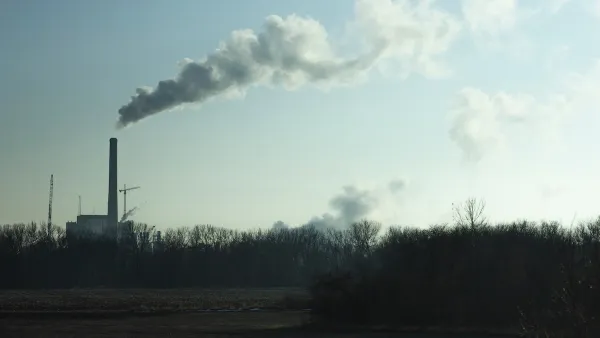
Nation's most wind-powered state turns to coal as data centers increase energy demand
For the first time in decades, Iowa has increased its generation of coal power.

Boston has spent millions making the Green Line more accessible — and there’s no end in sight
While the city has invested millions into expanding and adding platforms to the Green Line to make it more accessible, new train cars set to arrive next year will be too tall for disabled passengers to board without raising the current platforms.

Idaho may see an 18% drop in federal surface transit funding — the largest estimated cut in the US
Transit systems in rural communities are much more reliant on federal funding to provide their services.

How ‘post-disaster gentrification’ alters neighborhoods after natural calamities
After hurricanes, fires or other calamities, the original residents of a community are often replaced by younger, wealthier residents.

FREE Course: Walkable City 1: Why Walkability?
After describing his path towards focusing on walkability as the essence of good planning, Jeff Speck marches through his five principal reasons for making more walkable places.
Reinventing Malls: Planning Alchemy—Turning Gray Fields Into Gold
The course focuses on the opportunities and imperatives that shape reinvention of mall sites.

City of Wisconsin Rapids
Harvard University Graduate School of Design
KFH Group Inc.
The Architects Foundation
University of Cincinnati Online
The Pocatello Development Authority
The Urban Renewal Agency of the City of Pocatello