Dallas is putting its hopes on architecture and art to spur the city's cultural development.


"Dallas has long been seen as a city (and metro area) rich with money but poor on quality of life. Downtown is full of colossal office buildings, huge parking garages and one-way streets that whisk office workers in and back out to the suburbs as efficiently as possible. But Dallas has always strived to be a world-class destination, and its leaders have looked to great architecture and art to make that a reality since 1890, when the city spent $300,000, then an outrageous sum, on a courthouse in the middle of downtown. It showed that Dallas was leaving its Wild West reputation behind.
Nowadays Big D has a collection of modern buildings by famous architects to rival that of any metropolis. Even so, this has been a monumental year for Dallas architecture."
This piece looks at the city's new performing arts complex, and the new football stadium in nearby Arlington as signs of Dallas' increasing attention to architecture.
Thanks to ArchNewsNow
Read the full story: Big D’s Culture Game
The Emerging Arts Center of Texas
Fast Company's annual list of innovative cities highlights Dallas as an emerging hub of culture.
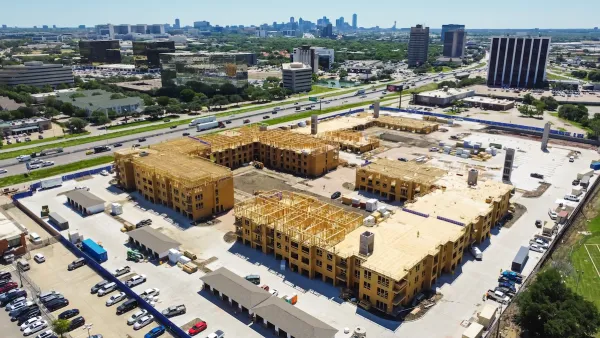
Dallas releases zoning code overhaul to officials
The drafted overhaul is over 400 pages long.
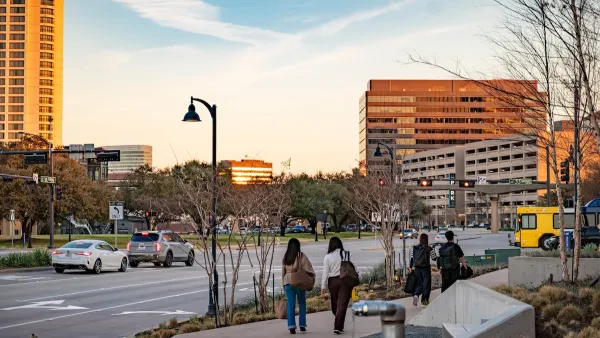
Dallas moves to overhaul its zoning code
The city's zoning reform will allow more multi-family and mixed-use developments.

Planetizen Federal Action Tracker
A weekly monitor of how Trump’s orders and actions are impacting planners and planning in America.

Eastern Nebraska is running out of electricity
Data centers and electrification are straining eastern Nebraska’s grid, throttling economic development.

Study reveals best places in the U.S. for cycling, walking
New research from Streetlight Data examines bicycle and pedestrian miles per capita in the 100 largest U.S. cities by population.

Federal government nominates new FTA administrator
Mark Aesch is currently the founder and CEO of a transportation management consulting firm.

Developers reveal $10 billion stadium plan as ‘Hail Mary’ to keep Bears in Chicago
The plan would also boast a public park, high- and mid-rise buildings and a youth sports complex.

As Texas embraces carbon storage, a Black community questions the risks
Texas now issues permits for companies to store carbon dioxide underground. East Texas residents fear safety risks, and skeptics doubt the climate benefits.

FREE Course: Walkable City 1: Why Walkability?
After describing his path towards focusing on walkability as the essence of good planning, Jeff Speck marches through his five principal reasons for making more walkable places.
Reinventing Malls: Planning Alchemy—Turning Gray Fields Into Gold
The course focuses on the opportunities and imperatives that shape reinvention of mall sites.

City of Charlotte
City of Rosemead
Rutgers University, Edward J. Bloustein School of Planning and Public Policy
University of Michigan School for Environment and Sustainability (SEAS)
Hunter College, City University of New York (CUNY)
The Architects Foundation
City of Cambridge
The Pocatello Development Authority
The Urban Renewal Agency of the City of Pocatello