The Infrastructurist talks with Pennsylvania Governor Ed Rendell -- "a friend of infrastructure" -- about the proposed National Infrastructure Bank.


"I: So how would the NIB be structured? Who would be charged with oversight?
R: We think it can't be part of the Department of Transportation [as was originally suggested by a June bill introduced by the House transportation committee chairman, calling for creation of the NIB as part of the DOT, governed and monitored by an office in the Federal Highway Administration] because it has to include waste water, levies, school construction, and more. So if it is placed in any government agency, it would be better placed in the treasury, though it could also be a standalone organization with general oversight by Congress and the administration, or by an independent board - and we would approve either of those oversight models. It's gotta be more than just transportation."
Read the full story: How Would a National Infrastructure Bank Work? An Interview with PA Gov. Ed Rendell

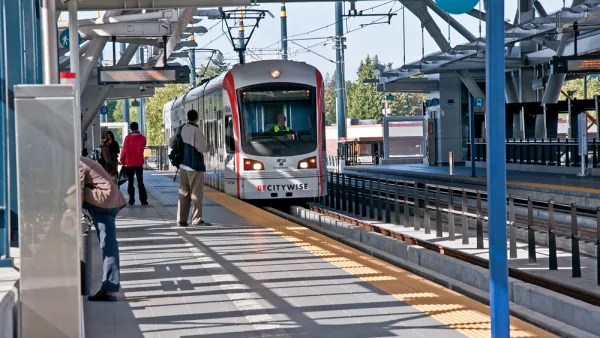
Sound Transit, Feds Agree to Low Interest Rates on $2 Billion in Transportation Funding
If getting low interest rates from the federal government on money borrowed to finance transportation projects sounds like a national infrastructure bank, you're on the right track.
Dissecting the National Infrastructure Bank Idea
Hillary Clinton recently proposed the creation of a national infrastructure bank—an idea also put forward several times by the Obama Administration. Posts by Vox and City Observatory put the idea under a microscope.
How to Turn $10 billion into $300 Billion: Create an Infrastructure Bank
It's certainly not a new idea - what's new is the current bipartisan Senate bill, cutely abbreviated as the BRIDGE Act, seeded with $10 billion of federal funds that would attract funds from the private sector to be loaned to worthy projects.

Planetizen Federal Action Tracker
A weekly monitor of how Trump’s orders and actions are impacting planners and planning in America.

Amtrak, CN end decades-long dispute with eight-year agreement
The new operating agreement establishes an updated framework for the companies to work together, including processes to resolve disputes.

Northwest rail fans eager for Sept. 30 debut of Amtrak’s Airo fleet
Get ready for that new train smell and more seats. But they won’t go faster or run more frequently on the Cascades route in Washington and Oregon.

LAX SkyLink opening delayed again, contractor won’t commit to new deadline
The project was supposed to open its doors to the public in 2023.

Caltrain may slash over one-third of its stations
If Bay Area voters reject two transit tax measures, Caltrain, BART and AC Transit will see steep service cuts.

A 'dangerous' precedent: North Carolina successfully pressures communities into voting for toll roads
Two mayors resigned from the Charlotte Regional Transportation Planning Organization after it voted in favor of the toll roads.

FREE Course: Walkable City 1: Why Walkability?
After describing his path towards focusing on walkability as the essence of good planning, Jeff Speck marches through his five principal reasons for making more walkable places.
Reinventing Malls: Planning Alchemy—Turning Gray Fields Into Gold
The course focuses on the opportunities and imperatives that shape reinvention of mall sites.

City of Thousand Oaks
City of Wisconsin Rapids
Harvard University Graduate School of Design
The Architects Foundation
University of Cincinnati Online
The Pocatello Development Authority
The Urban Renewal Agency of the City of Pocatello