A significant portion of greater Cleveland's economy is driven by its immigrant population, according to a new report.


"Immigrants are responsible for about 7 percent of the Greater Cleveland economy, though they make up only 6 percent of the labor force, creating one of the few metro areas in America where immigrants contribute more to the economy than native-born workers. The region's immigrants are more likely than native-born residents to be working, are far more likely to start businesses and on average earn higher salaries.
Those details come from "Immigrants and the Economy: Contributions of Immigrant Workers to the Country's 25 Largest Metropolitan Areas," which is being released today by the Fiscal Policy Institute of New York through Policy Matters Ohio."
Of the nation's 25 biggest Metropolitan areas, only Cleveland and Cincinnati showed a significant economic impact from immigrant populations.
Read the full story: Cleveland attracts the world's best, just not enough of them


The Crucial Role of Suburban Voters in the Midterms
Suburban voters were instrumental in preventing a 'red wave' on Election Day and on December 6 in the Georgia U.S. Senate runoff election, enabling the Democrats to win a 51st Senate seat.
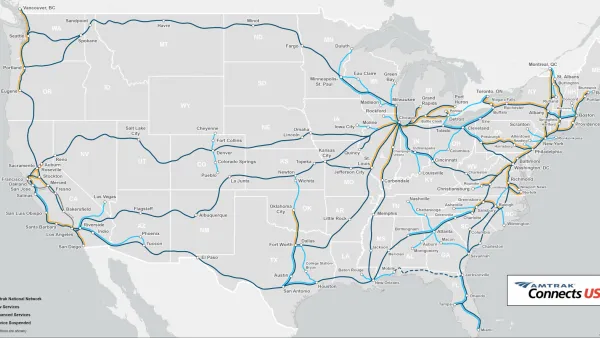
Political Support for Amtrak’s All Aboard Ohio Plans Follows Federal Infrastructure Funding
Gov. Mike DeWine’s sudden interest in working with Amtrak might have something to do with $66 billion in Infrastructure Investment and Jobs Act funding recently announced by the Federal Railroad Administration.
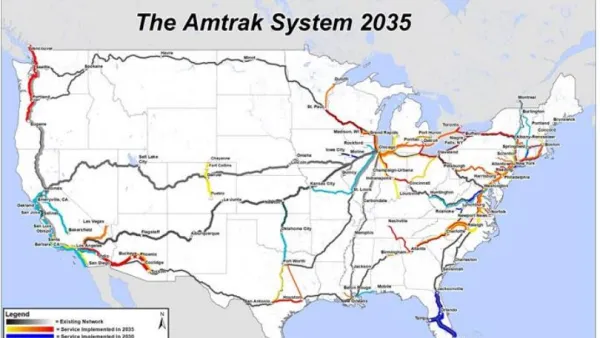
Amtrak Proposes Five New Routes in Ohio
The nation’s most populous state without an intercity passenger rail program could be the benefit of ambitions to expand the network of Amtrak service around the country.

Planetizen Federal Action Tracker
A weekly monitor of how Trump’s orders and actions are impacting planners and planning in America.

California plans to bury El Niño’s downpour
If the state plays its cards right, it may be able to store a billion acre-feet of El Niño’s water in aquifers.

Desperate measures: Advocates weigh draining Lake Powell to fill Colorado River
Draining the reservoir could reduce evaporation losses by a couple hundred thousand acre-feet.

Metra may invest $9.1 billion in regional rail
The agency released a draft of a study examining potential ways to offer more frequent train service.

California city breaks ground on transit connector
The project includes three mobility hubs and a pedestrian bridge.

After public outcry, Massachusetts city releases housing development tracker
Cambridge’s tracker currently shows 250 housing projects in various stages of development.

FREE Course: Walkable City 1: Why Walkability?
After describing his path towards focusing on walkability as the essence of good planning, Jeff Speck marches through his five principal reasons for making more walkable places.
Reinventing Malls: Planning Alchemy—Turning Gray Fields Into Gold
The course focuses on the opportunities and imperatives that shape reinvention of mall sites.

City of Rosemead
Rutgers University, Edward J. Bloustein School of Planning and Public Policy
One Hundred Miles
Hunter College, City University of New York (CUNY)
The Architects Foundation
University of Cincinnati Online
City of Cambridge
Montrose County
The Pocatello Development Authority