When then-Pres. Bush signed a transportation bill in 1991, he said it 'could be summed up in three words; jobs, jobs, jobs. Bruce Katz and Robert Puentes of Brookings say that infrastructure spending is much more than that.


Katz and Puentes write, "[T]he pressure for jobs in the near term is intense. At minimum we should focus any additional investments on repairing the nation's existing crumbling infrastructure, helping transit agencies avoid drastic cutbacks in their workforce and their service, and holding the states and metropolitan entities responsible for their performance.
But to truly produce real prosperity, federal leadership, as with the interstates in the 1950s, is more necessary than ever and should advance an updated vision identifying strategic, transformative infrastructure investments of critical importance to national economic competitiveness. That vision should include robust plans for freight movement, the electric grid, and water infrastructure across state borders and between metropolitan areas."
Read the full story: Rethinking the way on infrastructure
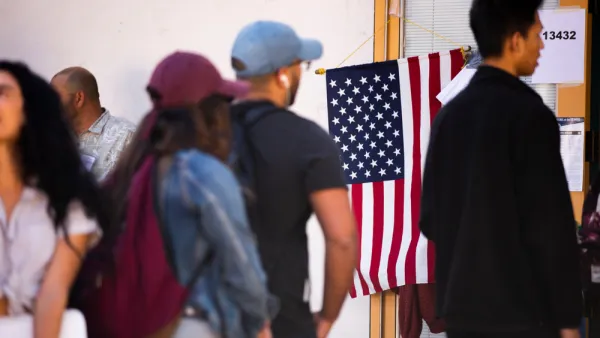
Brookings: A Demographic Post-Mortem of the Midterms
Young adults, according to a deep dive analysis by Brookings Metro demographer William Frey, were a key demographic group responsible for stopping the red wave that most polling predicted as the likely outcome of last month's midterm elections.
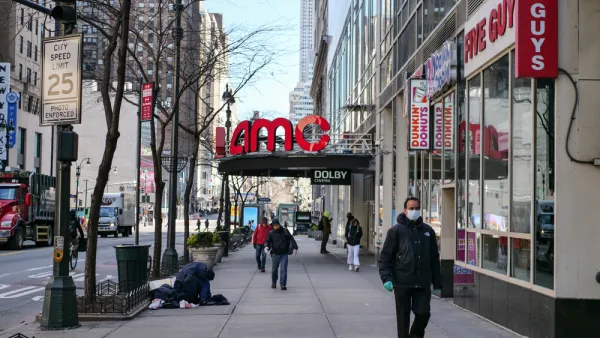
'The Great Real Estate Reset'
Business as usual in the real estate industry is failing the economy and the political and social cohesion of the United States, according to a new initiative launched by the Brookings Institution.
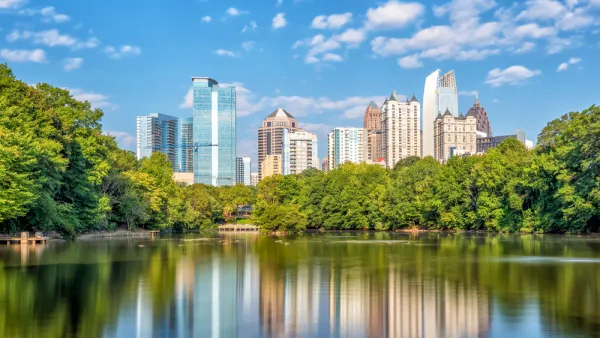
The Blue Beltway
Ronald Brownstein, a senior editor at The Atlantic, coins a new political-geographic term in the wake of the Georgia U.S. Senate runoff elections to describe a shift in the political alignment of nearly all large metropolitan areas in the nation.

Planetizen Federal Action Tracker
A weekly monitor of how Trump’s orders and actions are impacting planners and planning in America.

California plans to bury El Niño’s downpour
If the state plays its cards right, it may be able to store a billion acre-feet of El Niño’s water in aquifers.

Desperate measures: Advocates weigh draining Lake Powell to fill Colorado River
Draining the reservoir could reduce evaporation losses by a couple hundred thousand acre-feet.

Chicago voters approve permanent festival grounds, penalty for vacant property owners
Currently, major summer and fall festivals take over public parks for weeks at a time, drawing criticism from nearby residents

NYC votes to cut outdoor dining red tape, speed up permitting
New York City also voted to allow the Department of Transportation to begin work on urgent projects before notifying elected officials.

California appears to reject Prop. 45
The proposition would have expanded the projects that qualify for a streamlined environmental review, effectively paring down the California Environmental Quality Act.

FREE Course: Walkable City 1: Why Walkability?
After describing his path towards focusing on walkability as the essence of good planning, Jeff Speck marches through his five principal reasons for making more walkable places.
Reinventing Malls: Planning Alchemy—Turning Gray Fields Into Gold
The course focuses on the opportunities and imperatives that shape reinvention of mall sites.

City of Rosemead
Rutgers University, Edward J. Bloustein School of Planning and Public Policy
One Hundred Miles
Hunter College, City University of New York (CUNY)
The Architects Foundation
University of Cincinnati Online
City of Cambridge
Montrose County
The Pocatello Development Authority