As part of GOOD's Top 100 Ideas of 2009, author Jacob Gordon celebrates the fact that other standards of efficiency are gaining traction abroad and in the US.


"But LEED's big weakness is that all of its measurements happen on the computer screen before the first bulldozer arrives. According to the USGBC's best calculations, LEED buildings use 25 to 30 percent less energy-while more critical calculations show them as no more efficient, or in some cases worse, than their non-LEED counterparts.
Because LEED buildings don't have to perform up to spec in real life, LEED has contributed to a trend of showboating and point scrounging, leaving energy efficiency-arguably the most important metric-lost in the shuffle."
Read the full story: The GOOD 100: Ending LEED's Monopoly
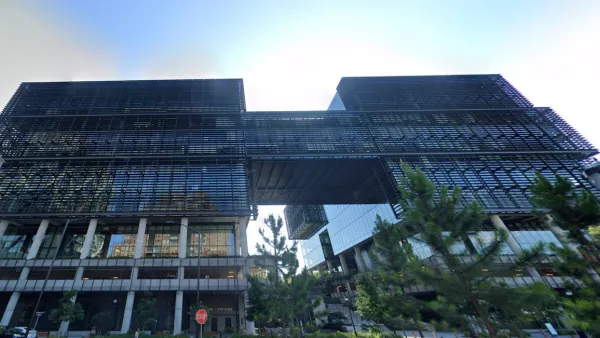
Fourth Ward Project Aims for Sustainability on Atlanta's Beltline
A new megaproject hopes to bring new life to a former industrial site.

15 Cities Receive Grant Support LEED for Cities and Communities Program
The LEED for Cities and Communities grant program will support the first 15 cities to seek certification under LEED v4.1

The Search for a New Green Building Standard
The need to slash emissions from buildings is increasingly urgent, and critics say LEED won't get us there.

Planetizen Federal Action Tracker
A weekly monitor of how Trump’s orders and actions are impacting planners and planning in America.

Eastern Nebraska is running out of electricity
Data centers and electrification are straining eastern Nebraska’s grid, throttling economic development.

Move over, LA: St. Louis gears up for Olympics, invests millions in downtown redevelopment
The Missouri city will host the 2028 Olympic soccer group stage and knockout matches.

Dallas releases zoning code overhaul to officials
The drafted overhaul is over 400 pages long.

NYC renovations for dangerous, ‘mercilessly crammed’ street delayed until 2027
Construction was supposed to begin this fall.

San Diego’s Midway Rising project gets greenlight from city council
The project looks to become the largest affordable housing development in California's history.

FREE Course: Walkable City 1: Why Walkability?
After describing his path towards focusing on walkability as the essence of good planning, Jeff Speck marches through his five principal reasons for making more walkable places.
Reinventing Malls: Planning Alchemy—Turning Gray Fields Into Gold
The course focuses on the opportunities and imperatives that shape reinvention of mall sites.

City of Rosemead
Rutgers University, Edward J. Bloustein School of Planning and Public Policy
One Hundred Miles
University of Michigan School for Environment and Sustainability (SEAS)
Hunter College, City University of New York (CUNY)
The Architects Foundation
City of Cambridge
The Pocatello Development Authority
The Urban Renewal Agency of the City of Pocatello