James Howard Kunstler criticizes a recent New Yorker article that failed to consider the American pattern of suburban development as the cause of the banking crisis.


"It was the worthlessness of the tradable securitized debt associated with all those overpriced (and overvalued) chipboard and vinyl houses, smeared recklessly over the American landscape, that started all the trouble in the first place. And it is our inability to come to grips with that underlying catastrophe that prolongs the resolution of the still-florid banking crisis -- since the federal government is doing everything possible to prop up the failed capital equation of terminal suburbia, and to deny the obsolescence of that version of the American Dream and all the mechanisms for delivering it."
Read the full story: Original Sin

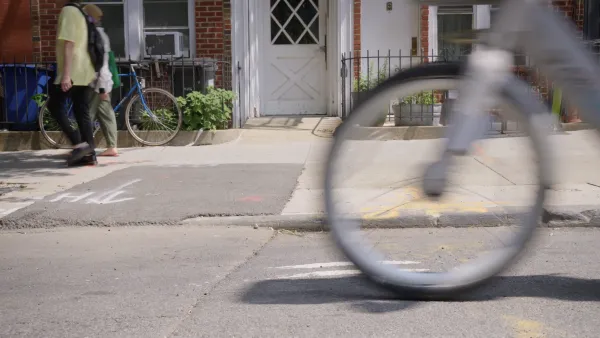
Art project makes NYC Citi Bikes physically harder to pedal in rent-burdened neighborhoods
Ground Truth, created by Brooklyn artist Justin Blinder, slows bikes down to make cyclists feel the burden of high rent.
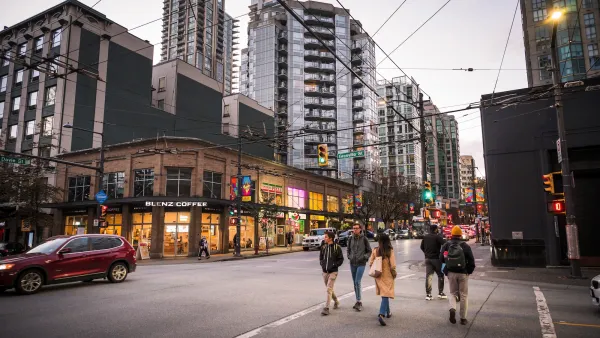
To upzone or not to upzone? Two views on the housing crisis
Allowing more density can increase the housing supply, but does the attendant rise in land prices cancel out the benefits?
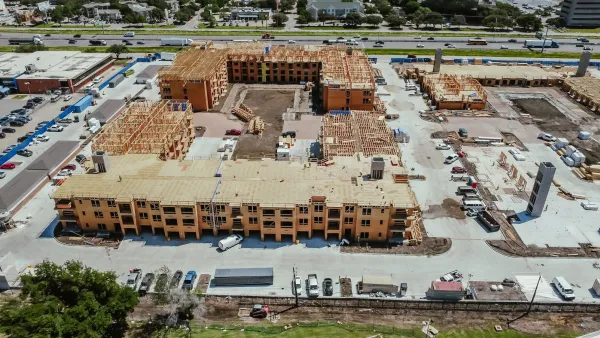
Controversial Texas housing law has 'directly facilitated' over 1,250 new homes
SB 840 allows developers to build multifamily housing by-right on lots zoned for commercial use without applying to a zoning change.

Planetizen Federal Action Tracker
A weekly monitor of how Trump’s orders and actions are impacting planners and planning in America.

Amtrak, CN end decades-long dispute with eight-year agreement
The new operating agreement establishes an updated framework for the companies to work together, including processes to resolve disputes.

Northwest rail fans eager for Sept. 30 debut of Amtrak’s Airo fleet
Get ready for that new train smell and more seats. But they won’t go faster or run more frequently on the Cascades route in Washington and Oregon.

Trump administration unlawfully slashed $7 billion in clean energy grants, judge rules
The Environmental Protection Agency ended the Solar For All program, which provided the grants, after President Donald Trump’s inauguration.

Record-breaking wildlife overpass in Colorado brings 91% reduction in animal collisions
Prior to the overpass, vehicles were hitting one deer per day on Colorado’s Interstate 25.

California lawmakers approve just 5% of much-needed LA28 transportation funding
State legislators appear just as unwilling as Trump to pay for Olympics-related transportation projects.

FREE Course: Walkable City 1: Why Walkability?
After describing his path towards focusing on walkability as the essence of good planning, Jeff Speck marches through his five principal reasons for making more walkable places.
Reinventing Malls: Planning Alchemy—Turning Gray Fields Into Gold
The course focuses on the opportunities and imperatives that shape reinvention of mall sites.

City of Thousand Oaks
City of Wisconsin Rapids
Harvard University Graduate School of Design
The Architects Foundation
University of Cincinnati Online
The Pocatello Development Authority
The Urban Renewal Agency of the City of Pocatello