Water saver or environmental hazard? Questions are compounding about artificial turf as more homeowners ditch their grass for fake lawns. Contradicting city policies muddy the issue in the arid Southwest.


Planetizen Assistant Editor Nate Berg reports on how some cities are responding to increased demand for artificial turf -- both as a water-saving device and an easier way to keep up green appearances.
"As Garden Grove is allowing it, however, other Southwest municipalities are finding reasons to say no to faux. Glendale, Ariz., had once given rebates to residents for installing artificial turf as a water-saving alternative. The savings turned out to be modest and conversions ended up causing environmental problems. The city stopped giving rebates after the Centers for Disease Control and Prevention released an advisory in June 2008 associating artificial turf with a potential exposure to lead dust, created as the fibers making up some phony grass blades age and wear."
Read the full story: Faux Better or Worse


The Rise of Artificial Turf
Once scratchy and unrealistic, artificial grass has come a long way. Now, it’s quickly becoming a popular lawn replacement as droughts and climate change make traditional lawns harder to maintain.
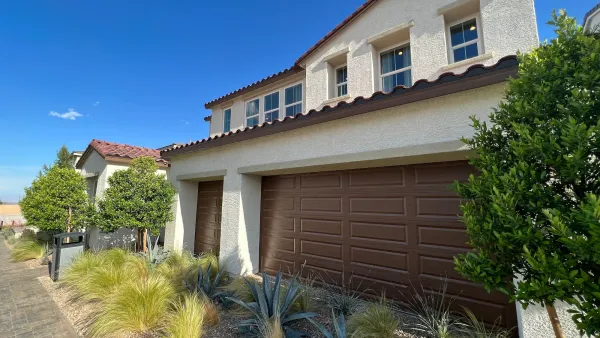
Nevada Law Requiring Removal of ‘Useless’ Grass Has Killed 100,000 Las Vegas Trees, Lawsuit Claims
The lawsuit alleges that the removal of ornamental grass has damaged the city’s tree canopy.

Fossil Fuel-Based Artificial Turf Raises Concerns
Cities and states are rolling back support for artificial turf, which can leach chemicals and microplastics into groundwater.

Planetizen Federal Action Tracker
A weekly monitor of how Trump’s orders and actions are impacting planners and planning in America.

California plans to bury El Niño’s downpour
If the state plays its cards right, it may be able to store a billion acre-feet of El Niño’s water in aquifers.

Chicago breaks ground on $3 billion megadevelopment
The new neighborhood, titled Foundry Park, will one day host 3,700 residences.

California High-Speed Rail Authority CEO resigns after $600,000 scandal
Under Ian Choudri, the authority used taxpayer dollars to fund first class flights and trips to nightclubs.

Want to study the Missouri River? Soon, you may need unanimous approval from 10 states
Legislation would require 10 governors’ permission to study or build projects moving water outside the basin.

Desperate measures: Advocates weigh draining Lake Powell to fill Colorado River
Draining the reservoir could reduce evaporation losses by a couple hundred thousand acre-feet.

FREE Course: Walkable City 1: Why Walkability?
After describing his path towards focusing on walkability as the essence of good planning, Jeff Speck marches through his five principal reasons for making more walkable places.
Reinventing Malls: Planning Alchemy—Turning Gray Fields Into Gold
The course focuses on the opportunities and imperatives that shape reinvention of mall sites.

City of Rosemead
Rutgers University, Edward J. Bloustein School of Planning and Public Policy
One Hundred Miles
Hunter College, City University of New York (CUNY)
The Architects Foundation
University of Cincinnati Online
City of Cambridge
Montrose County
The Pocatello Development Authority