Budget issues are causing major issues for a handful of states. Neal Peirce argues these budget woes are a sign that states are making the wrong investments and that they idea of a state may be out of date.


While many states are investing in roads and transportation infrastructure, rather than education and environmental programs that could help them maintain their competitive edge. The problem may be one of governmental habit.
"For a moment, step back and ask yourself: If we were organizing the United States for the first time, right now, would we repeat our arbitrarily drawn state lines across the continent? And would we stick like glue to our existing political units–roughly 85,000 cities, towns, boroughs, counties and districts, some drawn up in the colonial mist of three centuries past?"
Read the full story: Are States Obsolete?
Cities and States Large Borrowing Causes Concern
As the economic downturn has caused many states and municipalities to borrow large amounts of money, some worry there may be a glut of them going bankrupt.
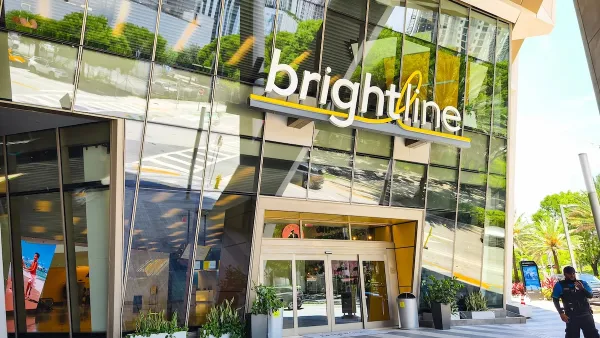
Brightline Florida files for bankruptcy
The transit company is over $5 billion in debt.
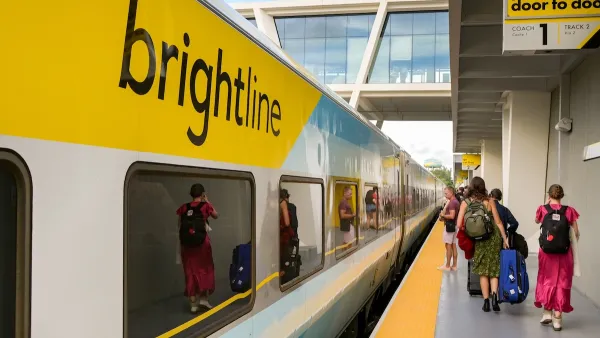
Brightline Florida expected to file for bankruptcy this week
The transit agency is over $5 billion in debt.

Planetizen Federal Action Tracker
A weekly monitor of how Trump’s orders and actions are impacting planners and planning in America.

California plans to bury El Niño’s downpour
If the state plays its cards right, it may be able to store a billion acre-feet of El Niño’s water in aquifers.

Desperate measures: Advocates weigh draining Lake Powell to fill Colorado River
Draining the reservoir could reduce evaporation losses by a couple hundred thousand acre-feet.

Mamdani’s pied-à-terre tax survives legal challenge
A panel of judges found that the plaintiffs failed to demonstrate injury as a result of New York City's implementation of the tax.

Eastern Nebraska is running out of electricity
Data centers and electrification are straining eastern Nebraska’s grid, throttling economic development.

Seattle passes record-breaking transit services expansion
Proposition 1 will double the city’s transit tax to add 95,000 more bus trips and preserve 180,000 bus trips annually.

FREE Course: Walkable City 1: Why Walkability?
After describing his path towards focusing on walkability as the essence of good planning, Jeff Speck marches through his five principal reasons for making more walkable places.
Reinventing Malls: Planning Alchemy—Turning Gray Fields Into Gold
The course focuses on the opportunities and imperatives that shape reinvention of mall sites.

City of Rosemead
Rutgers University, Edward J. Bloustein School of Planning and Public Policy
One Hundred Miles
University of Michigan School for Environment and Sustainability (SEAS)
Hunter College, City University of New York (CUNY)
The Architects Foundation
City of Cambridge
Montrose County
The Pocatello Development Authority