The Metropolitan Area Planning Council will unveil a new plan for growth and preservation in Greater Boston, which calls for a new pattern of development based on "Smart Growth".


"ONE OF the greatest improvements to life in Metro Boston over the past 20 years is the MBTA. Whatever its shortcomings, the T today is a far cry from the one many of us rode as children. It is, for the most part, reliable, clean, and safe. The rebuilt Orange Line runs quickly downtown, and north to Malden. The Red Line has doubled in length, linking Braintree with Cambridge. Commuter rail lines knit the region together, and ferries bring passengers into town from the South Shore.
Today, the Metropolitan Area Planning Council will unveil a new plan for growth and preservation in Greater Boston. The plan, called "MetroFuture," was constructed with input from more than 5,000 residents and regional leaders. It calls for a new pattern of development based on "smart growth" - concentrating new homes and jobs near existing infrastructure, preserving farms and fields, and protecting air, water, and habitat. However, attaining the lofty goals of MetroFuture depends more on one institution than on any other: a healthy, stable, and growing transit system."
Read the full story: Why we need to save the T from ruin

Three Cheers for the Automobile
Former Congressman Ernest Istook discusses why the automobile is the ultimate manifestation of freedom, mobility, and personal choice, and argues for a re-allocation of public spending away from mass transit and other alternatives.
Congestion Costing Reality Check, Part 2: A congestion costing critique
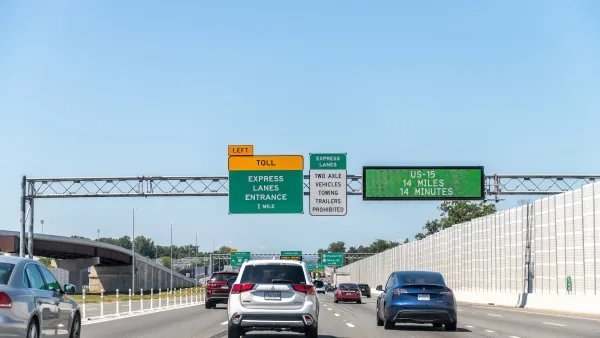
There are good reasons to be skeptical of highway industry claims that traffic congestion is a growing problem. Their analysis is often incomplete and biased. Let’s pull back the curtain on some major congestion cost studies.

Trump Administration Proposes to Divert Billions from Mass Transit to Highways; Advocates Sound Alarm
Two proposals from the Trump DOT would eliminate a federal mass transit fund and make it harder for states to allocate funding to transit projects.

Amtrak, CN end decades-long dispute with eight-year agreement
The new operating agreement establishes an updated framework for the companies to work together, including processes to resolve disputes.

Judges permit Denver to divert 77,000 acre feet from the Colorado River for reservoir expansion
Overuse and climate change have caused the Colorado River’s water levels to plummet.
Nation's most wind-powered state turns to coal as data centers increase energy demand
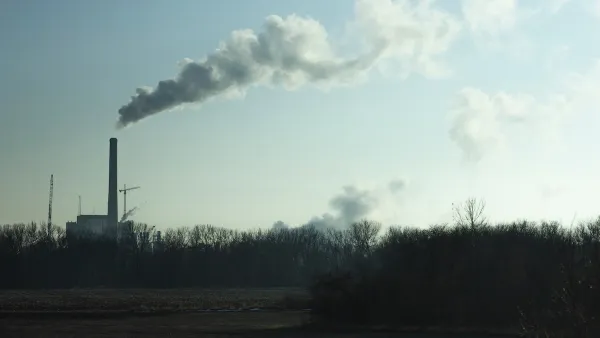
For the first time in decades, Iowa has increased its generation of coal power.

Boston has spent millions making the Green Line more accessible — and there’s no end in sight
While the city has invested millions into expanding and adding platforms to the Green Line to make it more accessible, new train cars set to arrive next year will be too tall for disabled passengers to board without raising the current platforms.

Idaho may see an 18% drop in federal surface transit funding — the largest estimated cut in the US
Transit systems in rural communities are much more reliant on federal funding to provide their services.

How ‘post-disaster gentrification’ alters neighborhoods after natural calamities
After hurricanes, fires or other calamities, the original residents of a community are often replaced by younger, wealthier residents.

FREE Course: Walkable City 1: Why Walkability?
After describing his path towards focusing on walkability as the essence of good planning, Jeff Speck marches through his five principal reasons for making more walkable places.
Reinventing Malls: Planning Alchemy—Turning Gray Fields Into Gold
The course focuses on the opportunities and imperatives that shape reinvention of mall sites.

City of Wisconsin Rapids
Harvard University Graduate School of Design
KFH Group Inc.
The Architects Foundation
University of Cincinnati Online
The Pocatello Development Authority
The Urban Renewal Agency of the City of Pocatello