Former Congressman Ernest Istook discusses why the automobile is the ultimate manifestation of freedom, mobility, and personal choice, and argues for a re-allocation of public spending away from mass transit and other alternatives.


"Let's hear it for automobiles."
"They are the great American freedom machines."
"They offer us enormous opportunities to go where we want, when we want. They are even more energy-efficient than the mass transit systems touted by "smart growth" advocates."
"Autos dramatically expand the geographical area in which people can work, shop, eat, attend school or just enjoy themselves without the extra time needed to match public transit schedules or to walk or bike. With extra range of movement comes a huge range of extra opportunity."
"Yet professional planners have persuaded government to sink billions into trying to push us into mass transit. Since 1970, more than half a trillion dollars have been pumped into mass transit subsidies. The result? More than 95 percent of America's workers still drive to work."
Read the full story: The great American freedom machine

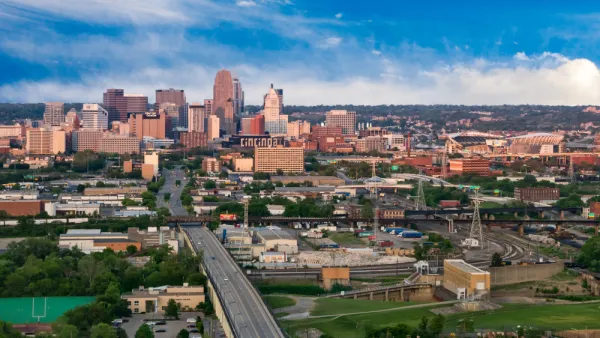
'Economic Mapping' to Help Regional Planning
Identifying potential hubs and activity centers allows regions to foster economic growth and density.
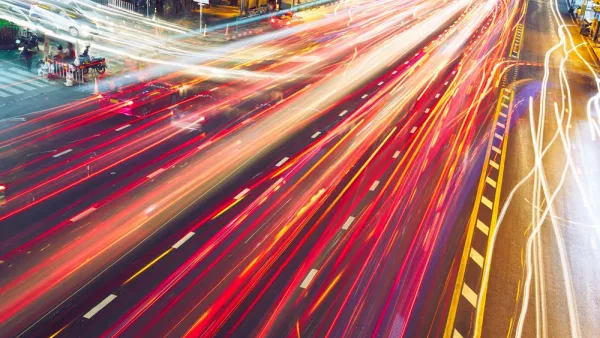
Learning from the National Household Travel Survey
The Federal Highway Administration's National Household Travel Survey (NHTS) shows that transit use is rising and household vehicle miles traveled are declining—but other data sources paint a more ambiguous picture.
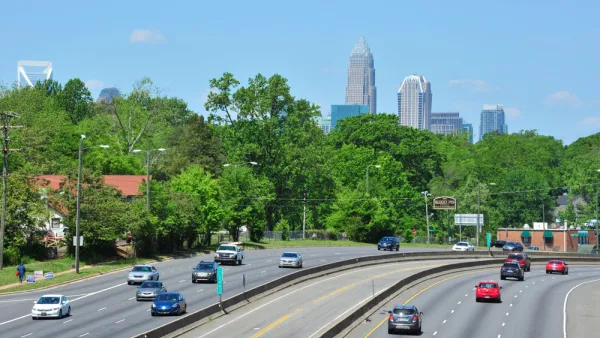
In Sprawling Charlotte, Traffic Jams Point to Climate Solutions
A look at the relationship between sprawl and climate change mitigation in the fast-growing North Carolina city.

Amtrak, CN end decades-long dispute with eight-year agreement
The new operating agreement establishes an updated framework for the companies to work together, including processes to resolve disputes.

Judges permit Denver to divert 77,000 acre feet from the Colorado River for reservoir expansion
Overuse and climate change have caused the Colorado River’s water levels to plummet.
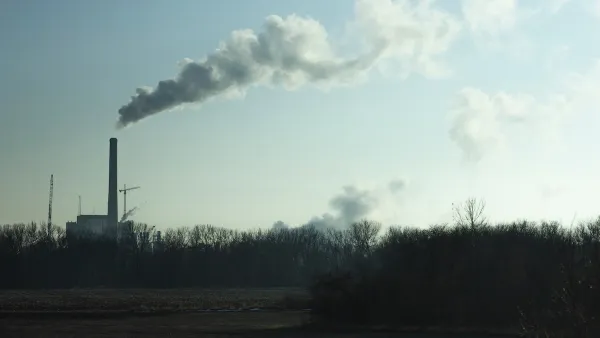
Nation's most wind-powered state turns to coal as data centers increase energy demand
For the first time in decades, Iowa has increased its generation of coal power.

Boston has spent millions making the Green Line more accessible — and there’s no end in sight
While the city has invested millions into expanding and adding platforms to the Green Line to make it more accessible, new train cars set to arrive next year will be too tall for disabled passengers to board without raising the current platforms.

Idaho may see an 18% drop in federal surface transit funding — the largest estimated cut in the US
Transit systems in rural communities are much more reliant on federal funding to provide their services.

How ‘post-disaster gentrification’ alters neighborhoods after natural calamities
After hurricanes, fires or other calamities, the original residents of a community are often replaced by younger, wealthier residents.

FREE Course: Walkable City 1: Why Walkability?
After describing his path towards focusing on walkability as the essence of good planning, Jeff Speck marches through his five principal reasons for making more walkable places.
Reinventing Malls: Planning Alchemy—Turning Gray Fields Into Gold
The course focuses on the opportunities and imperatives that shape reinvention of mall sites.

City of Wisconsin Rapids
Harvard University Graduate School of Design
KFH Group Inc.
The Architects Foundation
University of Cincinnati Online
The Pocatello Development Authority
The Urban Renewal Agency of the City of Pocatello