A roundtable discussion on the projected growth in the Bay Area of California, and the planning tools being unveiled that will help mitigate the projected increase of an additional 2 million inhabitants to the region by 2035.


"The projected growth in the Bay Area is expected to increase from the the current 7+ million people to over 9 million by the year 2035. A discussion from various planning groups and regional governments discusses how smart growth, mixed-use development, and infill can help meet the needs of this growth in the face of the current economic crisis."
KQED talks with Carl Anthony, founder of Earth House and co-author of the new book "Breakthrough Communities: Sustainability and Justice in the Next American Metropolis", Jeremy Madsen, executive director of Greenbelt Alliance, Ken Kirkey, planning director with the Association of Bay Area Governments, Will Fleissig, president of Communitas Development, Inc.
Read the full story: Smart Growth in the Bay Area
Growth Slows in Bay Area
The San Francisco Bay Area has seen its smallest rate of growth in the state's history, according to data from the 2010 Census.
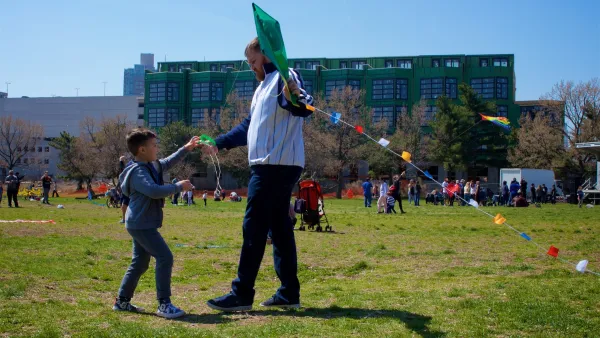
Is the built environment partly to blame for population decline?
The way communities are designed could be contributing to lower birth rates.
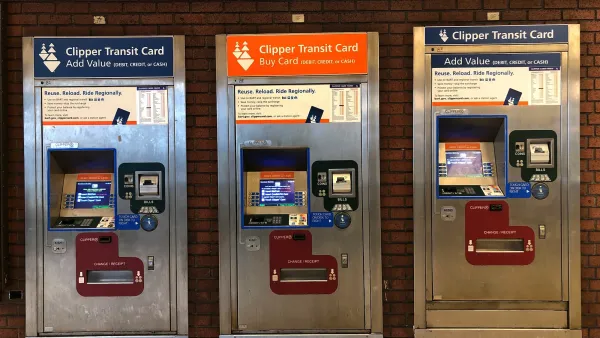
Bay Area transit loses $1M per month on credit card fees
As more people use mobile payments to pay their fares, transit agencies are spending more on transaction fees.

Planetizen Federal Action Tracker
A weekly monitor of how Trump’s orders and actions are impacting planners and planning in America.

California plans to bury El Niño’s downpour
If the state plays its cards right, it may be able to store a billion acre-feet of El Niño’s water in aquifers.

Desperate measures: Advocates weigh draining Lake Powell to fill Colorado River
Draining the reservoir could reduce evaporation losses by a couple hundred thousand acre-feet.

US buildings threatened, destroyed by fires set to triple by 2060
Researchers found a high fire risk for socioeconomically vulnerable neighborhoods in the American West.

LA residents may be allowed to paint their own crosswalks
Councilwoman Katy Yaroslavsky put out a motion instructing the Los Angeles Department of Public Transportation to study the feasibility of allowing volunteers to paint crosswalks.

Dallas moves to overhaul its zoning code
The city's zoning reform will allow more multi-family and mixed-use developments.

FREE Course: Walkable City 1: Why Walkability?
After describing his path towards focusing on walkability as the essence of good planning, Jeff Speck marches through his five principal reasons for making more walkable places.
Reinventing Malls: Planning Alchemy—Turning Gray Fields Into Gold
The course focuses on the opportunities and imperatives that shape reinvention of mall sites.

City of Rosemead
Rutgers University, Edward J. Bloustein School of Planning and Public Policy
One Hundred Miles
Hunter College, City University of New York (CUNY)
The Architects Foundation
University of Cincinnati Online
City of Cambridge
Montrose County
The Pocatello Development Authority