The solution to transportation problems in New York lies not just with the city and the state, but also with the federal government.


"When the New York State legislature passed a "rescue" bill for the Metropolitan Transit Authority, transit users across the region let out a sigh of relief. Some of us, however, warned that Albany's rescue wasn't going to solve the MTA's long-term problems. Now the State Comptroller, Thomas DiNapoli, has issued a report that outlines the MTA's budget outlook for the next three years. His conclusion? The MTA will need to continue borrowing to fund its program of repair, maintenance, and expansion of the system. However, according to DiNapoli,
"Such a heavy reliance on debt would place increasing pressure on the operating budget, just as heavy borrowing in the past has contributed to the MTA's current fiscal crisis."
In order to continue to improve the system, after recovering from the blatant neglect of New York's transit infrastructure through the 1970s, the MTA needs about $18 billion over the next five years. Additionally, the region will continue to grow and so will the demands on our transit system. Other trends, such as decreasing automobile use, climbing fuel prices, and the need to address global warming will necessitate a larger, more comprehensive transit system."
Read the full story: Washington Needs to Accept Responsiblity for New York’s Mass Transit


Trump Administration Proposes to Divert Billions from Mass Transit to Highways; Advocates Sound Alarm
Two proposals from the Trump DOT would eliminate a federal mass transit fund and make it harder for states to allocate funding to transit projects.
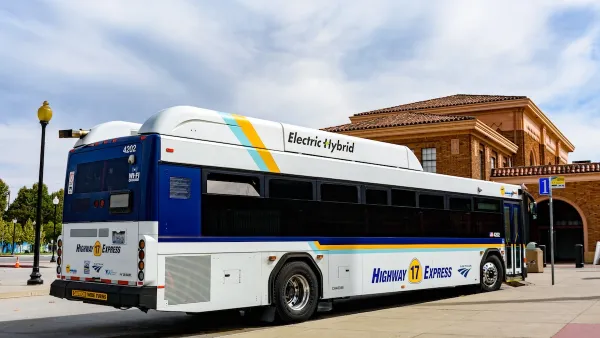
Beyond Congestion Pricing: Strategies for Revolutionizing Urban Mobility
How cities are leveraging data and technology to improve their transportation networks and reduce traffic.
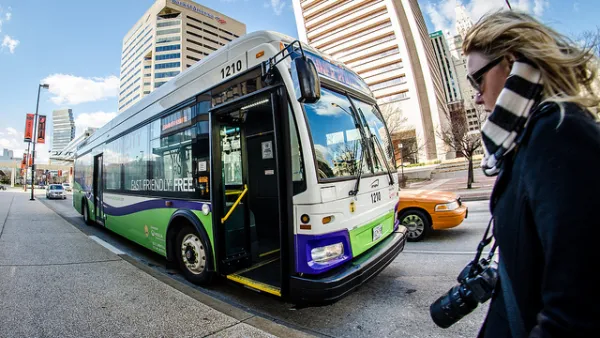
Baltimore Leaders Call on City To Think Big on Transit
With federal infrastructure funding on the table, local leaders are calling for a comprehensive strategy to improve the region’s public transit.

Planetizen Federal Action Tracker
A weekly monitor of how Trump’s orders and actions are impacting planners and planning in America.

Amtrak, CN end decades-long dispute with eight-year agreement
The new operating agreement establishes an updated framework for the companies to work together, including processes to resolve disputes.

Judges permit Denver to divert 77,000 acre feet from the Colorado River for reservoir expansion
Overuse and climate change have caused the Colorado River’s water levels to plummet.

NYC DOT wants faster, more permanent street upgrades
The city is examining ways to build more concrete infrastructure without getting entangled in 'decades-long' projects.

'Something we’ve never seen before:' rising utility rates could strain city finances nationwide
Data centers, climate change and other factors have caused utility rates in the United States to increase by 38% since 2020.

Trump to overrule local leaders, lease millions of acres of America’s Pacific Island territories’ seafloors to mining companies
International law says that the Indigenous people of America’s territories have a right to prior and informed consent regarding projects that impact their countries.

FREE Course: Walkable City 1: Why Walkability?
After describing his path towards focusing on walkability as the essence of good planning, Jeff Speck marches through his five principal reasons for making more walkable places.
Reinventing Malls: Planning Alchemy—Turning Gray Fields Into Gold
The course focuses on the opportunities and imperatives that shape reinvention of mall sites.

Harvard University Graduate School of Design
KFH Group Inc.
Greater Baltimore Committee
The Architects Foundation
University of Cincinnati Online
The Pocatello Development Authority
The Urban Renewal Agency of the City of Pocatello