Three cities - three directions on how their transportation infrastructure was shaped by national transportation and housing legislation, and the role of influential leaders like CO Gov. Lamm, OR representative Earl Blumenauer, and NY's Robert Moses.


The video begins with Miles O'Brien, the host, in the visibly aging NYC subway and then goes to suburban Highland Ranch outside Denver, then to Portland's bike-friendly and modern streetcar scenes. Back to NY and the expressway-divided South Bronx to see the effects of Robert Moses. Finally, all roads lead to DC where the new transportation legislation will determine the path the country takes.
Streetsblog:
"Focusing in on three cities, New York, Denver (and environs) and Portland, it features interviews with a whole host of interesting subjects including NYC DOT commissioner Janette Sadik-Khan, Portland Mayor Sam Adams, BikePortland blog maestro Jonathan Maus and Columbia University's Owen Gutfreund, author of "20th Century Sprawl."
Denver Post:
"Fast-forward to the 1970s, the beginnings of Highlands Ranch and its counterpoint. Then-Gov. Dick Lamm threatened to "drive a silver stake" through the Interstate 470 beltway. Lamm succeeded in delaying the beltway, but the wrath of real estate interests and the press transformed his stake into a boomerang, thoroughly marginalizing the young governor.
While Lamm was left licking his wounds, Portland was being tempted by the same siren's song: big federal dollars to build the Mount Hood Freeway. But then-City Councilman Earl Blumenauer (now a congressman) rallied local activists to oppose speculators who were determined to demolish miles of historic urban fabric to build an eight-lane freeway through the heart of southeast Portland.
Blueprint America is more than a tutorial on urban planning and its consequences. It is a thoughtful and provocative study of human nature and political courage."
Thanks to Leonard Conly
Read the full story: Blueprint America: Road to the Future
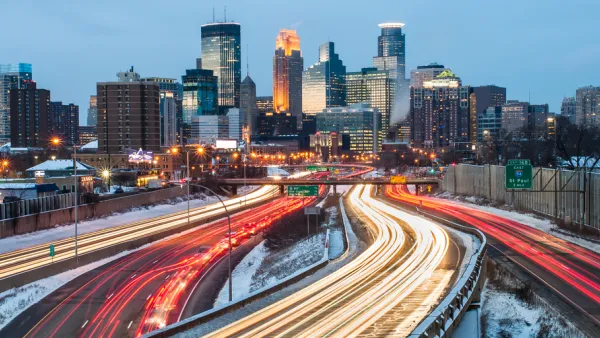
Removal Over Reconstruction: Rectifying Crumbling U.S. Highways
Successful urban highway deconstruction projects have swapped highways for boulevards and saw economic, public health, and urban design benefits. Will more cities opt for highway removal programs over reconstruction?
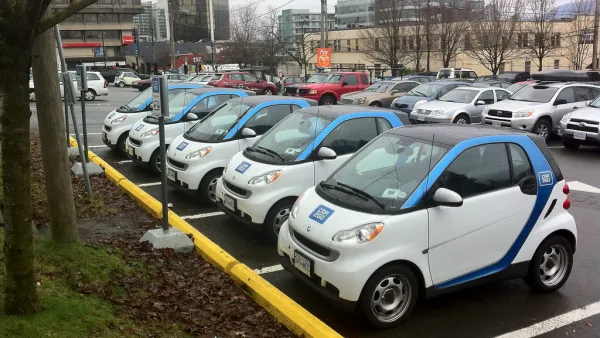
Car2Go Pulls Out of Five North American Cities
As the company plans to cease operations in a number of markets, carsharing’s future in the rapidly shifting world of mobility is unclear.

Kids and Urbanization
The question of whether there is space for children in rapidly changing cities was under investigation in two recent studies with somewhat contradictory findings.

Planetizen Federal Action Tracker
A weekly monitor of how Trump’s orders and actions are impacting planners and planning in America.

California plans to bury El Niño’s downpour
If the state plays its cards right, it may be able to store a billion acre-feet of El Niño’s water in aquifers.

Desperate measures: Advocates weigh draining Lake Powell to fill Colorado River
Draining the reservoir could reduce evaporation losses by a couple hundred thousand acre-feet.

Los Angeles just elected an urban planner as its mayor
Transportation analysts are optimistic that Raman will be more aggressive in addressing transit issues than Bass.

Mamdani’s pied-à-terre tax survives legal challenge
A panel of judges found that the plaintiffs failed to demonstrate injury as a result of New York City's implementation of the tax.

Eastern Nebraska is running out of electricity
Data centers and electrification are straining eastern Nebraska’s grid, throttling economic development.

FREE Course: Walkable City 1: Why Walkability?
After describing his path towards focusing on walkability as the essence of good planning, Jeff Speck marches through his five principal reasons for making more walkable places.
Reinventing Malls: Planning Alchemy—Turning Gray Fields Into Gold
The course focuses on the opportunities and imperatives that shape reinvention of mall sites.

City of Rosemead
Rutgers University, Edward J. Bloustein School of Planning and Public Policy
One Hundred Miles
University of Michigan School for Environment and Sustainability (SEAS)
Hunter College, City University of New York (CUNY)
The Architects Foundation
City of Cambridge
Montrose County
The Pocatello Development Authority