Planetizen has teamed up with National Journal, a weekly politics and policy magazine, to explore transportation issues. As part of National Journal's Transportation Experts blog, we've asked Planetizen Interchange bloggers and National Journal's Transportation Experts whether money from the Highway Trust Fund should be used for non-highway projects like bike lanes and pedestrian walkways.



We've posed the following question to Planetizen's Interchange bloggers and National Journal's Transportation Experts.
Transportation sources contribute 30 percent of U.S. emissions of greenhouse gases, and road congestion is a large and growing problem in many urban areas. Yet the Highway Trust Fund is facing a severe cash crunch, and state transportation departments are worried that there won't be enough money for highways and mass transit. Should the next surface transportation bill allow states and municipalities to use a greater share of scarce Trust Fund dollars on non-highway projects such as bike lanes and pedestrian walkways?
Interchange bloggers and National Journal's Transportation Experts have answered. Read their responses.


How a Truck Tax Could Save the Highway Trust Fund
The freight trucking industry is a prime candidate for a mileage tax that would boost road maintenance revenue.
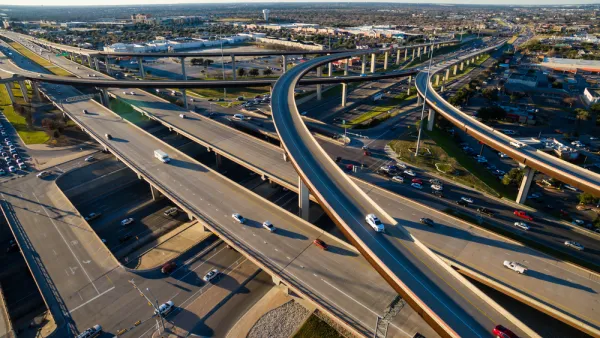
The True Cost of Texas Highways
An explainer of the monetary, environmental, and social costs of exuberant road building.

A Fair Share for Walking
Most people value walkability, yet most communities underinvest in pedestrian facilities. Some jurisdictions are investing more in sidewalks and crosswalks in order to better serve community values.

Planetizen Federal Action Tracker
A weekly monitor of how Trump’s orders and actions are impacting planners and planning in America.

The state-sanctioned urbicide of Austin
People don’t kill cities. Freeways do.

US to reduce Colorado River water deliveries to Mexico
A new Colorado Treaty amendment reduces Mexico’s Colorado River water allocation by 250,000 acre feet.

5 New England states march closer to 800 megawatt wind energy project
Securing federal approval for the project may be complicated under the Trump administration, which has historically been hostile towards domestic wind power.

Baltimore to break ground on $50 million Transit Priority Project
The project will bring faster bus trips, safer streets and better bike connections to Baltimore.

Airbnb launches $250 million 'last-dollar financing' housing accelerator, makes first investment in Austin
The company will put $6.4 million towards affordable housing development in Texas’ capital.

FREE Course: Walkable City 1: Why Walkability?
After describing his path towards focusing on walkability as the essence of good planning, Jeff Speck marches through his five principal reasons for making more walkable places.
Reinventing Malls: Planning Alchemy—Turning Gray Fields Into Gold
The course focuses on the opportunities and imperatives that shape reinvention of mall sites.

Eagle County Government
Harvard University Graduate School of Design
Nashville Planning Department
The Architects Foundation
University of Cincinnati Online
The Pocatello Development Authority
The Urban Renewal Agency of the City of Pocatello
Journal of the American Planning Association

