Metropolis talks with William Saunders, editor of Harvard Design Magazine, about his new book covering the evolving field of urban design.


Metropolis: Your book starts out by looking back to the first conferences on urban design, in 1956 at Harvard, which attempted to establish the new field as a collaboration between architecture, landscape architecture, and planning. But now urban design is mostly the domain of architects. Why do you think that is?
William Saunders: I think Krieger is right when he talks about urban design as more a state of mind than a profession. You could be an urban designer and be a physician if you simply thought in terms of how parts of cities should relate, how parts of cities can enliven cities, and things like that. But there is this sort of cultural "number one" spot that architecture has usually had, this cultural status. And it's kind of bullied its way to the top.
Metropolis: What's a good example of urban design?
William Saunders: The one in the last decade everyone refers to-and it's on the cover of this book-is Millennium Park in Chicago. It is an outstanding project. It's used by the citizens of the city as well as tourists, it's beautiful, it's high artistic quality, it serves public needs with its concert spaces. Then you could think of things like what Foster did with Trafalgar square, to take cars and trucks out of it and turn it into a pedestrian zone.
Read the full story: Q&A: William Saunders

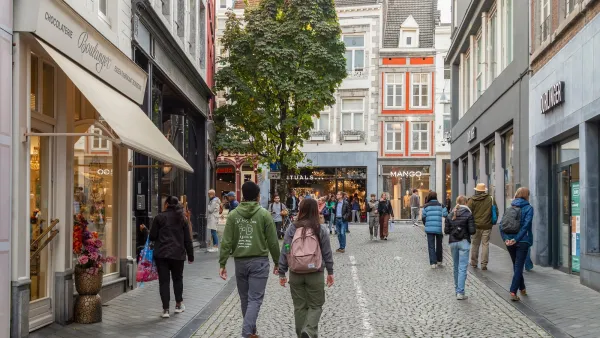
Planning for Love, Part 3: Enhancing human connection through walkability
In the third and final installment of this series, author Hannah Kosoff examines what her research findings say about modern dating and urban form.

Planning for Love, Part 2: What happens to dating in a car-centric world?
A survey of over 150 adults about their dating lives reveals stark differences based on their neighborhood's walkability.
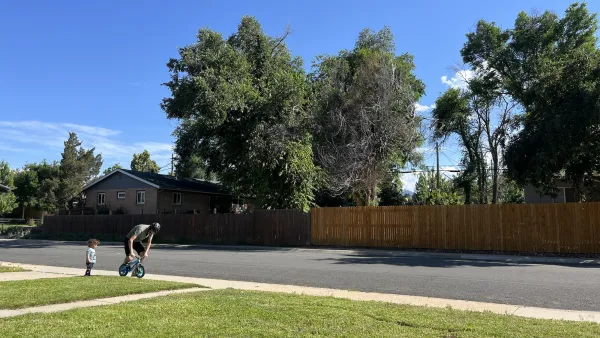
The Parking Lot Maternity Leave
New parenthood is the stress test of suburbia. I’ve learned the hard way just how spectacularly it fails.

Planetizen Federal Action Tracker
A weekly monitor of how Trump’s orders and actions are impacting planners and planning in America.

The state-sanctioned urbicide of Austin
People don’t kill cities. Freeways do.

US to reduce Colorado River water deliveries to Mexico
A new Colorado Treaty amendment reduces Mexico’s Colorado River water allocation by 250,000 acre feet.

Nation's most wind-powered state turns to coal as data centers increase energy demand
For the first time in decades, Iowa has increased its generation of coal power.

NYC cools commuters with city's first rain garden above a bus stop
New York City officials say the plants in the rain garden can absorb 16 gallons of rainwater during heavy storms.

Brightline West’s future may rely on $6 billion federal loan
The company has until Nov. 2 to make a $400 million equity investment into its proposed high-speed rail line.

FREE Course: Walkable City 1: Why Walkability?
After describing his path towards focusing on walkability as the essence of good planning, Jeff Speck marches through his five principal reasons for making more walkable places.
Reinventing Malls: Planning Alchemy—Turning Gray Fields Into Gold
The course focuses on the opportunities and imperatives that shape reinvention of mall sites.

Eagle County Government
Harvard University Graduate School of Design
Nashville Planning Department
The Architects Foundation
University of Cincinnati Online
The Pocatello Development Authority
The Urban Renewal Agency of the City of Pocatello
Journal of the American Planning Association