Green Living magazine gives kudos to Canada's leading cities in terms of energy, water, density and bike-friendliness.


"The cleanest air and water, bountiful green spaces, solar-powered and geothermal-heated buildings all are tantalizingly within reach in several Canadian municipalities. So, where should you point your biodiesel-fueled moving van?
Vancouver: Urban Density Experts
The EcoDensity Charter, which will encourage green laneway housing, rezoning and relaxed building codes to accommodate solar panels and shading. A commitment to making all city operations carbon neutral by 2012 and plans to reduce community GHG emissions by a whopping 80 percent by 2050 (from 1990 levels) will also help to improve air quality, lower energy bills and create an even more livable city.
Yellowknife: Canada's geothermal energy hot spot
Yellowknife will become a whole lot greener thanks to its Community Energy Plan, ...[which will] use clean, geothermal energy from a nearby abandoned goldmine (the Con Mine) to heat 2,000 homes.
Calgary: The green electricity capital
Forget dirty oil; Calgary is and will continue to be all about clean voltage. It is the only municipality in Canada to draw at least 75 percent of its electricity from renewable sources, and it plans to jack that up to 90 percent by 2012."
Read the full story: Canada's Greenest Cities of Tomorrow


Watch: The Errors Behind 'Best Cities' Rankings
Despite its long history of ranking the best cities to live in the United States, Money Magazine should not be cited as an authority on the matter, according to this video.
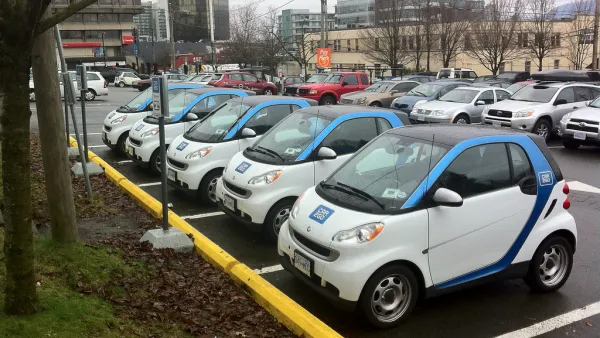
Car2Go Pulls Out of Five North American Cities
As the company plans to cease operations in a number of markets, carsharing’s future in the rapidly shifting world of mobility is unclear.
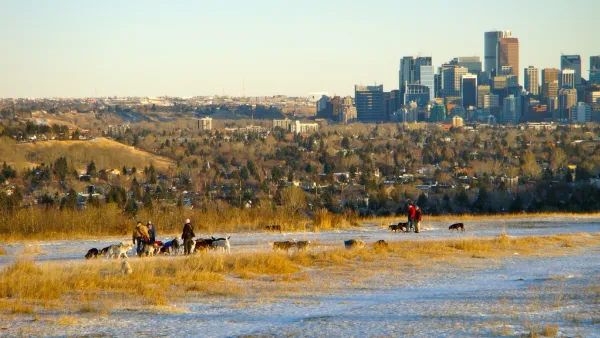
First Bus Rapid Transit Line Opens in Calgary
The MAX Purple Line has begun service on 17 Avenue SE.

Planetizen Federal Action Tracker
A weekly monitor of how Trump’s orders and actions are impacting planners and planning in America.

Amtrak, CN end decades-long dispute with eight-year agreement
The new operating agreement establishes an updated framework for the companies to work together, including processes to resolve disputes.

Judges permit Denver to divert 77,000 acre feet from the Colorado River for reservoir expansion
Overuse and climate change have caused the Colorado River’s water levels to plummet.

Boston has spent millions making the Green Line more accessible — and there’s no end in sight
While the city has invested millions into expanding and adding platforms to the Green Line to make it more accessible, new train cars set to arrive next year will be too tall for disabled passengers to board without raising the current platforms.

Idaho may see an 18% drop in federal surface transit funding — the largest estimated cut in the US
Transit systems in rural communities are much more reliant on federal funding to provide their services.

How ‘post-disaster gentrification’ alters neighborhoods after natural calamities
After hurricanes, fires or other calamities, the original residents of a community are often replaced by younger, wealthier residents.

FREE Course: Walkable City 1: Why Walkability?
After describing his path towards focusing on walkability as the essence of good planning, Jeff Speck marches through his five principal reasons for making more walkable places.
Reinventing Malls: Planning Alchemy—Turning Gray Fields Into Gold
The course focuses on the opportunities and imperatives that shape reinvention of mall sites.

City of Wisconsin Rapids
Harvard University Graduate School of Design
KFH Group Inc.
The Architects Foundation
University of Cincinnati Online
The Pocatello Development Authority
The Urban Renewal Agency of the City of Pocatello