In response to the widening threat of climate change, the United Nations will release a note of suggestions that propose a dramatic change in global economic relations, tarriffs, and taxes, according to this piece from Fox News.


"A United Nations document on "climate change" that will be distributed to a major environmental conclave next week envisions a huge reordering of the world economy, likely involving trillions of dollars in wealth transfer, millions of job losses and gains, new taxes, industrial relocations, new tariffs and subsidies, and complicated payments for greenhouse gas abatement schemes and carbon taxes - all under the supervision of the world body.
Those and other results are blandly discussed in a discretely worded United Nations "information note" on potential consequences of the measures that industrialized countries will likely have to take to implement the Copenhagen Accord, the successor to the Kyoto Treaty, after it is negotiated and signed by December 2009. The Obama administration has said it supports the treaty process if, in the words of a U.S. State Department spokesman, it can come up with an "effective framework" for dealing with global warming.
The 16-page note, obtained by FOX News, will be distributed to participants at a mammoth negotiating session that starts on March 29 in Bonn, Germany, the first of three sessions intended to hammer out the actual commitments involved in the new deal.
In the stultifying language that is normal for important U.N. conclaves, the negotiators are known as the "Ad Hoc Working Group On Further Commitments For Annex I Parties Under the Kyoto Protocol." Yet the consequences of their negotiations, if enacted, would be nothing short of world-changing."
Read the full story: U.N. 'Climate Change' Plan Would Likely Shift Trillions to Form New World Economy
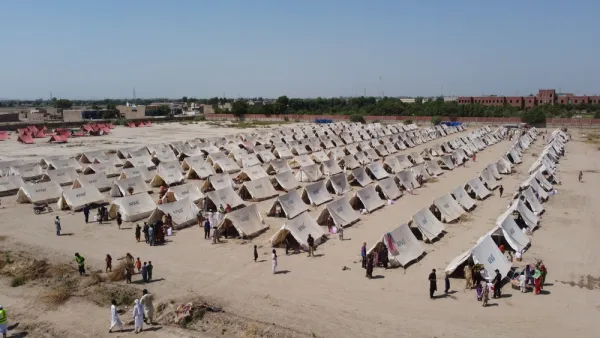
COP27 Climate Negotiations Produce a Mixed Bag
Negotiators at this year’s COP27 climate change meetings can claim progress on some tricky issues, but stagnation reigns on the fundamental issue of emission reductions.

The Urgent Need for Climate Action Includes Land Use Reforms, IPCC Report Says
The United Nations International Panel on Climate Change (IPCC) released its latest report earlier this week, sounding the alarm that time is running out to make the changes that can prevent the worst outcomes of climate change.
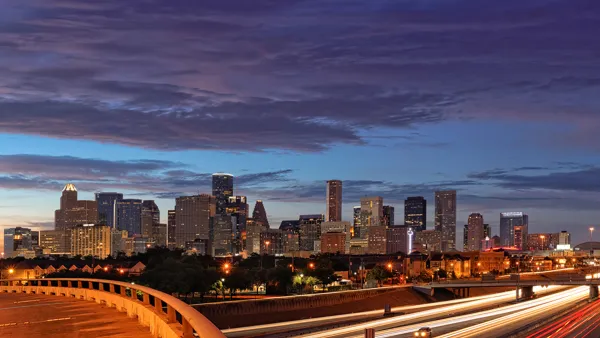
Changes in Houston Over the Last Decade
Comparing Houston in 2010 to the city today reveals a variety of transportation, infrastructure, and economic changes.

Planetizen Federal Action Tracker
A weekly monitor of how Trump’s orders and actions are impacting planners and planning in America.

Eastern Nebraska is running out of electricity
Data centers and electrification are straining eastern Nebraska’s grid, throttling economic development.

Study reveals best places in the U.S. for cycling, walking
New research from Streetlight Data examines bicycle and pedestrian miles per capita in the 100 largest U.S. cities by population.

DSA members accuse Mamdani of 'abandoning values' over housing redevelopment
New York City's mayor plans to replace about 2,000 units of public housing with private, mixed-income housing.

All sides of BRT debate unhappy with CDOT’s most recent move
The Colorado Department of Transportation is no longer considering center-running bus lanes for Colorado Boulevard.

Massachusetts bogs generate both power, and cranberries
Putting solar panels above farmland is one way Massachusetts is advancing toward its goal of net-zero carbon emissions by 2050.

FREE Course: Walkable City 1: Why Walkability?
After describing his path towards focusing on walkability as the essence of good planning, Jeff Speck marches through his five principal reasons for making more walkable places.
Reinventing Malls: Planning Alchemy—Turning Gray Fields Into Gold
The course focuses on the opportunities and imperatives that shape reinvention of mall sites.

City of Rosemead
Rutgers University, Edward J. Bloustein School of Planning and Public Policy
One Hundred Miles
University of Michigan School for Environment and Sustainability (SEAS)
Hunter College, City University of New York (CUNY)
The Architects Foundation
City of Cambridge
The Pocatello Development Authority
The Urban Renewal Agency of the City of Pocatello