Taking a hint from heightened interest in Brazil's favelas, a German developer plans to build 10 villas in a Rio de Janeiro slum, which he'll market as the new tourist hotspot.


"[Rolf] Glaser is one of a small, bold band of foreigners going where most Rio residents fear to tread, catering to tourists who want to see the "real" Rio beyond the Copacabana beach district and the Christ the Redeemer statue.
The 52-year-old entrepreneur plans to build 10 or so well-appointed villas where tourists would be able to taste luxury and slum life at the same time."
"In a city renowned for the jaw-dropping beauty of its beaches and forested mountains, Vidigal, perched high at the end of a swanky beach area, has a panoramic vista that would make real estate agents' eyes water.
That is already causing worries that Glaser's investment, which he puts at around $500,000, may provoke property speculation that could force residents to sell and move to other slums.
Still, favelas remain largely off limits for Brazilians, leaving the way clear for foreigners who have found them increasingly fascinating and chic."
Read the full story: Developer sees slum as Brazil's next tourism hotspot

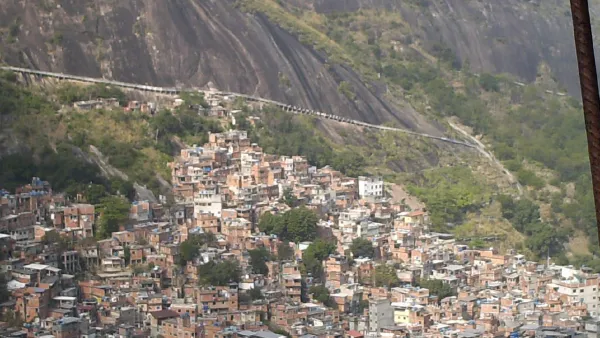
Rio's Pricey Sky Gondola Goes Full Stop
The sky gondola system built prior to the Rio Olympics has ground to a halt, leaving residents of the city's favelas with little to show for such a grand investment in infrastructure.
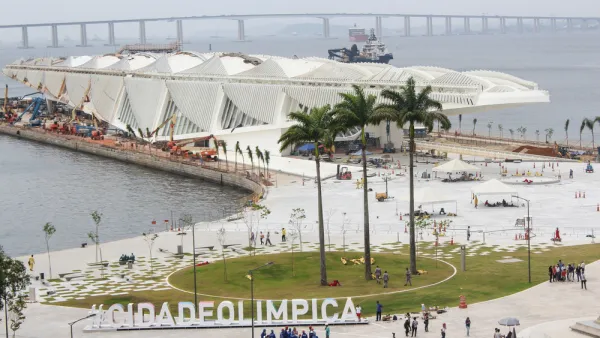
Less Than the Olympic Ideal
A long-read in The Nation pokes large holes in the narrative of the Olympics as a beacon of equality and unity. The effect in Brazil, according to the article, has been quite the opposite.
Brazil's Insight on Climate Change Adaption
A new report from the World Resources Institute illustrates how Brazil is preparing its cities to deal with climate change.

Planetizen Federal Action Tracker
A weekly monitor of how Trump’s orders and actions are impacting planners and planning in America.

California plans to bury El Niño’s downpour
If the state plays its cards right, it may be able to store a billion acre-feet of El Niño’s water in aquifers.

Chicago breaks ground on $3 billion megadevelopment
The new neighborhood, titled Foundry Park, will one day host 3,700 residences.

California High-Speed Rail Authority CEO resigns after $600,000 scandal
Under Ian Choudri, the authority used taxpayer dollars to fund first class flights and trips to nightclubs.

Want to study the Missouri River? Soon, you may need unanimous approval from 10 states
Legislation would require 10 governors’ permission to study or build projects moving water outside the basin.

Desperate measures: Advocates weigh draining Lake Powell to fill Colorado River
Draining the reservoir could reduce evaporation losses by a couple hundred thousand acre-feet.

FREE Course: Walkable City 1: Why Walkability?
After describing his path towards focusing on walkability as the essence of good planning, Jeff Speck marches through his five principal reasons for making more walkable places.
Reinventing Malls: Planning Alchemy—Turning Gray Fields Into Gold
The course focuses on the opportunities and imperatives that shape reinvention of mall sites.

City of Rosemead
Rutgers University, Edward J. Bloustein School of Planning and Public Policy
One Hundred Miles
Hunter College, City University of New York (CUNY)
The Architects Foundation
University of Cincinnati Online
City of Cambridge
Montrose County
The Pocatello Development Authority