Coriandoline, a housing development in Correggio, Italy, is the first to have been designed primarily by children. The award-winning neighborhood boasts themed houses and "built-in playability."


"The first phase began in 1995 with a research project involving 700 children from 12 local nursery and infant schools. 50 teachers and 2 child psychologists worked together with a group of 20 architects, engineers, surveyors, builders and carpenters: talking to the children, taking them on trips to learn about architecture, encouraging them to draw, building models with them."
"Turning children's abstract fantasies into concrete reality was the next step, one which was by no means an easy task for Luciano Pantaleoni and his colleagues, 'When we started the planning phase, we realised we faced an enormous risk. On the one hand we could have fallen into the trap of creating something banal - houses that looked just like all new houses, with token 'corrections' providing superficial concessions. On the other hand we could have gone to the opposite extreme and end up creating a sort of fairytale playground which had no meaning as a part of the town. We wanted to create an area which could be exploited and enjoyed by the whole community, but which used children's experiences and needs as a parameter for quality.'"
Read the full story: "Soft on the inside, hard on the outside"

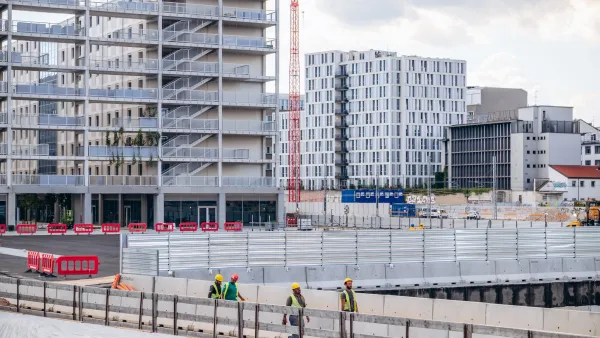
Milan’s Olympic Athletes’ Village is Designed for Reuse
This year’s athlete housing is designed specifically to be repurposed as student housing after the games.
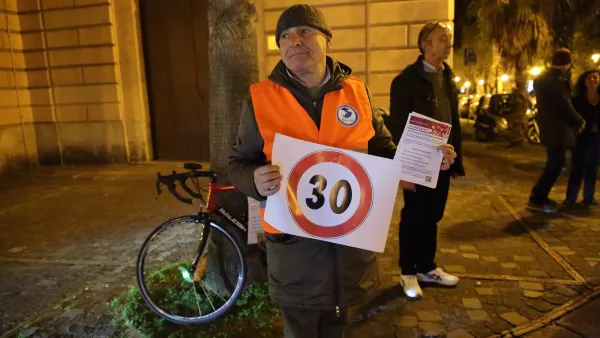
Rome is Latest European Capital to Drop Speed Limit to 30KPH
Traffic fatalities in Bologna, the first major Italian city to lower their speed limit, dropped by 50 percent in the first year.
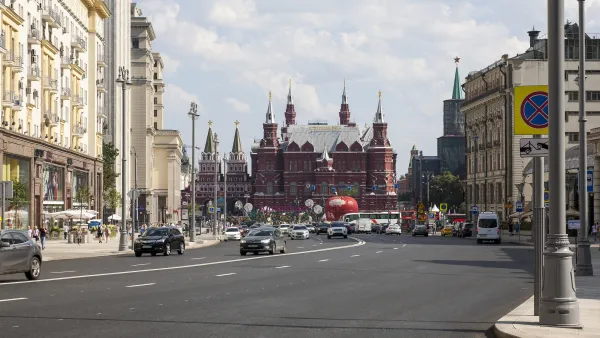
Banning Russian Oil, Part II
Part I occurred when President Biden banned the importation of all Russian fossil fuels on March 8. A month later, Congress passed legislation to codify the embargo. Getting the European Union onboard is proving cumbersome.

Planetizen Federal Action Tracker
A weekly monitor of how Trump’s orders and actions are impacting planners and planning in America.

Amtrak, CN end decades-long dispute with eight-year agreement
The new operating agreement establishes an updated framework for the companies to work together, including processes to resolve disputes.

Judges permit Denver to divert 77,000 acre feet from the Colorado River for reservoir expansion
Overuse and climate change have caused the Colorado River’s water levels to plummet.

Northwest rail fans eager for Sept. 30 debut of Amtrak’s Airo fleet
Get ready for that new train smell and more seats. But they won’t go faster or run more frequently on the Cascades route in Washington and Oregon.

NYC DOT wants faster, more permanent street upgrades
The city is examining ways to build more concrete infrastructure without getting entangled in 'decades-long' projects.

'Something we’ve never seen before:' rising utility rates could strain city finances nationwide
Data centers, climate change and other factors have caused utility rates in the United States to increase by 38% since 2020.

FREE Course: Walkable City 1: Why Walkability?
After describing his path towards focusing on walkability as the essence of good planning, Jeff Speck marches through his five principal reasons for making more walkable places.
Reinventing Malls: Planning Alchemy—Turning Gray Fields Into Gold
The course focuses on the opportunities and imperatives that shape reinvention of mall sites.

Harvard University Graduate School of Design
KFH Group Inc.
Greater Baltimore Committee
The Architects Foundation
University of Cincinnati Online
The Pocatello Development Authority
The Urban Renewal Agency of the City of Pocatello