Architects form the University of British Columbia are calling on cities to "go wild" -- mainly by integrating ecological features into the cityscape to make it more self-contained. The result would be both sustainable and exciting, they say.


"Their proposal is based on seven tenets that run the gamut from buildings that multitask as homes, offices, farms and reefs to facades reshaped with warps, folds and hollows."
"The hypothetical result of this schematic approach, say Fujita and Soules, is a future city that's not only ecologically self-contained, but also much more exciting to live in."
"The EcoMet tenets can be applied to any generic modern metropolis, but use Vancouver as a laboratory and inspiration, partly because Fujita and Soules live and work here. The city also has plenty of raw material close by, what with all the stray coyotes and nearby marine life."
"What's more -- and there's no polite way to put this -- Vancouver could really use the help: it has become an architectural monoculture, the urban equivalent of a tree farm."
Read the full story: Is Your City Boring? Make It Wild
Africa's Urban Harvest
Faced with climate change and poverty, Africans are focusing on a new farming frontier: the cities.
Cities, Not Farms, At Fault For Bay Pollution
Cities, not the agriculture heavy Central Valley, are the source of most of the runoff and pollution that enters the San Francisco Bay, according to a new report.
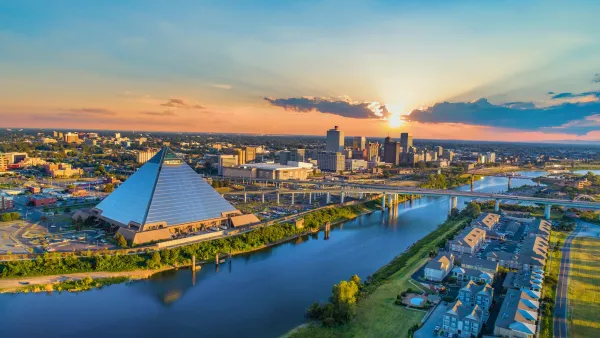
15 US cities and their global namesakes
Hundreds of cities around the United States are named after other places. We tour a few of them.

Planetizen Federal Action Tracker
A weekly monitor of how Trump’s orders and actions are impacting planners and planning in America.

Eastern Nebraska is running out of electricity
Data centers and electrification are straining eastern Nebraska’s grid, throttling economic development.

Move over, LA: St. Louis gears up for Olympics, invests millions in downtown redevelopment
The Missouri city will host the 2028 Olympic soccer group stage and knockout matches.

Dallas releases zoning code overhaul to officials
The drafted overhaul is over 400 pages long.

NYC renovations for dangerous, ‘mercilessly crammed’ street delayed until 2027
Construction was supposed to begin this fall.

San Diego’s Midway Rising project gets greenlight from city council
The project looks to become the largest affordable housing development in California's history.

FREE Course: Walkable City 1: Why Walkability?
After describing his path towards focusing on walkability as the essence of good planning, Jeff Speck marches through his five principal reasons for making more walkable places.
Reinventing Malls: Planning Alchemy—Turning Gray Fields Into Gold
The course focuses on the opportunities and imperatives that shape reinvention of mall sites.

City of Rosemead
Rutgers University, Edward J. Bloustein School of Planning and Public Policy
One Hundred Miles
University of Michigan School for Environment and Sustainability (SEAS)
Hunter College, City University of New York (CUNY)
The Architects Foundation
City of Cambridge
The Pocatello Development Authority
The Urban Renewal Agency of the City of Pocatello