The Interior Department is proposing a rule change for National Parks that would open thousands of miles of park trails to mountain bikes. Conflicts between bikers and hikers are expected.


"The proposal raised tensions between hikers and bikers, who face off against one another on dirt byways all over the country. Each group is burdened with a stereotype that is part true and part myth: thrill-seeking gear heads on one side, plodding leaf peepers on the other, each group accusing the other of not fully appreciating the great out-of-doors."
"The proposal would not take effect until the middle of next year at the earliest, National Park Service officials said, meaning that the Obama administration will decide on the issue. Under the plan, many trail usage decisions would be made at the level of individual parks, rather than at the central National Park Service office."
"Both sides say that would accelerate trail decisions and probably result in a new arena of discussion - or conflict - at each park headquarters, with administrators being lobbied by the two groups. Existing trails would be the main focus of the change; most proposals for new trails would still have to go through a more lengthy process of review at the Park Service headquarters."
FULL STORY: Expansion of Biking in Parks Is Proposed

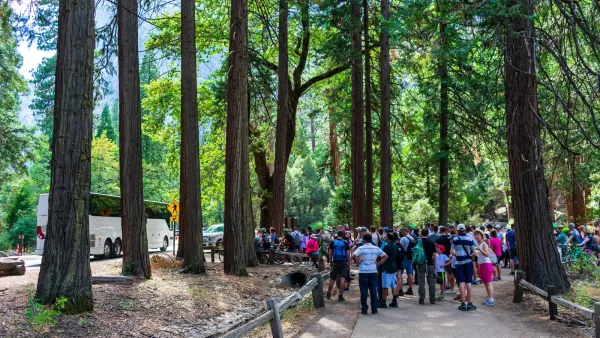
Yosemite crowds wait hours to enter park after NPS ends reservation system
Bumper-to-bumper traffic and a lack of parking foreshadowed a potentially chaotic summer.
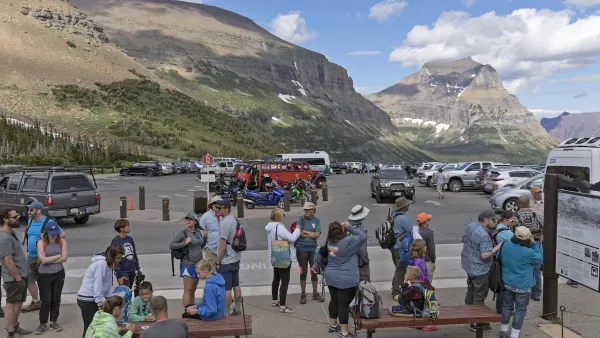
Glacier National Park drops reservation requirement, plans to double down on shuttle network
Since 2021, visitors with cars have had to make a reservation to access the park.
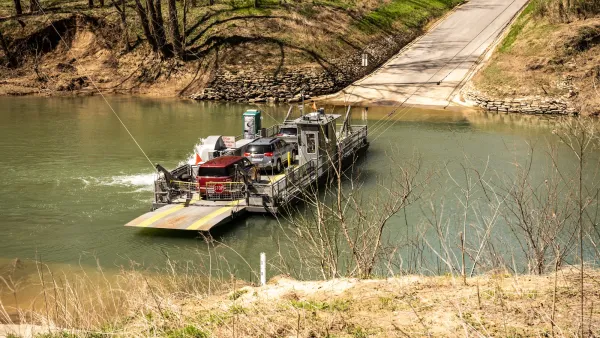
Nation’s Shortest Car Ferry Travels Just 200 Feet in a National Park
The Green River Ferry shuttles cars in a 30-second trip.

Planetizen Federal Action Tracker
A weekly monitor of how Trump’s orders and actions are impacting planners and planning in America.

The state-sanctioned urbicide of Austin
People don’t kill cities. Freeways do.

US to reduce Colorado River water deliveries to Mexico
A new Colorado Treaty amendment reduces Mexico’s Colorado River water allocation by 250,000 acre feet.

LA Metro’s ultimatum: no extra buses for LA28 if federal funding isn’t imminently secured
If Metro does not provide additional buses, LA28 organizers will have to find a new way to manage Olympic traffic. LA28’s budget does not include a line item for transit.

Colorado’s Largest Data Center Could Rise Next to Homes — Without a Public Hearing
The proposed campus would consume 11 times the power of Denver International Airport; as it has across the country, opposition mounts.

5 New England states march closer to 800 megawatt wind energy project
Securing federal approval for the project may be complicated under the Trump administration, which has historically been hostile towards domestic wind power.

FREE Course: Walkable City 1: Why Walkability?
After describing his path towards focusing on walkability as the essence of good planning, Jeff Speck marches through his five principal reasons for making more walkable places.
Reinventing Malls: Planning Alchemy—Turning Gray Fields Into Gold
The course focuses on the opportunities and imperatives that shape reinvention of mall sites.

Eagle County Government
Harvard University Graduate School of Design
Nashville Planning Department
The Architects Foundation
University of Cincinnati Online
The Pocatello Development Authority
The Urban Renewal Agency of the City of Pocatello
Journal of the American Planning Association