Dan Lorentz at Where blog takes a look at the current state of urban affairs journalism in these two posts. He looks at the role of bloggers and citizen journalists, and wonders what would happen if a city were to lose its daily newspaper.


"Newspapers once provided a viable way to fund journalism about cities. But as readership and revenues from advertising decline, this business model is failing. The prospect of newspaperless cities is real. If nothing takes over the role formerly played by newspapers cities will lose something important.
Think of what a newspaper does for a city."
"I'd like to see newspapers (or whatever media form succeeds them) play an additional role for cities: cupid. Which is to say I want to start reading urban journalism that makes people fall in love with city living.
Don't get me wrong. I'm not advocating that urban journalists become civic boosters or chamber-of-commerce shills. What I want to read is professional journalism about cities that is motivated by a deep understanding of and love for what makes cities such vital places to live. As I conceive of it, journalists with these motives would not shy away from covering the problems of the city, but instead would be determined to confront them."
Read the full story: Notes about the Future of Urban Journalism, Part 1

A Journalistic View of Cities
I was reading the New York Times Magazine special architecture issue a few weeks ago when something jumped out at me. On the intro page to the issue of the “Mega-Megalopolis” one of the by-line says “How does an architect plan for a city with no history? Or a city that just keeps growing?” Interesting questions particularly given the fact that to charge architects with the task of planning our cities is affording too much power to a profession that simply doesn’t have it.
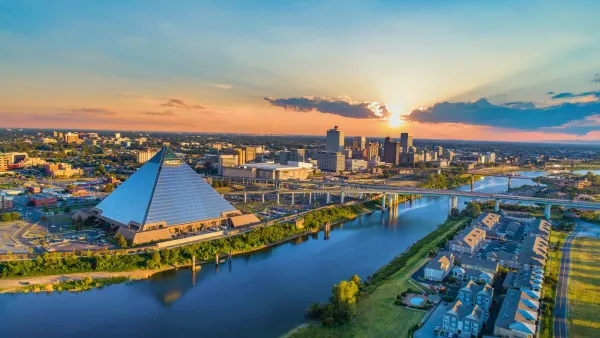
15 US cities and their global namesakes
Hundreds of cities around the United States are named after other places. We tour a few of them.
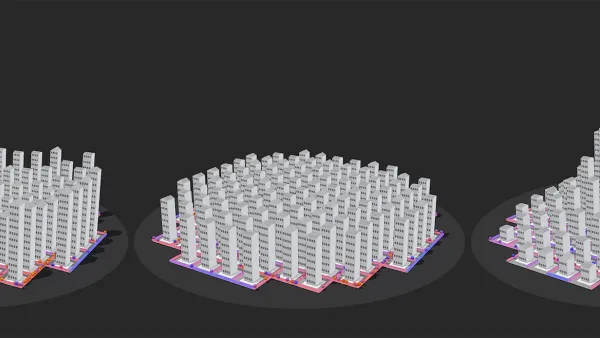
New study visualizes how city shapes impact mobility
Whether circular or linear, the shape and layout of cities affects how their residents get around.

‘Going backwards:’ Baltimore mayor, students rally against state's transit funding plan
Maryland's proposed six-year plan provides no funding for Baltimore’s BMORE bus program and reduces its road maintenance funding.

Detroit to transform waterfront with $2.2 billion investment
Developers will convert about 18 acres of unused parking lot space into civic spaces.

HUD modernizes 50-year-old manufactured housing framework
The Next Generation Manufactured Housing Action Plan establishes new energy-efficiency standards for manufactured homes, and new guidelines for anchoring them.

After $600,000 wasted, CA high-speed rail board limits CEO’s power
Ian Choudri will no longer be able to sign, change or manage contracts.

Lithium mines leech water from surrounding communities. Soon, they’ll run dry
Researchers concluded that most lithium mines won't have enough water to meet industry demands by 2050.

El Niño takes lives, infrastructure as U.S. storm systems prove ill-prepared
About two-thirds of America's culverts are in states with outdated design standards.

FREE Course: Walkable City 1: Why Walkability?
After describing his path towards focusing on walkability as the essence of good planning, Jeff Speck marches through his five principal reasons for making more walkable places.
Reinventing Malls: Planning Alchemy—Turning Gray Fields Into Gold
The course focuses on the opportunities and imperatives that shape reinvention of mall sites.

One Hundred Miles
County of Mendocino
planning NEXT
The Architects Foundation
University of Cincinnati Online
Montrose County
Northern Illinois Transit Authority (NITA)
The Pocatello Development Authority