Environmental groups aren't happy to hear that Yellowstone officials may be installing more cellphone towers and providing wireless internet in the near future, fearing that the technology will detract from and destroy the park's natural scenery.


"'When people come to Yellowstone, it's one of the most special times in their lives,' said Tim Stevens of the National Parks Conservation Assn. 'One of the things that makes it that is the ability to hear the splash of a geyser . . . and not having that sound drowned out by somebody having a conversation with their family back in New Jersey.'
Yellowstone officials say it's only logical to extend wireless service into already highly developed areas. Their plan calls for one additional tower by the historic Lake Yellowstone Hotel, and for improving service in the Canyon and Tower-Roosevelt areas.
It also would consolidate some of the telecommunications equipment that mars certain parts of the park, such as the mass of antennas that crowns Bunsen Peak, a popular hiking destination near Mammoth Hot Springs.
'Yellowstone is not one place,' said Tom Ollitt, the park official who oversaw the plan. 'It's three to four different experiences. The developed areas have a different experience than anywhere else in Yellowstone.'"
FULL STORY: Cellphones in Yellowstone?

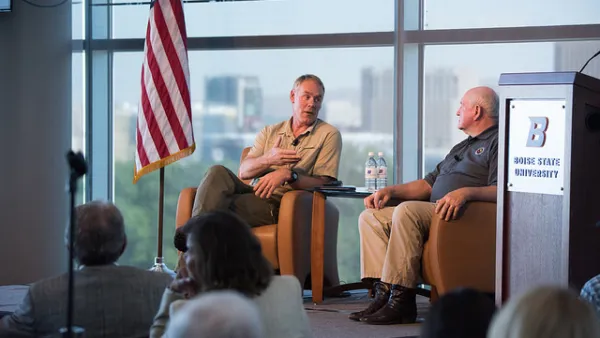
Under Zinke, Land in Montana Is Still Somehow Protected
Though he’s opened land all over the U.S. to industry, the Interior Secretary is actually pushing to conserve even more of his home state.
Home on the Range: Plans to Expand Wild Bison Roaming
Montana state officials are considering a plan to allow wild bison to roam in a larger area outside of Yellowstone National Park. Ranchers oppose the project for fear of disease spreading to area livestock.
Pending Ruling By Congress May Subvert Local Zoning Authority
The telecommunications industry is pressuring Congress to add language to upcoming bill that would preempt local zoning authority if they 'take too long' to approve cell phone towers or sites.

Planetizen Federal Action Tracker
A weekly monitor of how Trump’s orders and actions are impacting planners and planning in America.

The state-sanctioned urbicide of Austin
People don’t kill cities. Freeways do.

US to reduce Colorado River water deliveries to Mexico
A new Colorado Treaty amendment reduces Mexico’s Colorado River water allocation by 250,000 acre feet.

5 New England states march closer to 800 megawatt wind energy project
Securing federal approval for the project may be complicated under the Trump administration, which has historically been hostile towards domestic wind power.

Baltimore to break ground on $50 million Transit Priority Project
The project will bring faster bus trips, safer streets and better bike connections to Baltimore.

Airbnb launches $250 million 'last-dollar financing' housing accelerator, makes first investment in Austin
The company will put $6.4 million towards affordable housing development in Texas’ capital.

FREE Course: Walkable City 1: Why Walkability?
After describing his path towards focusing on walkability as the essence of good planning, Jeff Speck marches through his five principal reasons for making more walkable places.
Reinventing Malls: Planning Alchemy—Turning Gray Fields Into Gold
The course focuses on the opportunities and imperatives that shape reinvention of mall sites.

Eagle County Government
Harvard University Graduate School of Design
Nashville Planning Department
The Architects Foundation
University of Cincinnati Online
The Pocatello Development Authority
The Urban Renewal Agency of the City of Pocatello
Journal of the American Planning Association