Montana state officials are considering a plan to allow wild bison to roam in a larger area outside of Yellowstone National Park. Ranchers oppose the project for fear of disease spreading to area livestock.


Ana Campoy reports on the details of a plan that would allow wild bison access to more 400,000 acres to the west and north of the park. The bison are currently allowed to leave the park during certain times of year, but the new plan would allow year-round access to a much larger swath of land outside the park.
Part of the problem is the size of the herd, which is growing. “A group of state and federal agencies has been overseeing the bison herd with the goal of keeping its numbers around 3,000 as a result of some of the legal disputes. But doing so has proved difficult. Officials have tried a variety of strategies, ranging from killing animals that wander too far out of Yellowstone to issuing limited numbers of bison-hunting licenses. Periodically, managers also ship wild bison to the slaughterhouse.”
Ranchers oppose the expansion of the territory due to fears of disease. “Half the Yellowstone herd has been exposed to brucellosis, though Montana officials said there are no documented cases of bison, rather than elk, passing the disease to cattle. The bulk of the new habitat would be in federal and state land, where state officials say there are few cattle,” writes Campoy.
Matthew Brown later reported that the Montana Board of Livestock declined to act on the proposal, asking for more details about the costs of the plan.
Read the full story: Plan to Let Bison Roam Farther Irks Ranchers
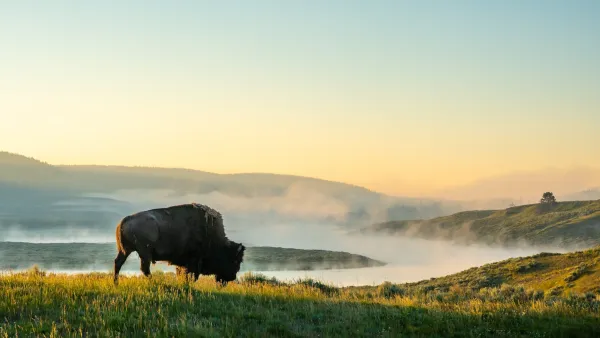
Trump administration orders the removal of 900 bison from public land near Yellowstone
The action marks a drastic shift in wildlife management policy for the Yellowstone-adjacent bison herd.
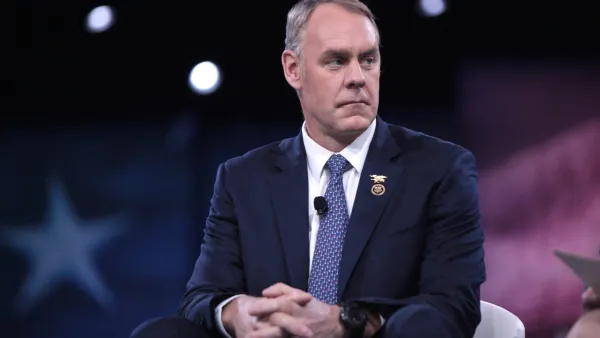
A Look Back on What Ryan Zinke Is Leaving Behind
Zinke’s tenure at the Interior Department was not lengthy, but the damage he inflicted will be long-lasting.
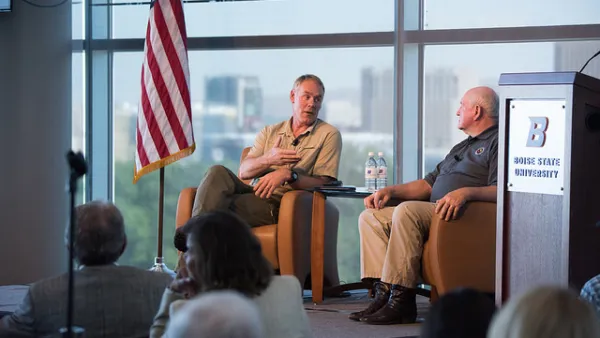
Under Zinke, Land in Montana Is Still Somehow Protected
Though he’s opened land all over the U.S. to industry, the Interior Secretary is actually pushing to conserve even more of his home state.

Planetizen Federal Action Tracker
A weekly monitor of how Trump’s orders and actions are impacting planners and planning in America.

California plans to bury El Niño’s downpour
If the state plays its cards right, it may be able to store a billion acre-feet of El Niño’s water in aquifers.

Desperate measures: Advocates weigh draining Lake Powell to fill Colorado River
Draining the reservoir could reduce evaporation losses by a couple hundred thousand acre-feet.

US buildings threatened, destroyed by fires set to triple by 2060
Researchers found a high fire risk for socioeconomically vulnerable neighborhoods in the American West.

LA residents may be allowed to paint their own crosswalks
Councilwoman Katy Yaroslavsky put out a motion instructing the Los Angeles Department of Public Transportation to study the feasibility of allowing volunteers to paint crosswalks.

Dallas moves to overhaul its zoning code
The city's zoning reform will allow more multi-family and mixed-use developments.

FREE Course: Walkable City 1: Why Walkability?
After describing his path towards focusing on walkability as the essence of good planning, Jeff Speck marches through his five principal reasons for making more walkable places.
Reinventing Malls: Planning Alchemy—Turning Gray Fields Into Gold
The course focuses on the opportunities and imperatives that shape reinvention of mall sites.

City of Rosemead
Rutgers University, Edward J. Bloustein School of Planning and Public Policy
One Hundred Miles
Hunter College, City University of New York (CUNY)
The Architects Foundation
University of Cincinnati Online
City of Cambridge
Montrose County
The Pocatello Development Authority