Implementing auto regulations and restrictions or raising the gas tax is the debate amongst the public as to how to lower air pollution from the growing car population. However, getting older cars off the road may be the most effective.


"A series of drastic measures to cut pollution (in Beijing) ended (Sept.20), following the completion of the Olympics in August and the Paralympics in September. Those measures, meant to be temporary, included...restrictions on driving that cut the number of cars on the roads by nearly half.
The government recently has encouraged an unusual amount of public debate over what price the city is willing to pay for cleaner air. It has published the results of opinion polls on automobile restrictions that show the public more or less split.
The steps could include increasing parking fees to discourage driving; charging people to drive in congested downtown areas, as London and some other cities do; and auctioning license plates to reduce the number of cars added to the roads.
Curbing auto use could hurt one of China's pillar industries, car-industry advocates warn. The Beijing Auto Industry Association instead advocates higher fuel prices -- a move also favored by some environmentalists who want a long-discussed fuel tax enacted.
Du Shaozhong, deputy head of the Beijing Environmental Protection Bureau, said the government plans to retire early about 10% of the city's older, more polluting cars because they don't meet current emissions standards. The 300,000 cars produced about half of Beijing's auto emissions, he said."
Read the full story: Beijing Weighs Pollution-Control Measures; Whiff of Fresh Air During Olympics Raised City's Hopes

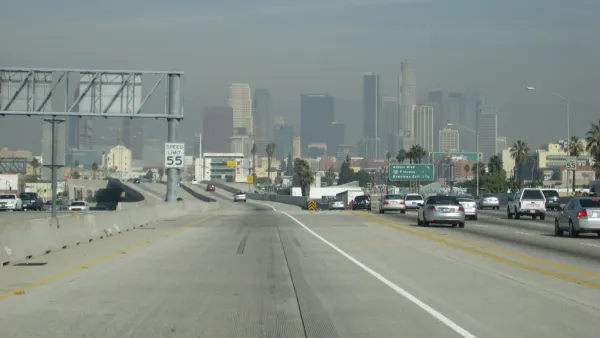
If Road Pricing Is Inherently Unfair and Regressive...
Road pricing has its faults as a revenue measure, but it needs to be compared to ten elements of the current system of paying for transportation, including hidden subsidies, says Joe Cortright, an urban economist with Portland-based City Observatory.
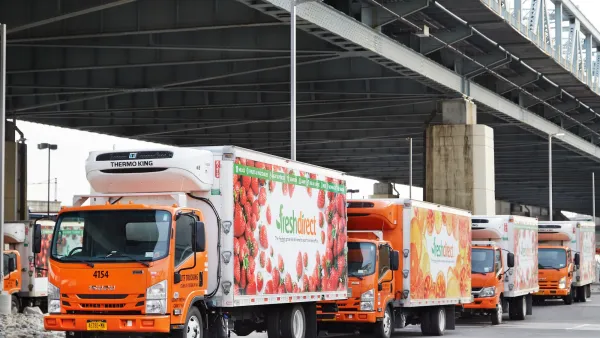
NYC Congestion Pricing Revenue Will Fund up to 1,000 Hybrid Refrigerated Trucks
Traffic to the Hunts Point Produce Market causes increased rates of asthma in surrounding neighborhoods.
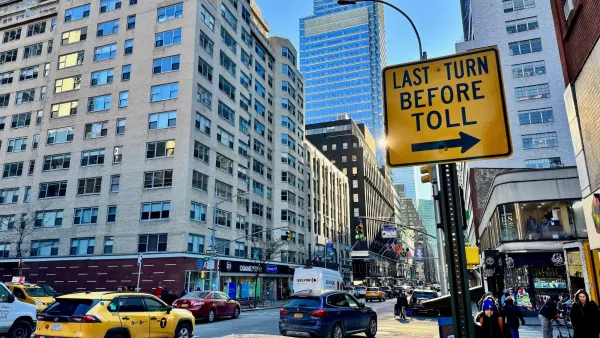
NYC Congestion Pricing Cut Air Pollution by 22% in 6 Months
The program reduced vehicle entries into the toll zone by 11 percent.

Planetizen Federal Action Tracker
A weekly monitor of how Trump’s orders and actions are impacting planners and planning in America.

Amtrak, CN end decades-long dispute with eight-year agreement
The new operating agreement establishes an updated framework for the companies to work together, including processes to resolve disputes.

Judges permit Denver to divert 77,000 acre feet from the Colorado River for reservoir expansion
Overuse and climate change have caused the Colorado River’s water levels to plummet.

NYC DOT wants faster, more permanent street upgrades
The city is examining ways to build more concrete infrastructure without getting entangled in 'decades-long' projects.

'Something we’ve never seen before:' rising utility rates could strain city finances nationwide
Data centers, climate change and other factors have caused utility rates in the United States to increase by 38% since 2020.

Trump to overrule local leaders, lease millions of acres of America’s Pacific Island territories’ seafloors to mining companies
International law says that the Indigenous people of America’s territories have a right to prior and informed consent regarding projects that impact their countries.

FREE Course: Walkable City 1: Why Walkability?
After describing his path towards focusing on walkability as the essence of good planning, Jeff Speck marches through his five principal reasons for making more walkable places.
Reinventing Malls: Planning Alchemy—Turning Gray Fields Into Gold
The course focuses on the opportunities and imperatives that shape reinvention of mall sites.

Harvard University Graduate School of Design
KFH Group Inc.
Greater Baltimore Committee
The Architects Foundation
University of Cincinnati Online
The Pocatello Development Authority
The Urban Renewal Agency of the City of Pocatello