The Pennsylvania Fresh Food Financing Initiative (FFFI) has provided $42 million in grants and loans to finance 58 locally-owned grocery stores, combating fresh grocery shortages in areas of rural and urban Pennsylvania.


"By providing loans that commercial lenders deem too risky and grants to make up for the higher costs of developing stores in central business districts and urban neighborhoods, this $120 million investment fund is seeding a new crop of food markets across the state."
"That no big chains have yet taken advantage of the fund suggests that the added costs and financial risks involved in building a store in a low-income neighborhood or a small town are not the primary reasons supermarket chains have avoided these locations.
Many independents, on the other hand, see real opportunities in these neighborhoods and have the flexibility to adapt their stores to fit into historic buildings or odd-shaped lots. For them, the fund not only overcomes the higher costs of opening stores in these locations. It solves what may well be a more pivotal factor driving the grocery store gap: independent retailers, unlike chains, lack access to sufficient capital."
Thanks to Justin Dahlheimer
Read the full story: Pennsylvania Seeds a New Crop of Local Grocery Stores

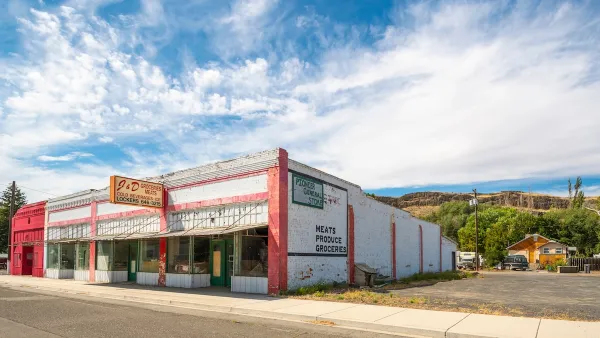
One Weird Trick for Eliminating Food Deserts
How enforcing one federal law, ignored since the 1980s, could bring back small grocers and ensure more people have convenient access to fresh foods.
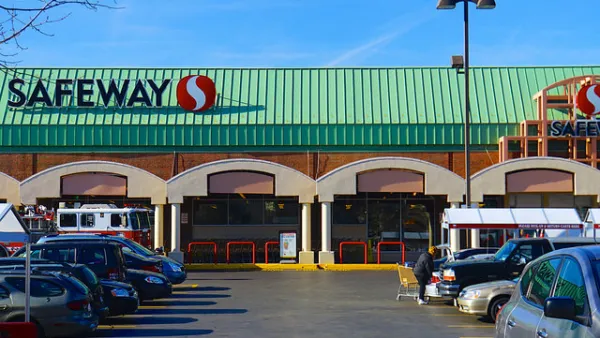
'Grocery Walk' Gathers D.C. Residents to Bring Attention to Lack of Food Options
Neighborhoods with mostly minority populations in Washington, D.C. suffer from a lack of quality grocery stores. A large group of neighborhood activists are trying to do something about it.
Making Grocers More Appetizing to Developers
Last week, Mayor Bloomberg's office announced an initiative to encourage developers to include grocery stores in new projects. Nevin Cohen, whose research focuses on urban food system, reviews the plan.

Planetizen Federal Action Tracker
A weekly monitor of how Trump’s orders and actions are impacting planners and planning in America.

Amtrak, CN end decades-long dispute with eight-year agreement
The new operating agreement establishes an updated framework for the companies to work together, including processes to resolve disputes.

Judges permit Denver to divert 77,000 acre feet from the Colorado River for reservoir expansion
Overuse and climate change have caused the Colorado River’s water levels to plummet.

Maryland local governments examine if they should have more power to raise property taxes
Maryland’s housing market is out of reach for the majority of moderate-income residents.

Northwest rail fans eager for Sept. 30 debut of Amtrak’s Airo fleet
Get ready for that new train smell and more seats. But they won’t go faster or run more frequently on the Cascades route in Washington and Oregon.

NYC DOT wants faster, more permanent street upgrades
The city is examining ways to build more concrete infrastructure without getting entangled in 'decades-long' projects.

FREE Course: Walkable City 1: Why Walkability?
After describing his path towards focusing on walkability as the essence of good planning, Jeff Speck marches through his five principal reasons for making more walkable places.
Reinventing Malls: Planning Alchemy—Turning Gray Fields Into Gold
The course focuses on the opportunities and imperatives that shape reinvention of mall sites.

Harvard University Graduate School of Design
KFH Group Inc.
Greater Baltimore Committee
The Architects Foundation
University of Cincinnati Online
The Pocatello Development Authority
The Urban Renewal Agency of the City of Pocatello