Neighborhoods with mostly minority populations in Washington, D.C. suffer from a lack of quality grocery stores. A large group of neighborhood activists are trying to do something about it.


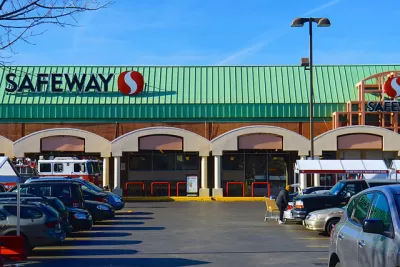
Sam Norton and Dave Johnson report from a "Grocery Walk" in Washington, D.C. last weekend, staged by a coalition of activists to focus on "the 'grocery store gap' between relatively affluent and predominantly white parts of the city like Ward 3 and lower-income, heavily racial minority areas like Wards 7 and 8."
"The former has nine full-service grocery stores, while the latter two–with their combined population of nearly 150,000 people–have just three full-service grocery stores between them," report Norton and Johnson.
The article spotlights a few of the biggest themes that emerged from the Grocery Walk, including points about the quality of grocery stores (not just quantity) and a history of difficulty in locating grocery stores east of the Anacostia River.

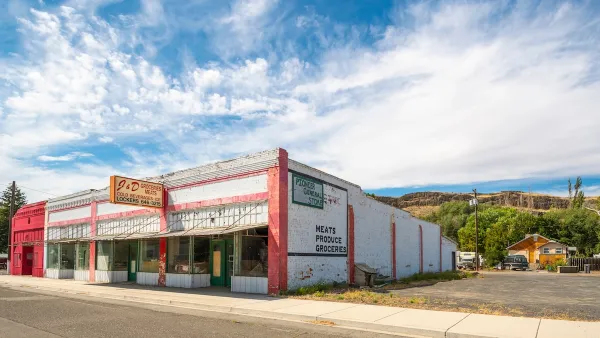
One Weird Trick for Eliminating Food Deserts
How enforcing one federal law, ignored since the 1980s, could bring back small grocers and ensure more people have convenient access to fresh foods.
What's Wrong With Walk Score's Food Desert Map
Walk Score’s new food desert map is a potentially powerful tool in the ongoing policy debate about access to healthy foods. But it’s still a work in progress.
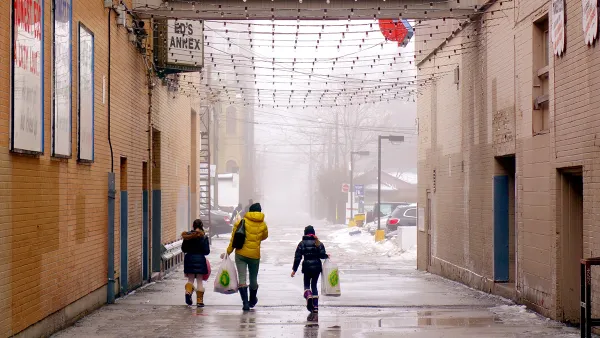
How Easy is Walking to the Grocery Store in Your City?
Angie Schmitt shares news of an effort by WalkScore to rank cities based on the ability of residents to access grocery stores on foot. WalkScore invites planners all over country to use their data to improve walkable access to food in cities.

Planetizen Federal Action Tracker
A weekly monitor of how Trump’s orders and actions are impacting planners and planning in America.

The state-sanctioned urbicide of Austin
People don’t kill cities. Freeways do.

US to reduce Colorado River water deliveries to Mexico
A new Colorado Treaty amendment reduces Mexico’s Colorado River water allocation by 250,000 acre feet.

Baltimore to break ground on $50 million Transit Priority Project
The project will bring faster bus trips, safer streets and better bike connections to Baltimore.

Airbnb launches $250 million 'last-dollar financing' housing accelerator, makes first investment in Austin
The company will put $6.4 million towards affordable housing development in Texas’ capital.

Guerilla urbanists are building DIY bus stop benches in Chicago
A before-and-after of one of the bus stops with a new bench. The new benches are not officially sanctioned or permitted, but the residents who placed them hope they will be the start of a network of DIY benches across the city.

FREE Course: Walkable City 1: Why Walkability?
After describing his path towards focusing on walkability as the essence of good planning, Jeff Speck marches through his five principal reasons for making more walkable places.
Reinventing Malls: Planning Alchemy—Turning Gray Fields Into Gold
The course focuses on the opportunities and imperatives that shape reinvention of mall sites.

Eagle County Government
Harvard University Graduate School of Design
Nashville Planning Department
The Architects Foundation
University of Cincinnati Online
The Pocatello Development Authority
The Urban Renewal Agency of the City of Pocatello
Journal of the American Planning Association