In both the United States and Canada, this fall's federal elections are being driven by environmental issues, which are driving a wedge between urban and rural voters.


"In the U.S. and Canadian elections now under way, the traditionally dominant political factors are giving way to a politics in which wedge issues such as John McCain's "drill, baby, drill" and Stéphane Dion's Green Shift program are pitting city folk against high-consumption, low-density rural voters.
Questions of culture and identity have been the principal means by which U.S. politicians are driving wedges between urban and rural voters. In Canada, the consensus-oriented political culture and the higher degree of urbanization has kept the hard wedges from being hammered in.
The rise of environmental politics on the electoral main stage has created a further opportunity for the urban-rural split. Competing with the New Democrats and the newcomer Green Party for urban votes, Stéphane Dion's Liberals have proposed the Green Shift, a universal income-tax cut to be offset by new taxes on carbon users. For someone in a big-city apartment building who uses public transit, the impact will be largely positive. And for rural folks? Mr. Harper has replied to Mr. Dion's plan with a tax cut on diesel - the fuel of choice for agricultural equipment, heavy pickups, motorboats and long-distance trucking - while continuing a very soft approach to global warming.
In the U.S., a clash on environment and energy has run along similar lines."
Read the full story: The first North American election?

Creating Ocean-Safe Plastic from Seashells
USC researchers have created a biodegradable, marine-safe plastic alternative using calcium carbonate from seashells, offering a promising solution to ocean pollution.
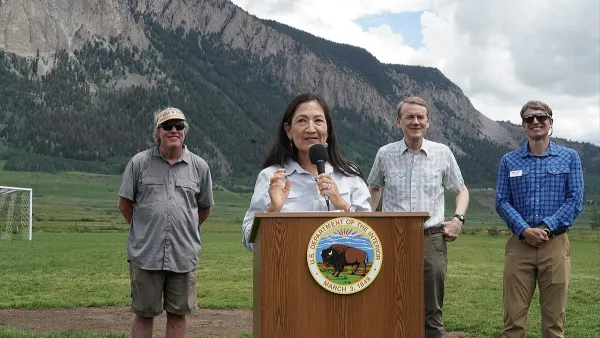
Commentary: Colorado Will Forge Ahead With Conservation Work
While federal policy may become less friendly to environmental efforts, support from state legislators and agencies can prevent the state from backsliding.
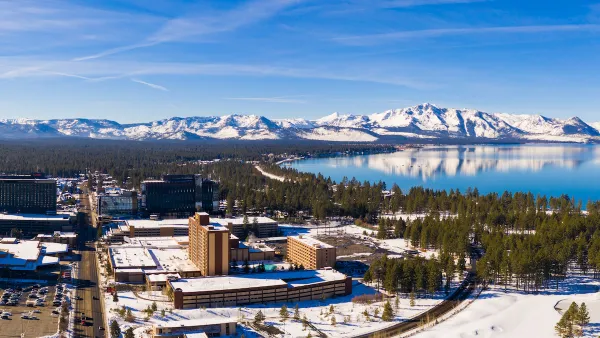
Nevada to Host National Outdoor Recreation Conference
In May 2024, the Society of Outdoor Recreation Professionals will hold its national conference in Stateline, Nevada, offering opportunities to learn and network in the beautiful setting of Lake Tahoe.

Planetizen Federal Action Tracker
A weekly monitor of how Trump’s orders and actions are impacting planners and planning in America.

California plans to bury El Niño’s downpour
If the state plays its cards right, it may be able to store a billion acre-feet of El Niño’s water in aquifers.

Desperate measures: Advocates weigh draining Lake Powell to fill Colorado River
Draining the reservoir could reduce evaporation losses by a couple hundred thousand acre-feet.

Not in my parking spot: LA renters oppose ADU development in their garages
Some tenants advocates say taking away residents’ parking spaces harms senior citizens and people with disabilities who rely on their cars to navigate the city.

NITA’s first budget outlines $5 billion operating plan
The plan also proposes a $9.73 billion capital program for 2027 through 2031.

In Texas, data centers are swallowing promised parkland
Residents who moved to Taylor, Texas for a rural community now have to contend with three data centers in their backyard.

FREE Course: Walkable City 1: Why Walkability?
After describing his path towards focusing on walkability as the essence of good planning, Jeff Speck marches through his five principal reasons for making more walkable places.
Reinventing Malls: Planning Alchemy—Turning Gray Fields Into Gold
The course focuses on the opportunities and imperatives that shape reinvention of mall sites.

City of Rosemead
Rutgers University, Edward J. Bloustein School of Planning and Public Policy
One Hundred Miles
Hunter College, City University of New York (CUNY)
The Architects Foundation
University of Cincinnati Online
City of Cambridge
Montrose County
The Pocatello Development Authority