Despite controversy over its funding,location and impact, the Florida Marlins are likely to build a new retractable-roof stadium on the former site of the Orange Bowl in the city's Little Havana neighborhood.


"The Florida Marlins took a major stride Tuesday in their lengthy quest for a permanent South Florida home, when a judge ruled that a new ballpark funded primarily through tax dollars serves the public good.
With Miami-Dade Circuit Court Judge Jeri Beth Cohen's ruling, the county and Marlins said they will move ahead with construction of the $515 million, 37,000-seat, retractable-roof stadium in Little Havana.
'This is the one we've been waiting for,' said Marlins President David Samson. 'It's a complete victory. It took a long time.'
County Mayor Carlos Alvarez on Tuesday restated what he told the court during his deposition: Building the ballpark will revitalize the neighborhood and create much-needed jobs.
'When the economy is hurting, it means thousands of jobs -- good-paying construction jobs -- for people who need them now,' he said.
Read the full story: Judge: Florida Marlins stadium serves public good
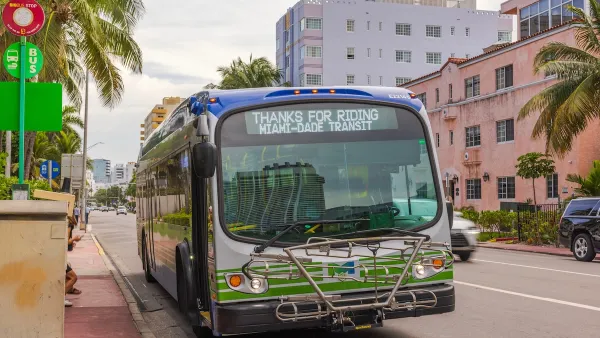
More money, less service: Miami-Dade slashes bus routes after hiking fare
The department is facing a multi-million dollar funding gap.

Miami Considers Airport-to-Port Train to Ease Cruise Ship Traffic
Miami’s port is one of the world’s busiest cruise ship terminals.
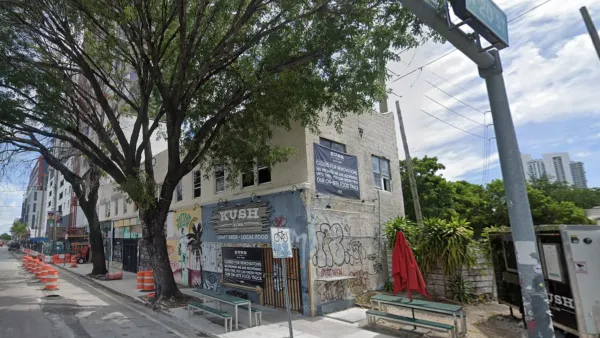
Miami Restaurant Rebuild Includes 10 Units of Affordable Workforce Housing
The restaurant’s owner worked with a local community redevelopment agency to preserve a historic building.

Planetizen Federal Action Tracker
A weekly monitor of how Trump’s orders and actions are impacting planners and planning in America.

Eastern Nebraska is running out of electricity
Data centers and electrification are straining eastern Nebraska’s grid, throttling economic development.

Washington state to charge fee to drivers with fuel-efficient cars
Revenue from the fee will go towards supporting the state’s highways.

Instead of building new housing, LA developers are turning mansions into mega-mansions
In the richest areas, the number of houses valued at $30 million with demolition permits has skyrocketed since 2018.

Illinois considers spending $1 billion in taxpayer money on data center
A quantum computing campus and data center are currently under construction in Chicago.

As development costs rise, Boston moves to lessen affordable housing requirements
The Boston Zoning Commission and the City Council still need to approve Boston Mayor Michelle Wu’s proposed changes

FREE Course: Walkable City 1: Why Walkability?
After describing his path towards focusing on walkability as the essence of good planning, Jeff Speck marches through his five principal reasons for making more walkable places.
Reinventing Malls: Planning Alchemy—Turning Gray Fields Into Gold
The course focuses on the opportunities and imperatives that shape reinvention of mall sites.

City of Charlotte
City of Rosemead
Rutgers University, Edward J. Bloustein School of Planning and Public Policy
University of Michigan School for Environment and Sustainability (SEAS)
Hunter College, City University of New York (CUNY)
The Architects Foundation
University District Partnership
City of Cambridge
The Pocatello Development Authority