The Feds won't agree to a $1 congestion peak bridge toll, so SF planners have proposed peak hour parking fees on corridors leading to the Golden Gate Bridge to satisfy the Urban Partnership Agreement terms to retain the $158 million grant.


"Commuters no longer face the threat of a congestion-based toll on the Golden Gate Bridge, which could have pushed the cost of crossing the span to at least $7. But in its place, drivers parking at meters along the route to the bridge - including on Lombard Street and Van Ness Avenue - will face varying rates that rise during the busiest hours and are designed to increase turnover and push long-term parkers to lots and garages."
"The plan to charge a congestion toll, in which tolls would increase during periods of heaviest traffic, on Doyle Drive or the bridge arose last August when the U.S. Department of Transportation awarded the Bay Area a $158 million grant that included money to replace seismically unstable Doyle Drive..."
The bridge district agreed to a $1 peak toll, "but federal officials objected to the plan, saying the tolls were not high enough to dissuade many motorists from driving during the most congested hours."
Thanks to Gerald Cauthen
Read the full story: Golden Gate Bridge congestion toll plan dies

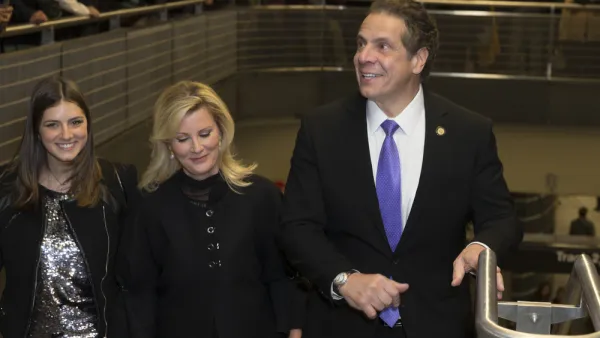
How NY Gov. Andrew Cuomo Came to Support Congestion Pricing
Gov. Andrew Cuomo was not an early endorser of congestion pricing. Why the sudden embrace, particularly when Mayor Bill de Blasio is opposed? Turns out that electronic tolling technology, embraced by the MTA, appears to have moved the governor.
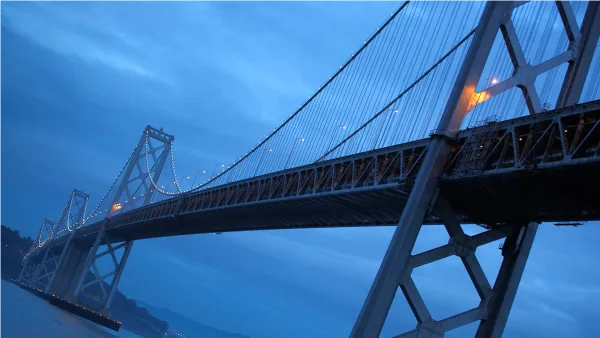
Bay Area Voters May Be Asked to Hike Bridge Tolls 60 Percent
Before the ballot measure would go to voters, state legislation needs to be written, passed, and signed by Gov. Brown. The first step was taken Dec. 14, when the region's planning agency discussed the option. Tolls are $5, last raised $1 in 2010.
Carpoolers Lose Free Ride On All Bay Area Bridges
In Jan., the Bay Area Toll Authority approved a new toll schedule that charges carpoolers $2.50, half the regular toll, effective July 1 to cross the seven state owned Bay Area bridges. On May 28, the Golden Gate Dist. approved a $3 carpool rate.

Planetizen Federal Action Tracker
A weekly monitor of how Trump’s orders and actions are impacting planners and planning in America.

Amtrak, CN end decades-long dispute with eight-year agreement
The new operating agreement establishes an updated framework for the companies to work together, including processes to resolve disputes.

Judges permit Denver to divert 77,000 acre feet from the Colorado River for reservoir expansion
Overuse and climate change have caused the Colorado River’s water levels to plummet.

NYC DOT wants faster, more permanent street upgrades
The city is examining ways to build more concrete infrastructure without getting entangled in 'decades-long' projects.

'Something we’ve never seen before:' rising utility rates could strain city finances nationwide
Data centers, climate change and other factors have caused utility rates in the United States to increase by 38% since 2020.

Trump to overrule local leaders, lease millions of acres of America’s Pacific Island territories’ seafloors to mining companies
International law says that the Indigenous people of America’s territories have a right to prior and informed consent regarding projects that impact their countries.

FREE Course: Walkable City 1: Why Walkability?
After describing his path towards focusing on walkability as the essence of good planning, Jeff Speck marches through his five principal reasons for making more walkable places.
Reinventing Malls: Planning Alchemy—Turning Gray Fields Into Gold
The course focuses on the opportunities and imperatives that shape reinvention of mall sites.

Harvard University Graduate School of Design
KFH Group Inc.
Greater Baltimore Committee
The Architects Foundation
University of Cincinnati Online
The Pocatello Development Authority
The Urban Renewal Agency of the City of Pocatello