With plans for a $4 billion light rail system, the city of Honolulu is hoping to boost its economy and create more jobs by contracting a number of smaller firms to do the project's work instead of one big firm.


"The city hopes to attract more local companies to work on its $4 billion mass-transit system by creating smaller contracts, as opposed to larger, $100 million contracts that are typically awarded only to national and international firms."
"At a workshop presented by the city for construction companies yesterday at the Neal Blaisdell Center, Mayor Mufi Hannemann emphasized the importance of the number of jobs mass transit would create that would help spur the slowing economy."
"To help local companies capitalize on the system, the Hannemann administration will create multiple contracts, ranging from $20 million to $350 million."
"In 1992 the city was ready to issue large contract awards that excluded many firms from bidding on its rail transit system when the City Council refused to spend local funds, killing the project."
"'Local firms were left at the mercy of large companies whether to hire them,' said Toru Hamayasu, the deputy transportation director. 'That was a lesson learned from 1992.'"
Read the full story: Mayor expects jobs with transit plan
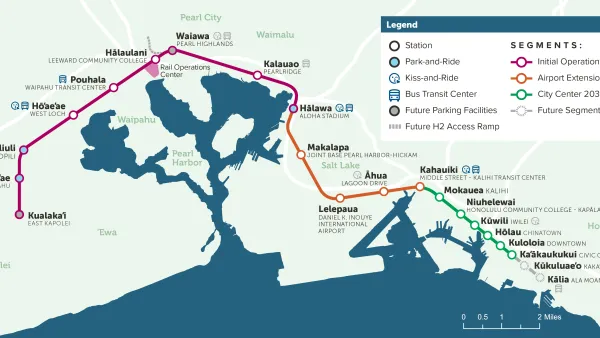
Skyline Rail, Now Serving Honolulu
In a historic day for public transit, Skyline Rail, a project once deemed the worst transit project in the United States due to extreme cost overruns and construction delays, finally opened to the public at the end of June.
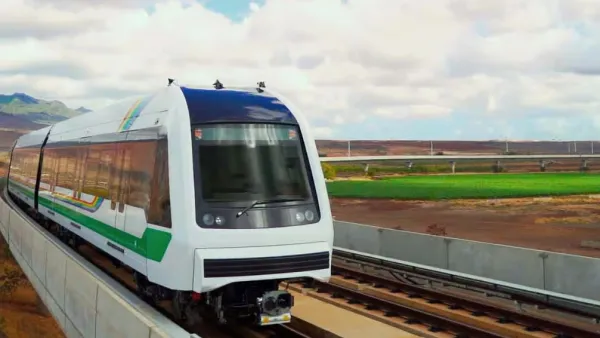
Honolulu Light Rail to Open in June
The city’s first light rail line will finally begin service after more than a half century of planning.
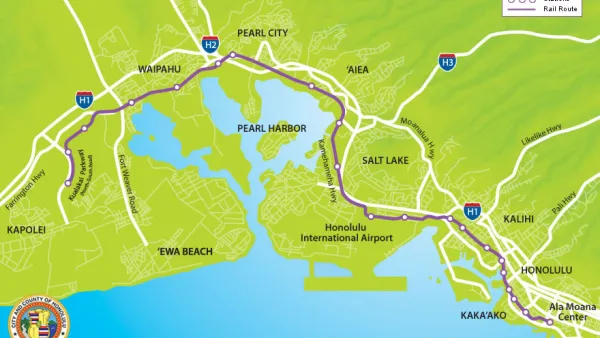
Honolulu Rail Cost Overruns Now Exceed $1 Billion
Add another $200 million to the $910 million shortfall already facing Honolulu's rail project. The changing circumstances surrounding the project won't make it any easier to create a viable funding plan to make up the difference.

Planetizen Federal Action Tracker
A weekly monitor of how Trump’s orders and actions are impacting planners and planning in America.

Eastern Nebraska is running out of electricity
Data centers and electrification are straining eastern Nebraska’s grid, throttling economic development.

Study reveals best places in the U.S. for cycling, walking
New research from Streetlight Data examines bicycle and pedestrian miles per capita in the 100 largest U.S. cities by population.

DSA members accuse Mamdani of 'abandoning values' over housing redevelopment
New York City's mayor plans to replace about 2,000 units of public housing with private, mixed-income housing.

All sides of BRT debate unhappy with CDOT’s most recent move
The Colorado Department of Transportation is no longer considering center-running bus lanes for Colorado Boulevard.

Massachusetts bogs generate both power, and cranberries
Putting solar panels above farmland is one way Massachusetts is advancing toward its goal of net-zero carbon emissions by 2050.

FREE Course: Walkable City 1: Why Walkability?
After describing his path towards focusing on walkability as the essence of good planning, Jeff Speck marches through his five principal reasons for making more walkable places.
Reinventing Malls: Planning Alchemy—Turning Gray Fields Into Gold
The course focuses on the opportunities and imperatives that shape reinvention of mall sites.

City of Rosemead
Rutgers University, Edward J. Bloustein School of Planning and Public Policy
One Hundred Miles
University of Michigan School for Environment and Sustainability (SEAS)
Hunter College, City University of New York (CUNY)
The Architects Foundation
City of Cambridge
The Pocatello Development Authority
The Urban Renewal Agency of the City of Pocatello