Despite the housing downturn, houses in excess of 20,000 square feet are still being built by the very wealthy — with no sign of a slowdown.


The unabated construction of mega-mansions has a few explanations:
"People are spending much more time at home. They want to be comfortable," says one real estate expert, while another has a different take: it just happens. "You keep adding the rooms you think you need. The ballroom. The screening room. Masters with his and hers and a beauty salon and a massage room. And the house keeps growing." Then there's that age-old explanation: ego.
Whatever the reason, the incursion of mega-mansions into some neighborhoods has also ruffled some feathers.
Prospective neighbors often complain that "mansionization" ruins the character of neighborhoods, and that the rumble of trucks during construction are a nuisance. A homeowner in such a neighborhood: "We used to know all our neighbors. We'd socialize with them. If they had a project, moving furniture, we'd help them out. The sort of thing neighbors do. . . . That doesn't exist anymore."
Read the full story: Mega-mansions are L.A.'s really big show

The Incredible Shrinking Home
A new AIA report shows that new homes under construction are getting smaller in response to market forces.
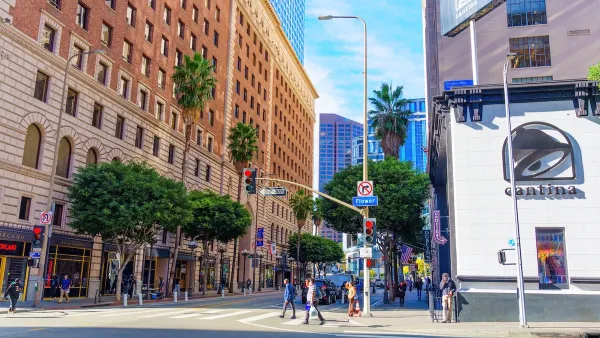
The LA housing policies making developers turn away from the city
Despite LA’s housing shortage, developers say the city’s "mansion-tax" and pandemic-era policies make it an unappealing place to build housing.
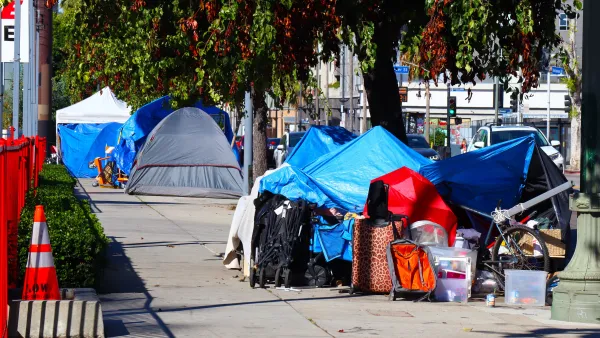
Los Angeles rescinds twelve 'anti-camping zones'
The zones previously prohibited unhoused people from camping in parts of Hollywood.

Planetizen Federal Action Tracker
A weekly monitor of how Trump’s orders and actions are impacting planners and planning in America.

Amtrak, CN end decades-long dispute with eight-year agreement
The new operating agreement establishes an updated framework for the companies to work together, including processes to resolve disputes.

Judges permit Denver to divert 77,000 acre feet from the Colorado River for reservoir expansion
Overuse and climate change have caused the Colorado River’s water levels to plummet.

Philadelphia to invest $2 billion into upgrading city airports as PHL places last in customer satisfaction
Modernizations to Philadelphia's airports will include baggage system upgrades and a new automated parking garage guidance system.

The LA housing policies making developers turn away from the city
Despite LA’s housing shortage, developers say the city’s "mansion-tax" and pandemic-era policies make it an unappealing place to build housing.

New density bill would require 7 California cities to establish regional transit hubs
The bill would also require major cities in California to permit high-rise residential buildings.

FREE Course: Walkable City 1: Why Walkability?
After describing his path towards focusing on walkability as the essence of good planning, Jeff Speck marches through his five principal reasons for making more walkable places.
Reinventing Malls: Planning Alchemy—Turning Gray Fields Into Gold
The course focuses on the opportunities and imperatives that shape reinvention of mall sites.

City of Wisconsin Rapids
Harvard University Graduate School of Design
KFH Group Inc.
The Architects Foundation
University of Cincinnati Online
The Pocatello Development Authority
The Urban Renewal Agency of the City of Pocatello