Plans to bring New Urbanist designs into British Columbia will do little to stem suburban sprawl, according to this column from the Globe and Mail.


"In the Lower Mainland's urban fringes, we still take New Urbanism seriously, in the same way we still lust after Ford Explorers. My own view is that history will regard New Urbanism as a last-gasp attempt to reform suburbanism from within, before high energy prices and new respect for land compels much denser development."
"This new wave of high density combined with high amenity is homegrown. It has turned the very word 'Vancouver' into a verb and an ideology: progressive cities now 'Vancouverize' because they believe in 'Vancouverism.'"
"We Vancouverites sell American planners and developers high density, high amenity urban development attuned to the needs of the new century. Then local developers like the Century Group go consultant shopping in Miami and end up buying the terminally pleasant nostalgia of New Urbanism. Go figure."
"Actually, checking the figures helps puncture New Urbanism's claims, especially the spiel that schemes like the one for the Southlands development present a radical increase in suburban residential densities. While this may be true by the standards of the sunbelt United States, Canadian cities have historically developed at higher densities, largely because we lack such sprawl-inducing public policies as the tax deductibility of mortgage interest and the federally funded interstate highway system."
"New Urbanism is dangerous because it claims to cure the very sprawl and social class separation that it causes."
FULL STORY: New Urbanism's Moses comes to Tsawwassen

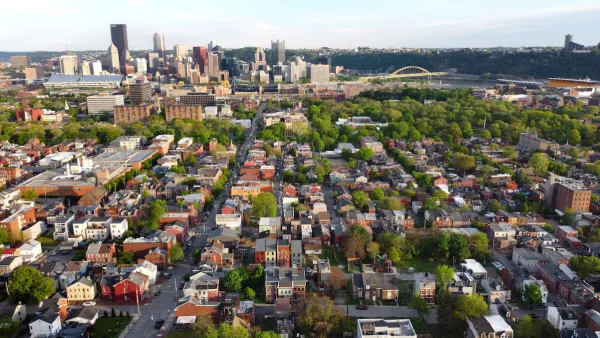
A Better Understanding of Smart Growth Benefits
Smart Growth creates compact, multimodal communities where residents consume less land, drive less, and rely more on non-auto modes. Planners have important stories to tell about the benefits of Smart Growth.
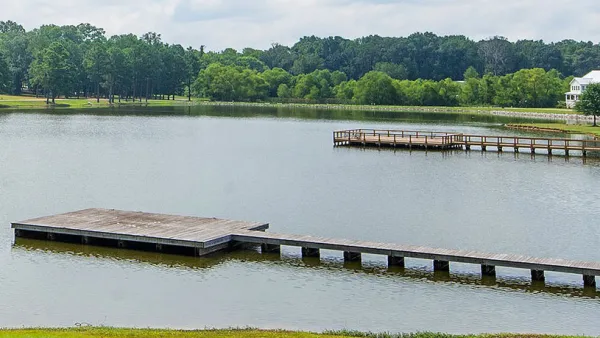
A Primer on Suburban Urbanism
How one master-planned development used lower-density urbanism principles to build a community focused on affordability, sustainability, and conservation.
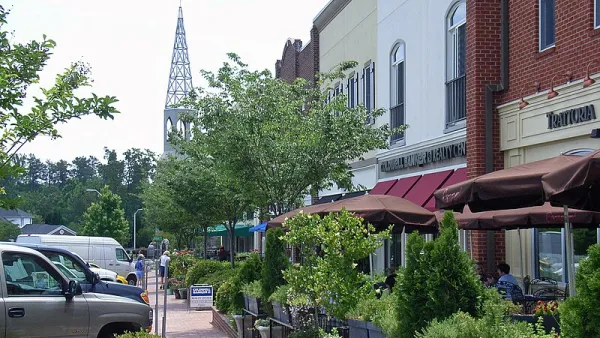
A ‘New Urbanism’ Travelogue
I visited three New Urbanist developments in North Carolina. Here's what I liked, what I didn't like, and what I learned.

Planetizen Federal Action Tracker
A weekly monitor of how Trump’s orders and actions are impacting planners and planning in America.

The state-sanctioned urbicide of Austin
People don’t kill cities. Freeways do.

US to reduce Colorado River water deliveries to Mexico
A new Colorado Treaty amendment reduces Mexico’s Colorado River water allocation by 250,000 acre feet.

5 New England states march closer to 800 megawatt wind energy project
Securing federal approval for the project may be complicated under the Trump administration, which has historically been hostile towards domestic wind power.

Baltimore to break ground on $50 million Transit Priority Project
The project will bring faster bus trips, safer streets and better bike connections to Baltimore.

Airbnb launches $250 million 'last-dollar financing' housing accelerator, makes first investment in Austin
The company will put $6.4 million towards affordable housing development in Texas’ capital.

FREE Course: Walkable City 1: Why Walkability?
After describing his path towards focusing on walkability as the essence of good planning, Jeff Speck marches through his five principal reasons for making more walkable places.
Reinventing Malls: Planning Alchemy—Turning Gray Fields Into Gold
The course focuses on the opportunities and imperatives that shape reinvention of mall sites.

Eagle County Government
Harvard University Graduate School of Design
Nashville Planning Department
The Architects Foundation
University of Cincinnati Online
The Pocatello Development Authority
The Urban Renewal Agency of the City of Pocatello
Journal of the American Planning Association