Owners of gas-guzzling SUVs would pay $50 to drive into the central city, while drivers of low emission vehicles would now be exempt from the $16 congestion charge.


"For five years, London has been assessing drivers a daily "congestion charge," now set at $16, to drive into the central city and a large swath around it, a fee designed to tackle the infernal bottlenecks that have turned much of London into a parking lot.
The program has become a test case for major cities around the world. The New York City Council this week voted for a three-year trial program that would impose an $8 charge on vehicles entering Midtown and Lower Manhattan, a plan that still needs approval from the state Legislature.
San Francisco has studied imposing a charge as a way of easing central-city traffic jams; cities in Norway and Sweden have also flirted with congestion pricing; and Singapore has been charging downtown drivers since 1975.
But London's pending carbon dioxide emissions charge goes beyond traffic control and establishes one of the first significant municipal climate change programs in the world.
It is designed to lure -- some would say shock -- Londoners out of their big Porsches, V6 Mondeos and 4x4s and into respectable Priuses or Renault Clios.
Drivers of the lowest-emitting cars would no longer have to pay the $16-a-day congestion charge to enter the central city.
The north Italian city of Milan in January launched a one-year trial program requiring drivers who enter an inner zone to buy an "Eco Pass," with cars emitting large quantities of CO2 or running on dirty diesel engines having to pay as much as $14.70 a day. But people who live in Milan's city center face a maximum payment of $387.50 a year; in London, inner-city residents could be paying $12,000 or more."
Read the full story: In London, a levy for sins of emission


NYC Congestion Pricing Revenue Will Fund up to 1,000 Hybrid Refrigerated Trucks
Traffic to the Hunts Point Produce Market causes increased rates of asthma in surrounding neighborhoods.
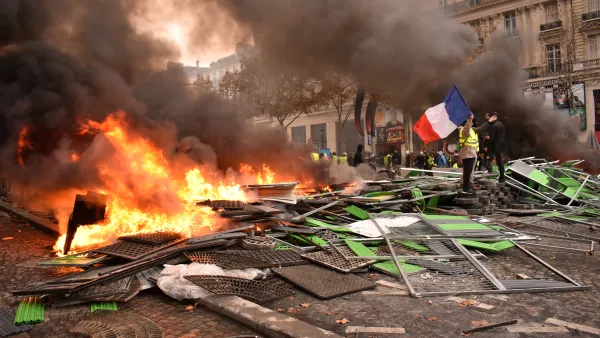
Watch Out for Green Class Backlash
Low emission zones, like that implemented in London, face backlash from critics on all sides of the political spectrum for impacting the poorest drivers and putting a burden on small businesses.
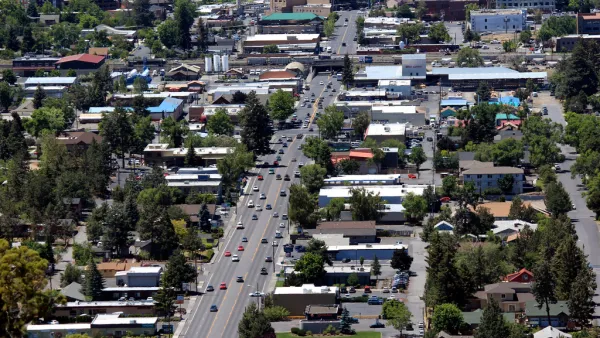
Oregon DOT Projects Little Decline in Driving Despite Climate Pledge
Financial projections from the state's Department of Transportation suggest the agency does not anticipate a marked reduction in driving in the next decade.

Planetizen Federal Action Tracker
A weekly monitor of how Trump’s orders and actions are impacting planners and planning in America.

California plans to bury El Niño’s downpour
If the state plays its cards right, it may be able to store a billion acre-feet of El Niño’s water in aquifers.

Chicago breaks ground on $3 billion megadevelopment
The new neighborhood, titled Foundry Park, will one day host 3,700 residences.

California High-Speed Rail Authority CEO resigns after $600,000 scandal
Under Ian Choudri, the authority used taxpayer dollars to fund first class flights and trips to nightclubs.

Want to study the Missouri River? Soon, you may need unanimous approval from 10 states
Legislation would require 10 governors’ permission to study or build projects moving water outside the basin.

Desperate measures: Advocates weigh draining Lake Powell to fill Colorado River
Draining the reservoir could reduce evaporation losses by a couple hundred thousand acre-feet.

FREE Course: Walkable City 1: Why Walkability?
After describing his path towards focusing on walkability as the essence of good planning, Jeff Speck marches through his five principal reasons for making more walkable places.
Reinventing Malls: Planning Alchemy—Turning Gray Fields Into Gold
The course focuses on the opportunities and imperatives that shape reinvention of mall sites.

City of Rosemead
Rutgers University, Edward J. Bloustein School of Planning and Public Policy
One Hundred Miles
Hunter College, City University of New York (CUNY)
The Architects Foundation
University of Cincinnati Online
City of Cambridge
Montrose County
The Pocatello Development Authority