In and around Washington D.C., traffic planners are experimenting with converting intersections to traffic circles. Residents are slowly embracing the new roundabouts.


"Montgomery County drivers, all too familiar with the back-and-forth and ins-and-outs of area traffic, might soon have to perfect another direction: round and round.
Traffic circles and roundabouts (a well-known fixture of British roadways) are becoming increasingly common in parts of Montgomery. Traffic planners say the trend is likely to continue.
"They're becoming much more popular for reasons of safety and efficiency," said Dan Burden, a Florida-based urban planner who has worked on several road projects in the region. Burden's company has suggested two roundabouts, among others, for proposed development along Glenallan Avenue, next to the Glenmont Metro station. "It's really coming. I've been predicting that within a reasonable number of years, there will one of these for every 1,000 residents.""
"The Maryland State Highway Administration has been advocating for additional traffic circles in recent years, particularly in less densely built areas, said Holger Serrano of the county's Department of Public Works."
Read the full story: A Better Way to Get Around
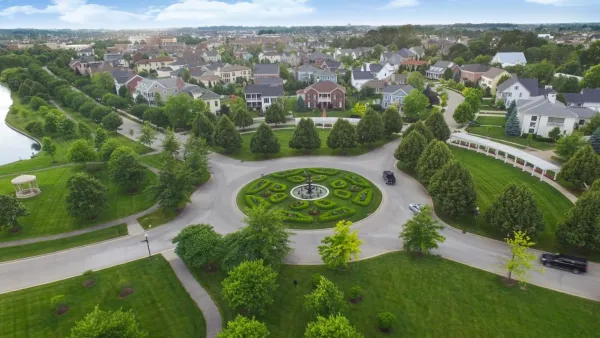
America's 'roundabout city' is in … Indiana?
Carmel, Indiana has built over 150 roundabouts as part of a broader mobility and development strategy.
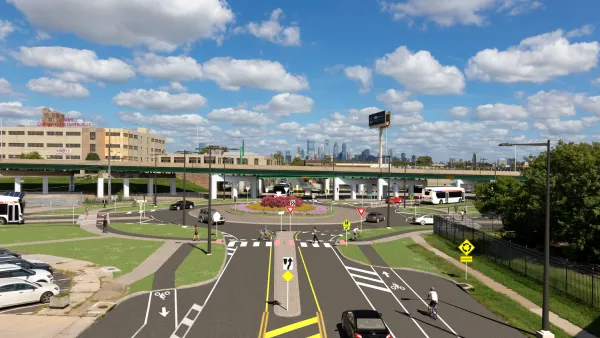
Philadelphia Is Expanding its Network of Roundabouts
Roundabouts are widely shown to decrease traffic speed, reduce congestion, and improve efficiency.
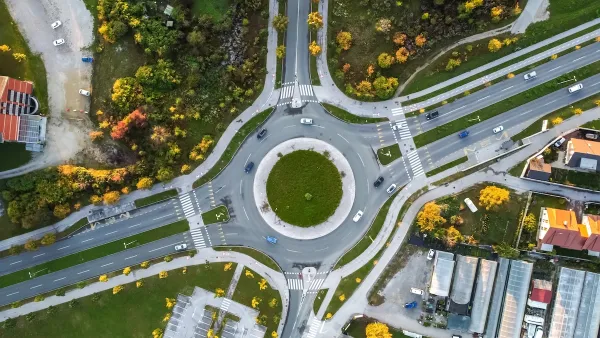
How I Learned to Stop Worrying and Love the Roundabout
What drives the U.S. backlash to roundabouts — objectively safer and more efficient than stop-and-go intersections?

Planetizen Federal Action Tracker
A weekly monitor of how Trump’s orders and actions are impacting planners and planning in America.

Eastern Nebraska is running out of electricity
Data centers and electrification are straining eastern Nebraska’s grid, throttling economic development.

Study reveals best places in the U.S. for cycling, walking
New research from Streetlight Data examines bicycle and pedestrian miles per capita in the 100 largest U.S. cities by population.

Next-generation nuclear reactors are coming to Texas
The reactors will not require towering containment structures thanks to new safety features.

California distributes $1.3 billion to prevent transit service cuts, bolster projects
Twenty-eight projects across California received a portion of the funding.

Pennsylvania Democrats have 15 affordability, clean energy bills for flipped state Senate
Bills in consideration include a bill supporting geothermal energy and a bill supporting solar on warehouses.

FREE Course: Walkable City 1: Why Walkability?
After describing his path towards focusing on walkability as the essence of good planning, Jeff Speck marches through his five principal reasons for making more walkable places.
Reinventing Malls: Planning Alchemy—Turning Gray Fields Into Gold
The course focuses on the opportunities and imperatives that shape reinvention of mall sites.

City of Charlotte
City of Rosemead
Rutgers University, Edward J. Bloustein School of Planning and Public Policy
University of Michigan School for Environment and Sustainability (SEAS)
Hunter College, City University of New York (CUNY)
The Architects Foundation
City of Cambridge
The Pocatello Development Authority
The Urban Renewal Agency of the City of Pocatello